










































Apparel manufacturing has never been a forgiving environment for operational inefficiency. Tight margins, compressed production timelines, seasonal collection cycles that don’t wait for process problems to resolve themselves — the industry runs on a kind of structured urgency that exposes weakness in ways that more forgiving sectors don’t. A delay that might be absorbed comfortably in a slower-moving business can cascade through a fashion supply chain in ways that affect retail delivery windows, wholesale relationships, and the financial outcome of an entire season.
Automation has entered this environment not as a disruption to established practice but as a response to pressures that manual operations were already struggling to absorb. The efficiency gains achieved through automation to improve apparel manufacturing don’t come from replacing the craft and judgment that the industry requires. Instead, they come from eliminating the administrative, logistical, and coordination overhead that surrounds production and consumes resources without adding value.
Where Manual Processes Create the Most Friction
The inefficiencies that cost apparel manufacturers the most tend to cluster in predictable places. Sample development processes where feedback cycles between design, technical teams, and factories run through email chains that take days to resolve what a connected system would handle in hours. Bill of materials management where changes made in one place don’t propagate automatically to production documentation, creating discrepancies that only surface when a factory is already cutting. Purchase order management where tracking the status of outstanding orders requires manual outreach rather than a dashboard that reflects current status without anyone having to update it.
Each of these friction points has a cost that’s distributed widely enough to be easy to overlook — a few hours here, a delayed decision there, a production error that required rework somewhere else. The cumulative effect on a manufacturing operation running multiple collections simultaneously is significant, and it’s the kind of drag that doesn’t appear cleanly in any single line item but shows up in timelines that consistently run longer than they should and margins that consistently land below projection.
Product Development and Technology
The connection between efficient product development and efficient manufacturing is direct — decisions made during the development phase shape the complexity of what the factory receives, and development processes that generate clean, complete technical packages reduce the downstream errors that create production problems.
In the apparel industry, PLM software fashion teams use to manage the product lifecycle — from initial concept through technical specification, sampling, and production handoff — addresses this connection at the infrastructure level. When design intent, technical specifications, bill of materials, and production documentation live in a connected environment rather than across disconnected tools, the accuracy of what reaches the factory improves, and the revision cycles that consume development timelines contract. That’s not a small efficiency gain in an industry where development timelines are measured in weeks and every revision cycle that can be shortened represents real calendar time recovered.
Factory Communication and Production Tracking
The relationship between a brand or manufacturer and its factory network is one of the more communication-intensive in the supply chain. Style specifications, change requests, sample approval feedback, delivery confirmations, quality inspection results — the volume of information moving between a brand’s production team and its manufacturing partners is significant, and the clarity and speed of that communication affects production outcomes in direct ways.
Automation to improve apparel manufacturing can also enhance communication across production teams, suppliers, and factories. By standardizing how information is shared—making it structured rather than unstructured, and tracked rather than buried in email—manufacturers can reduce the errors that arise when teams are working from unclear or contradictory instructions. In addition, automation creates a reliable production record that supports quality management, compliance, and supplier performance evaluation in ways that informal communication simply cannot.
Cutting and Production Workflow
On the factory floor, automation to improve apparel manufacturing has become increasingly sophisticated, particularly in processes such as cutting, spreading, and marker making. The efficiency gains and improvements in material utilization delivered by these technologies are now well-documented, with manufacturers consistently achieving measurable benefits when they make the necessary investment. Automated cutting systems reduce fabric waste at a level that manual processes can’t replicate consistently across high-volume production runs — and in an industry where fabric represents a significant share of cost of goods, material utilization improvements translate directly into margin.
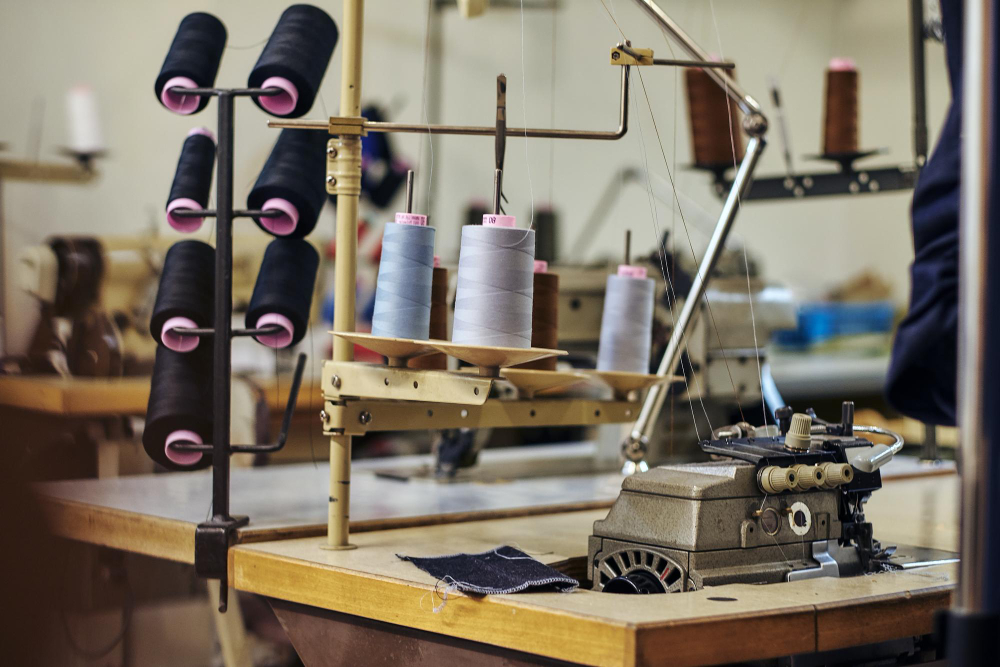
The integration between these floor-level automation systems and the planning and inventory management infrastructure upstream is where the full efficiency potential gets realized. A cutting system that knows exactly what’s needed for confirmed orders and sequences work accordingly produces better results than one operating from manual production sheets that may not reflect the most current order picture.
The Human Expertise That Automation Supports
The efficiency argument for automation in apparel manufacturing isn’t an argument against the skilled human judgment the industry depends on. It’s an argument for directing that judgment toward the decisions that actually require it — the fit assessment that only an experienced technical designer can make, the quality call that requires hands-on evaluation, the supplier relationship conversation that depends on accumulated trust.
Automation handles the administrative overhead that surrounds those decisions without adding value to them. When it’s working well, the people with the most expertise spend more of their time on the work that benefits from expertise and less on coordination tasks that don’t.
Find a Home-Based Business to Start-Up >>> Hundreds of Business Listings.