









































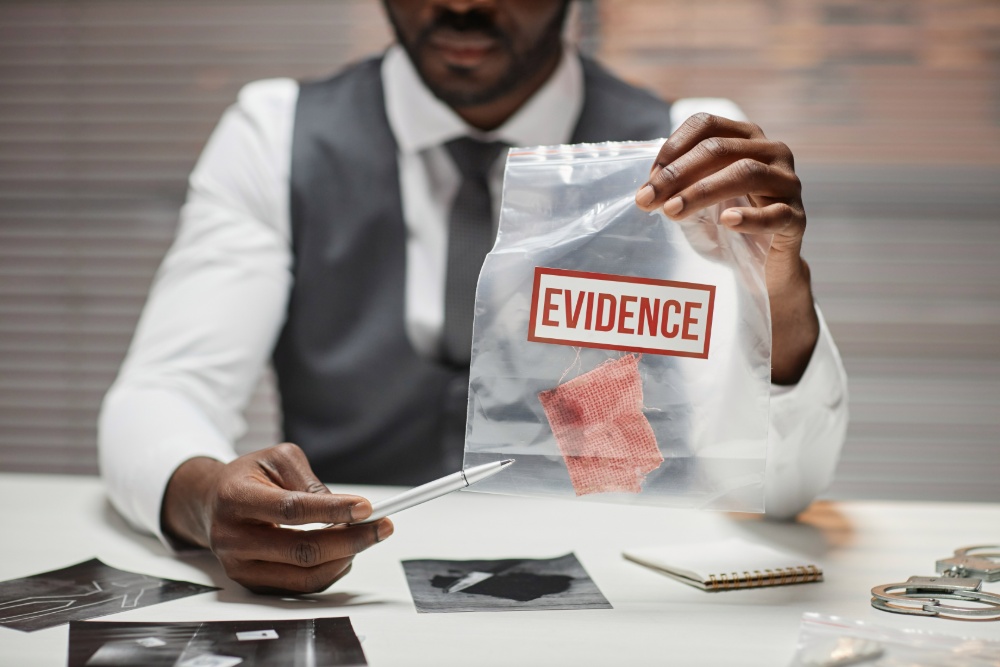
Sex crimes are among the most evidence-sensitive cases in the entire criminal justice system. According to the Bureau of Justice Statistics’ 2023 report on violent crime, sexual assault cases have some of the lowest prosecution rates of any felony category — and evidence quality is consistently identified as a primary driver of that gap. When physical, biological, or digital evidence is mishandled, mislabeled, or collected too late, it doesn’t just weaken a case. It can end one entirely.
That reality has pushed law enforcement agencies and forensic specialists to refine their protocols significantly over the past decade. Advances in DNA technology, trauma-informed interviewing standards, and multidisciplinary coordination have changed what’s possible — but only when the foundational work of evidence collection and management is done right. The gap between agencies that follow structured protocols and those that don’t shows up directly in case outcomes.
This article walks through the full evidence lifecycle in a sex crime investigation: from the moment first responders arrive at a scene to the forensic lab processes that can make or break a prosecution. It’s written for anyone trying to understand how these investigations actually work — not in theory, but in practice.
Why Proper Evidence Handling Is Crucial in Sex Crimes
Sex crime cases present a set of evidentiary challenges that few other criminal categories match. Physical evidence — DNA, trace materials, injuries — degrades rapidly. Digital evidence can be wiped or encrypted. Witness accounts are often limited to two people. And because many cases involve people who knew each other, the central legal question frequently hinges on consent rather than whether contact occurred at all. In that context, every piece of evidence carries outsized weight.
Consider a realistic scenario: a sexual assault reported 72 hours after the incident. The window for collecting biological evidence from the victim’s body has effectively closed. Trace fibers or foreign DNA on clothing may have been contaminated by laundering. If the crime occurred at a residence, the scene has likely been cleaned or disturbed. Investigators arriving at that point aren’t starting from scratch — they’re working with what’s left. What they can still document, preserve, and analyze will determine whether a prosecution is viable.
This time sensitivity is why the earliest stages of the sex crime investigation process are so consequential. Protocols developed by organizations like the International Association of Chiefs of Police (IACP) emphasize immediate, systematic response — not because investigators are expected to do everything perfectly under pressure, but because delay compounds every other challenge. Chain of custody errors, incomplete documentation, and missed collection windows are far more likely when procedures aren’t followed from the first hour.
There’s also an ethical dimension that shapes every decision investigators make. Victims of sexual assault are often in acute psychological distress, which affects both how they interact with investigators and how their accounts are later interpreted. Handling evidence improperly — or conducting interviews in ways that feel coercive or dismissive — can re-traumatize survivors and damage the evidentiary value of their testimony. Getting evidence handling right is inseparable from treating victims with dignity.
How Evidence Is Collected in Sex Crime Investigations
The collection process in sex crime investigation follows a deliberate sequence, with each step feeding into the next. It’s not a single event — it’s a series of coordinated actions carried out by different specialists who each own a piece of the overall picture.
Processing the Crime Scene and Victim Evidence
When investigators arrive at a crime scene, documentation precedes collection. Photographs, sketches, and written logs capture the scene in its original state before anything is touched or moved. This documentation creates the baseline that every subsequent analysis will reference.
Physical evidence collection then proceeds outward to inward — the perimeter first, then progressively toward the focal point of the incident. Investigators look for biological material (blood, semen, saliva), trace evidence (hair, fibers, soil), and contact evidence (fingerprints, footwear impressions). Every item collected is logged with its exact location, condition, and the identity of the person who collected it. This isn’t procedural formality — it’s the foundation of chain of custody, which we’ll return to later.
Victim evidence follows its own distinct pathway. Sexual assault forensic exams, commonly called SANE exams (Sexual Assault Nurse Examiner), collect biological and physical evidence directly from the survivor’s body using a standardized rape kit. The exam documents injuries, collects DNA swabs, preserves clothing, and records findings in a way specifically designed to meet evidentiary standards. The trained nurses conducting these exams are credentialed precisely because their documentation must withstand scrutiny in court.
Role of Forensic Labs and DNA Collection
Once collected, evidence moves to accredited forensic laboratories — a transition that requires meticulous documentation to maintain evidentiary integrity. Each item is transferred in sealed, labeled packaging with a chain of custody form tracking every person who handled it and when.
DNA evidence is often the centerpiece of forensic lab work in sexual assault cases. Biological samples collected during a SANE exam are analyzed to generate a DNA profile, which investigators can then compare against known profiles in databases like CODIS (Combined DNA Index System), maintained by the FBI. A match in CODIS can identify a perpetrator with no prior connection to the victim — cases that might otherwise go unsolved. Beyond identification, DNA analysis can also determine whether multiple assailants were involved or whether evidence from separate incidents links back to the same individual.
Forensic Techniques and Best Practices for Evidence Analysis
Building on the collected materials described above, forensic analysis is where raw evidence becomes usable information. The field has evolved considerably, and modern sex crime investigation processes draw on a range of techniques that go well beyond basic DNA profiling.
Toxicology analysis plays a critical role when drug-facilitated assault is suspected. Urine and blood samples must be collected within narrow time windows — many substances metabolize within 24 to 72 hours — and analyzed using gas chromatography-mass spectrometry (GC-MS) to identify compounds reliably. False negatives are a real risk when collection is delayed, which reinforces why investigators ask about potential drugging early in initial interviews.
Digital forensics has become increasingly central to sex crime investigations, particularly in cases involving electronic communication, image-based abuse, or online solicitation. Forensic examiners extract data from phones, computers, and cloud accounts using specialized tools that preserve the original data state — meaning nothing is altered during the examination. Metadata embedded in images and messages can establish timelines, geolocations, and identities that would otherwise be invisible.
Serological analysis — examining biological fluids — remains foundational. Investigators use alternate light sources (ALS) to identify stains on surfaces and clothing that aren’t visible to the naked eye. Presumptive tests can indicate the presence of biological material before more precise confirmatory testing in the lab. These layered approaches reduce the risk of missing evidence that wasn’t immediately apparent at the scene.
Best practices across all these techniques share a common thread: standardization. The National Institute of Standards and Technology (NIST) has published guidelines for forensic DNA analysis and laboratory quality standards that credentialed labs are expected to meet. When analysts follow validated, documented methods, their findings can withstand the cross-examination that accompanies trial.
Challenges in Handling Sex Crime Evidence
Even with strong protocols in place, sex crime investigations run into obstacles that other case types rarely face at the same scale.
Delayed reporting is the most persistent challenge. Many survivors don’t come forward immediately — sometimes because of fear, shame, or uncertainty about whether what happened qualifies as a crime. By the time investigators begin collecting evidence, biological material may be gone, witnesses may have scattered, and electronic records may have been deleted or overwritten. Investigators must work backward from a later starting point, relying more heavily on digital evidence, communications records, and the survivor’s account.
Victim trauma also shapes the investigation in ways that can complicate evidence gathering. Memory under acute stress is fragmented and non-linear — a well-documented phenomenon studied extensively in trauma research. Survivors may recall events out of sequence, omit details they later remember, or present with flat affect that can be misread as disengagement. Trauma-informed interviewing methods, which IACP guidelines now emphasize, are designed to account for these realities rather than penalize survivors for them.
Maintaining Chain of Custody and Ethical Considerations
Chain of custody is the documented record of every person who handled a piece of evidence, from collection to courtroom. A break in that chain — an unlabeled sample, a missing transfer log, storage at the wrong temperature — can render evidence inadmissible regardless of what it shows. Defense attorneys routinely scrutinize custody records, and gaps become the centerpiece of reasonable doubt arguments.
Ethical challenges layer onto the technical ones. Investigators must balance the urgency of evidence collection with respect for a survivor’s bodily autonomy and psychological state. Pushing a traumatized person through an exam they’re not ready for can produce evidence under conditions that later get challenged. Conversely, extended delays to wait for a survivor’s comfort can allow critical evidence to degrade. Navigating that tension requires judgment, training, and, increasingly, formal protocols that give both the investigation and the survivor’s needs appropriate weight.
Multidisciplinary Teams and Legal Frameworks in Evidence Management
No single investigator or agency owns a sex crime case. Effective evidence management increasingly depends on structured collaboration across disciplines — a model formalized in what are known as Sexual Assault Response Teams (SARTs).
A SART typically includes law enforcement investigators, SANE nurses, forensic examiners, victim advocates, and prosecutors. Each brings a distinct lens to the case. Victim advocates, for instance, help survivors understand what the forensic exam involves before consenting to it — a process that protects both the survivor’s rights and the evidentiary value of the exam itself. Prosecutors engage early to ensure that evidence is collected and documented in ways that will hold up under the specific legal standards of the jurisdiction.
When the legal dimensions of a case become complex — particularly in contested cases where evidence is disputed or incomplete — working with an experienced sex crimes lawyer becomes relevant for navigating how that evidence is introduced, challenged, or contextualized in formal proceedings. The evidentiary standards that forensic analysts follow in the lab are directly tied to what will be admissible in court, which is why the connection between investigative protocol and legal framework matters from the very first hour.
Federal and state legal frameworks shape what investigators can do and how they must document it. The Violence Against Women Act (VAWA) has influenced protocol development nationwide, including standards for rape kit collection and storage. Many states now mandate that untested rape kits be submitted for analysis within specific timeframes — a direct response to the backlog crisis that left hundreds of thousands of kits sitting unexamined for years.
What separates investigations that result in successful prosecutions from those that don’t often isn’t dramatic — it’s consistent, disciplined adherence to protocols that seem bureaucratic until the moment they matter in court. Building that discipline into every stage of the sex crime investigation process is how the evidentiary record becomes strong enough to withstand what comes next.
Find a Home-Based Business to Start-Up >>> Hundreds of Business Listings.