











































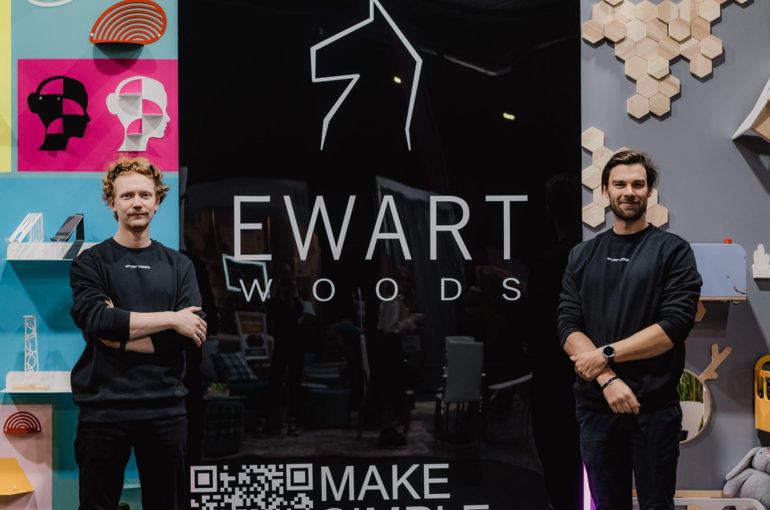
Most small manufacturing businesses face the same quiet math problem: handmade doesn’t scale the way software does. EWART WOODS started about as small as a business can start — one founder, Maksims, working alone in a garage in Latvia, making wooden USB flash drives by hand. There was no design team and no factory floor yet, just one person doing the cutting, sanding, and finishing himself, one order at a time. A decade later, Maksims built EWART WOODS into a company with its own factory, shipping wood and metal furniture worldwide—proof that the handmade constraint isn’t a ceiling; it’s a business model.
Starting Small, Thinking Global
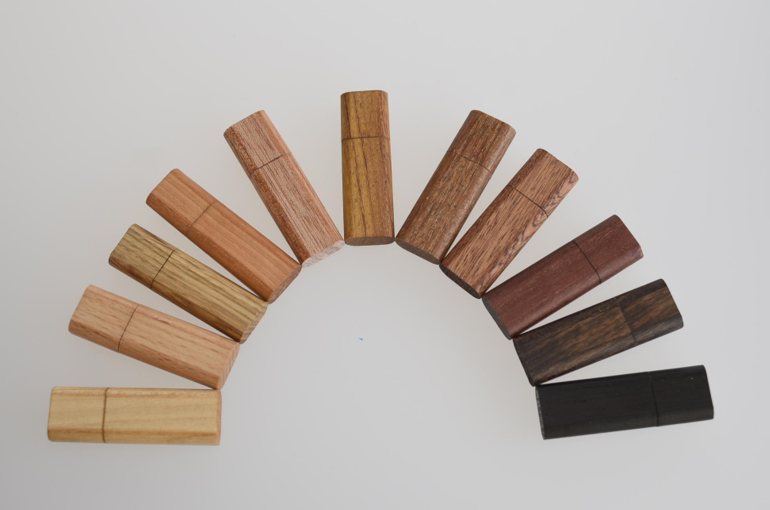
The product line didn’t start with furniture at all. Maksims’s first products were small, detailed wooden USB flash drives, made and shipped by hand, one at a time. From there, the catalog grew the way a lot of small manufacturing businesses actually grow — not off a five-year plan, but by following what customers asked for next. Toilet paper holders came next, then the wall-mounted shelves and nightstands that make up the bulk of the business today. Each new product line meant hiring another person, then another, until a one-man garage operation had become a small team — and eventually outgrew the garage entirely into its own factory.
The company’s core products are the kind you don’t notice until they’re done right: floating wall shelves, wall-mounted nightstands, toilet paper holders, sofa arm trays. They’re not designed to go viral — they’re the small, functional furniture people live with every day and replace maybe once a decade, which means the real growth challenge was never demand — it was reach. A business that started with one person in a garage doesn’t have the built-in customer base that a Los Angeles or London furniture brand starts with.
The way EWART WOODS solved that wasn’t through a big-box retail push or a splashy funding round. It grew almost entirely direct-to-consumer, first through Etsy, later through its own Shopify store, building slowly toward a shop with over ten years of history, tens of thousands of lifetime sales, and a 4.8-star rating across more than 5,000 customer reviews. That’s not a viral growth story. It’s a compounding-trust story, and it’s a far more common path for small manufacturing businesses than the headlines suggest. As Maksims built EWART WOODS, two product lines carried a disproportionate share of that growth: floating wall shelves and floating nightstands, the kind of small, wall-mounted furniture that quietly outsold almost everything else in the catalog long before either term became a deliberate keyword target.
Why Craftsmanship Became the Business Model, Not Just the Marketing
It would be easy to treat “handmade” as a marketing label slapped onto a supply chain that’s actually automated somewhere out of sight. EWART WOODS took the opposite bet: keep the manufacturing small and let that become the differentiator rather than the limitation.
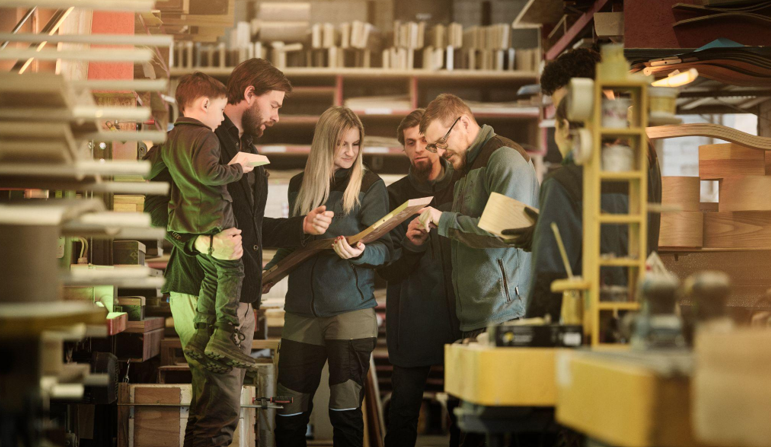
Every piece is still cut, assembled, sanded, and finished by a small team who works with the material every day, using solid wood, wood veneers, and Baltic birch plywood rather than composite fillers. That decision has real business consequences. It caps how fast the company can produce, but it also means every floating wall shelf that leaves the factory floor has passed through a person who checks it, not just a machine that stamped it. In an industry where mass-produced furniture is often built to last a single move, that slower process is the actual product — the craftsmanship is the business case, not a footnote to it.
There’s a sustainability angle here too, and it’s a practical one rather than a marketing one: furniture built from solid materials and finished by hand tends to get repaired rather than replaced, which matters more to a small manufacturer’s margins than most people realize. Returns and replacements are expensive. A well-made wall shelf that a customer keeps for fifteen years is a better unit economics story than one that gets returned in a month.

The Hard Lessons of Scaling a Physical-Product Business From a Small Country
Shipping wood furniture from Latvia to customers in the US, UK, France, and Germany is not a solved problem the way shipping from a US warehouse is. Freight costs, customs, and multi-week transit times are a constant tax on the business that a domestic competitor doesn’t pay. Every decision — packaging weight, box dimensions, which products even make sense to ship internationally at all — gets filtered through that reality first.
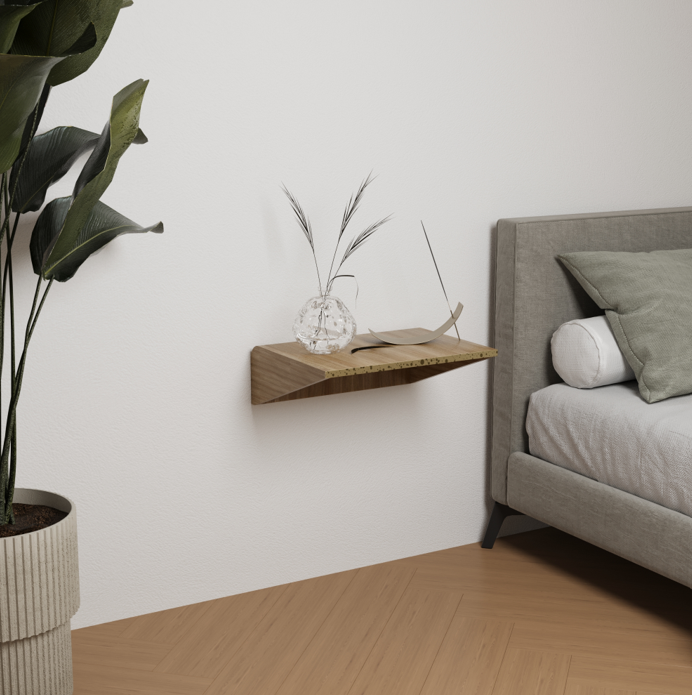
This is one of the less-discussed parts of running a home-based or small-workshop manufacturing business: the product design process has to account for logistics from day one, not bolt it on afterward. It’s part of why the floating shelf and floating nightstand lines specifically became the backbone of the catalog rather than staying as side products. As Maksims built EWART WOODS, he recognized that a wooden floating shelf has no legs and no separate base to box up. A floating bedside table mounts flush to the wall instead of standing on a full frame, which means it packs flatter and tends to survive the trip from Latvia more reliably than a traditional bedside table. That overlap between good design and good logistics—wall-mounted, floating furniture that ships light and photographs well—has shaped which product lines EWART WOODS invests in expanding versus which stay niche.
Building Trust When You Can’t Meet Every Customer in Person
A small manufacturer selling internationally has an obvious trust problem: almost no customer will ever set foot in the factory. All the traditional signals of a trustworthy furniture business — a physical showroom, word of mouth in a local market, a salesperson who can answer questions in person — don’t exist for a brand like this.
What replaced them was slow, unglamorous trust-building: consistent product photography that shows the real materials, responsive customer service, and — most importantly — simply staying in business long enough that review counts and repeat customers became their own proof. Star Seller status on Etsy and a decade-plus track record aren’t exciting to talk about, but for a small business with no physical storefront, they’re doing the same job a well-reviewed local shop does for a neighborhood retailer. A wall-mounted nightstand with two thousand reviews behind it is a very different purchase decision for a customer than the identical-looking piece from a brand-new seller with zero history.
What This Means for Other Small Manufacturers Starting Out
The EWART WOODS story isn’t a blueprint for fast growth—it’s closer to the opposite. It’s a case for treating small-batch, handmade production as a genuine competitive advantage rather than something to outgrow as fast as possible. The way Maksims built EWART WOODS offers an important lesson for anyone running or starting a home-based furniture or craft business: the pattern worth borrowing isn’t a specific tactic. It’s the sequencing: get the craftsmanship and the material choices right first, let logistics and design decisions follow from real constraints rather than assumptions, and let trust compound slowly through consistency rather than trying to manufacture it with marketing.
A decade in, that’s still the whole model: a small team, real materials, and furniture built to be kept — not replaced.
EWART WOODS began with one founder working alone in a garage in Latvia and has since grown into its own factory, designing and hand-finishing wood and metal furniture and home accessories shipped worldwide.
Find a Home-Based Business to Start-Up >>> Hundreds of Business Listings.


