








































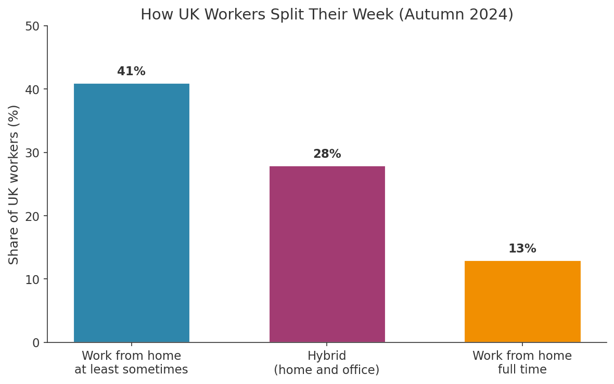
Running a business from a property that was never designed for work drains your focus fast. A spare corner of the bedroom or a laptop on the kitchen table rarely holds up once calls, deadlines and stock start to pile in. Across Britain, 41% of workers now spend at least part of the week working from home, and most new ventures begin under the owner’s own roof. The home you pick shapes how well that business runs. Speaking early with experienced estate agents in Ilford helps you shortlist properties that already suit how you work, rather than forcing your work to fit the property. Here is what to weigh before you sign.
Key Takeaways
- A dedicated room you can close beats a shared corner for focus and work-life balance.
- Check broadband speed, parking and natural light before raw square footage.
- A well built garden office can lift a home’s resale value by 5% to 15%.
- Some business use at home can trigger planning, lease or business rates questions.
- Local agents match property types to how your venture actually runs day to day.
Why Ilford Suits a Home Business
Ilford gives founders a rare mix: fast links to central London without central London prices. The Elizabeth line reaches Liverpool Street in about 22 minutes and Canary Wharf in roughly 28, so client meetings stay easy while your overheads stay low.
The area’s property stock also helps. Victorian and Edwardian terraces, post-war semis and modern flats sit side by side, which means options for almost any budget or workspace need.
| Quick Figure: Around 4.3 million UK businesses are run by their owner alone, with no other staff. For most founders, the home is the first office. |
Lower running costs free up cash for the part that matters: building the venture itself. That trade between connectivity and affordability is why so many founders choose East London over the capital’s core.
What to Check in a Property When You Work From Home
A strong home business property earns its keep in four areas: a workspace you can separate, reliable connectivity, room to grow, and access for anyone who visits. Walk every viewing with those four in mind.
A Separate Room to Work In
A dedicated room with a door does more for productivity than any gadget. Shutting it once the workday ends draws a line between work and home, which protects both. If a spare bedroom or box room is available, picture it as your office before anything else.
Tight on space? Clever layouts still deliver. The publication’s guide to getting the most from a compact home office shows how a small room can still function as a serious workspace.
Broadband, Power and Connectivity
Broadband is the lifeline of any home business. Before you commit, check the property’s real speeds, not just the advertised area average, and confirm whether full fibre is available on the street. A patchy connection costs you calls, uploads and credibility.
| Pro Tip: Run a postcode broadband check and ask the current owner which provider they use. A home already on full fibre saves you weeks of upgrade hassle after moving in. |
Count the plug sockets too, and look at where natural light falls. A bright room near a window lifts mood and cuts screen glare, both of which matter across long working days.
Storage, Stock and Room to Grow
Many home businesses outgrow their first setup within a year. If you hold stock, ship orders or keep equipment, factor in storage from the outset. A garage, loft or utility room can hold inventory without swallowing your living space. Think about how deliveries arrive too, since a safe spot for parcels matters once orders pick up.
| Property Type | Strengths for a Home Business | Watch For |
| Terraced house | Spare bedroom for an office, often a rear garden | Shared walls carry call noise |
| Semi-detached | More room, driveway parking, garden office potential | Higher price than a terrace |
| Flat or apartment | Lower cost, low upkeep, ideal for screen-based work | Limited storage; lease may restrict trading |
| House with garden | Room for a garden office or workshop | Build costs and planning checks |
Video: “My Insanely Productive Home Office Setup“
This walkthrough shows how to plan a focused workspace around the way you actually work, handy before you settle on a room.
Garden Offices: Extra Space That Pays Back
A garden office is a standalone, insulated building in your garden used as a workspace, separate from the main house. For founders who want a real divide between home and work, it ranks among the strongest upgrades available.
The value case is clear. Property experts put the uplift from a quality garden office at between 5% and 15% of a home’s value, so demand from remote workers keeps these spaces in favour.
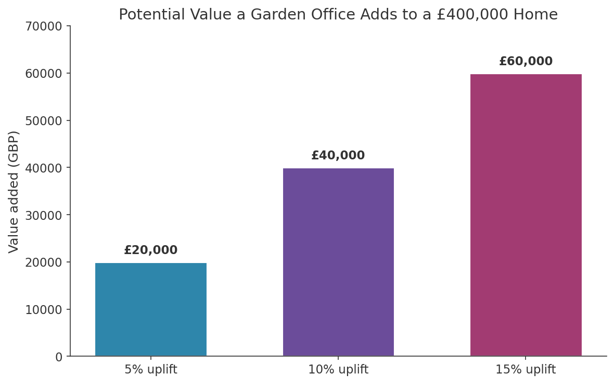
In commuter areas where indoor space is scarce, a garden room can lift a property’s worth by as much as 15%.
Buy a property with garden space in mind and you keep the option open. The magazine breaks down the figures in its piece on how much a garden office adds to a house, while its guide to smart home office renovations and how to fund them covers paying for the work.
Planning, Permissions and Running Costs
Most home businesses need no special permission, though some uses do. Trading from a spare room with a laptop is usually fine. Converting a garage into a salon, taking frequent deliveries, or having customers visit regularly can change the picture.
Three checks are worth making before you commit:
- Lease or tenancy terms, which may bar commercial activity in a flat.
- Mortgage conditions, since some lenders expect to be told about trading from the address.
- Business rates, which can apply when a room is used solely for work.
You can read the government’s guidance on business rates and home working to see where the line sits. When in doubt, a quick call to the local council settles most questions.
| Heads Up: If you plan structural changes, run customer visits, or convert an outbuilding, confirm planning and lease rules first. Sorting this early avoids an expensive surprise later. |
Keeping a Home Setup Secure and Professional
A home network rarely carries the protections a corporate office does, yet it handles the same sensitive data. Retail routers and smart devices can become an easy way in for attackers, so security deserves real thought from day one.
Simple habits help: a strong router password, regular firmware updates, and a separate network for work devices. For deeper guidance, Fortinet’s resource on securing a work-from-anywhere setup explains how to protect a home office to the same standard as a corporate network.
A tidy, well equipped room also reads as professional on video calls. The publication’s rundown of worthwhile home office investments covers the kit that makes the difference.
Renting or Buying for Your Home Business
Whether to rent or buy depends on your stage, budget and how settled the business is. Buying gives you freedom to adapt the space and build long term value. Renting keeps you flexible and frees up capital while the venture finds its feet. Neither answer is wrong; the right one simply matches where the business sits right now.
| Factor | Renting | Buying |
| Flexibility | Easy to move as the business grows | Tied to one property |
| Adapting the space | Limited by the landlord | Free to renovate or add an office |
| Upfront cost | Lower deposit | Larger deposit and fees |
| Long term value | No equity gain | Builds equity and potential uplift |
A local agent who knows the streets can match either path to the right property faster than a national portal alone.
Lint Group holds a 5 star rating from nearly 400 reviews, and that buyer focus shows up in real moves. In a recent Google review, Clairee described how the team guided her family through buying their first home, staying flexible and reachable at every step. For a founder buying a base for a new venture, that steady support takes pressure off an already busy moment.
Frequently Asked Questions
Do I Need Permission to Run a Business from Home in Ilford?
Most desk-based ventures need no permission at all. You may need approval for structural changes, regular customer visits, or signage. Check your lease, mortgage terms and, if unsure, your local council before trading from the property.
What Is the Best Property Type for a Home Business?
A house with a spare room or garden space suits most home businesses, since it allows a dedicated office and storage. Flats work well for quiet, screen-based work but often limit storage and may restrict commercial activity under the lease.
Will Working from Home Affect My Council Tax or Business Rates?
Usually not. If you use part of the home only for business, such as a converted workshop, that portion may attract business rates while the rest stays on council tax. The Valuation Office Agency decides each case on its merits.
How Much Value Does a Garden Office Add?
Expect a high quality, insulated garden office to add somewhere from 5% up to 15%, depending on build standard and local demand. Commuter areas with scarce indoor space tend to see the higher figure.
How Can an Estate Agent Help Me Find a Work-Friendly Home?
A good agent knows which streets and property types suit home working, from broadband coverage to parking and garden potential. They filter listings against your business needs and flag matching homes before they reach the open market.
Conclusion
The right home turns a side project into a proper business, and the wrong one slows everything down. Weigh the workspace, the broadband, the storage and the rules before the price tag, then picture a normal working week inside every property you view. Ilford’s blend of quick transport and sensible prices makes it a smart base for founders, and a knowledgeable local agent helps you find a home that works as hard as you do.
References
Office for National Statistics, Who Are the Hybrid Workers?, 2024 — https://www.ons.gov.uk/employmentandlabourmarket/peopleinwork/employmentandemployeetypes/articles/whoarethehybridworkers/2024-11-11
Department for Business and Trade, Business Population Estimates for the UK 2025 — https://www.gov.uk/government/statistics/business-population-estimates-2025/business-population-estimates-for-the-uk-and-regions-2025-statistical-release
IPSE, Does a Garden Office Add Value to Your Property?, 2024 — https://www.ipse.co.uk/advice/does-a-garden-office-add-value-to-your-property
GOV.UK, Business Rates: Overview — https://www.gov.uk/introduction-to-business-rates
Fortinet, Secure Work From Anywhere Solutions — https://www.fortinet.com/solutions/enterprise-midsize-business/work-from-anywhere
Fact Check: All statistics and data points in this article were verified against original sources as of 19 June 2026. Sources are listed in the References section.
Find a Home-Based Business to Start-Up >>> Hundreds of Business Listings.