








































Work is becoming faster, more connected, and increasingly mobile. Professionals are no longer tied to one desk, one screen, or one device. They move between offices, job sites, meetings, warehouses, hospitals, airports, client locations, and remote workspaces while still needing quick access to information.
That is where wearable AI becomes interesting. Instead of asking workers to stop what they are doing and reach for a laptop or phone, wearable devices can bring information, communication, and assistance closer to the task itself.
Smart glasses, watches, headsets, and other AI-powered tools are shaping a new kind of workplace: one where technology supports people in motion, not just people sitting at a screen.
Faster Access to Information
One of the biggest workplace benefits of wearable AI is quick access to information. In many jobs, timing matters. A technician may need repair instructions while standing in front of equipment. A warehouse worker may need order details while moving through inventory. A nurse may need hands-free communication during a busy shift. A manager may need to capture a note while walking a site.
Wearable AI can reduce the gap between needing information and acting on it. Instead of opening a phone, searching an app, or returning to a workstation, workers may be able to ask a voice assistant, receive an audio prompt, or view task information through connected devices.
This kind of access is not only about speed. It can also reduce errors, improve consistency, and help workers stay focused on the task in front of them.
Hands-Free Technology Supports Productivity
Hands-free tools are especially valuable in jobs where workers need to move, carry, inspect, repair, demonstrate, or document. A phone is useful, but it is not always practical when both hands are needed.
Wearable AI can help professionals complete small tasks without breaking their workflow. They may capture photos, record short videos, receive instructions, answer calls, or check updates while staying engaged with the work.
This matters because productivity is often lost in tiny interruptions. A worker stops, removes gloves, picks up a device, unlocks it, searches for information, then returns to the original task. Repeating that process throughout the day can create real friction.
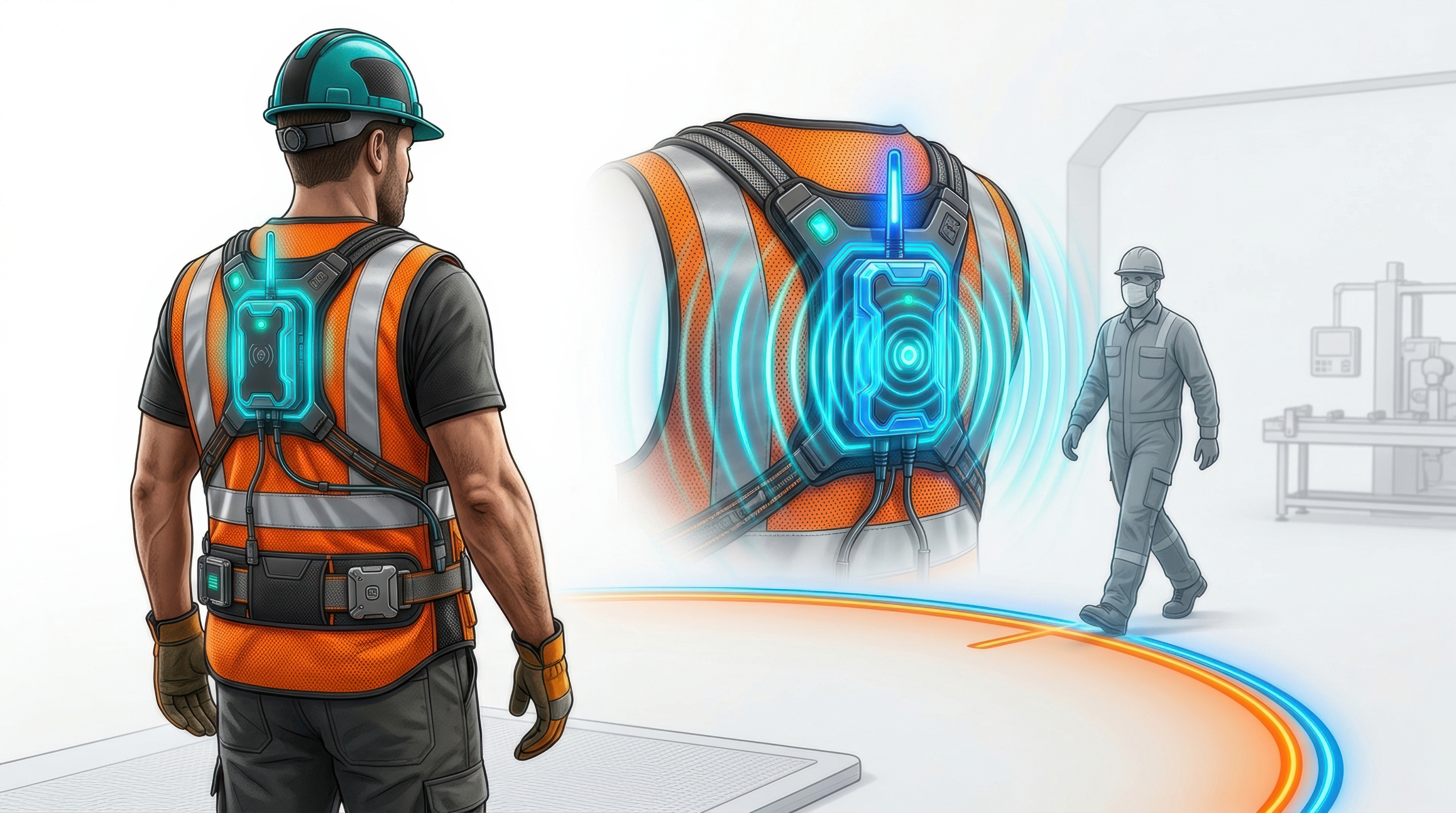
Deloitte has noted that workplace wearables can support worker effectiveness, productivity, and safety. That is the practical value businesses are watching closely: technology that does not just add features, but helps work happen more smoothly.
Smarter Communication and Collaboration
Communication is another area where wearable AI can change workplace routines. Smart glasses and connected headsets can make it easier for workers to share what they are seeing, speak with remote experts, or receive guidance without stepping away from the job.
This can be useful in training, inspections, healthcare support, construction, logistics, maintenance, and field service. A less experienced worker can connect with a senior specialist. A trainer can observe a task from the worker’s point of view. A remote team can troubleshoot a problem without everyone needing to be physically present.
That kind of collaboration is especially valuable for distributed teams. Businesses are often spread across different sites, cities, or time zones. Wearable AI can make remote support feel more immediate and practical.
Real-Time Assistance Can Improve Workflow
AI-powered glasses are not only useful because they are wearable. Their value grows when they can support real-time assistance.
Imagine a worker looking at a machine and receiving step-by-step instructions. A logistics employee getting the next task without checking a handheld scanner. A trainer recording a procedure from their own perspective. A salesperson quickly accessing product details before speaking with a client.
These moments may seem small, but they can improve workflow efficiency. The less time workers spend switching between tools, the more attention they can keep on the actual work.
This is also where devices such as Meta glasses reflect a broader workplace trend. Smart glasses are moving beyond the idea of novelty gadgets and into a category of connected tools that can support communication, visual capture, audio, voice control, and AI-assisted tasks.
Industries Exploring Wearable Technology
Wearable AI has potential across many industries, but the strongest use cases are often in environments where mobility matters.
In manufacturing, wearable devices can support inspections, maintenance, safety checks, and worker training. In logistics, they can help with picking, routing, scanning, and task updates. In healthcare-adjacent settings, they may support communication, documentation, or guided workflows where privacy rules allow.
In construction and engineering, smart glasses can help teams document site progress, communicate with remote specialists, and review instructions without constantly handling tablets or phones. In retail and hospitality, wearables may help staff access product details, inventory information, or guest requests faster.
For professional services, wearable AI may be useful for travel, notes, meetings, voice reminders, and lighter communication during busy days.
The specific use case will differ by industry, but the overall direction is the same: technology is becoming more personal, portable, and context-aware.
AI at Work Is Becoming More Normal
Wearable AI is part of a larger shift in workplace technology. AI is no longer only a back-office tool or something used by technical teams. It is becoming part of daily work, from writing and research to scheduling, summarizing, customer support, and decision-making.
Microsoft’s 2026 Work Trend Index focuses on AI reshaping the state of work, reflecting how quickly businesses are thinking about AI-supported workflows. Wearables are one part of that shift because they bring AI closer to physical tasks, movement, and real-time communication.
As workers become more comfortable using AI in software, it makes sense that AI will also appear in devices they wear.
The Business Case for Wearable AI
For businesses, wearable AI adoption will depend on clear value. Companies will want to know whether devices improve productivity, safety, training, communication, customer experience, or operational efficiency.
There are also important challenges. Privacy, data security, employee trust, device management, battery life, comfort, and cost all matter. Smart glasses with cameras require especially thoughtful policies around recording, consent, storage, and workplace boundaries.
The most successful companies will not adopt wearable AI just because it sounds futuristic. They will use it where it solves a real workflow problem.
Final Thoughts
The future of wearable AI in the workplace is not about replacing people with gadgets. It is about giving professionals better tools for the moments when phones, laptops, and tablets are not ideal.
Hands-free access to information, real-time assistance, remote collaboration, task documentation, and smarter communication can all make work more efficient. As wearable devices become lighter, more comfortable, and more intelligent, they are likely to become a larger part of connected workplace ecosystems.
For businesses, the opportunity is practical: use wearable AI to help people work with more clarity, less friction, and better support wherever the job happens.
Find a Home-Based Business to Start-Up >>> Hundreds of Business Listings.