









































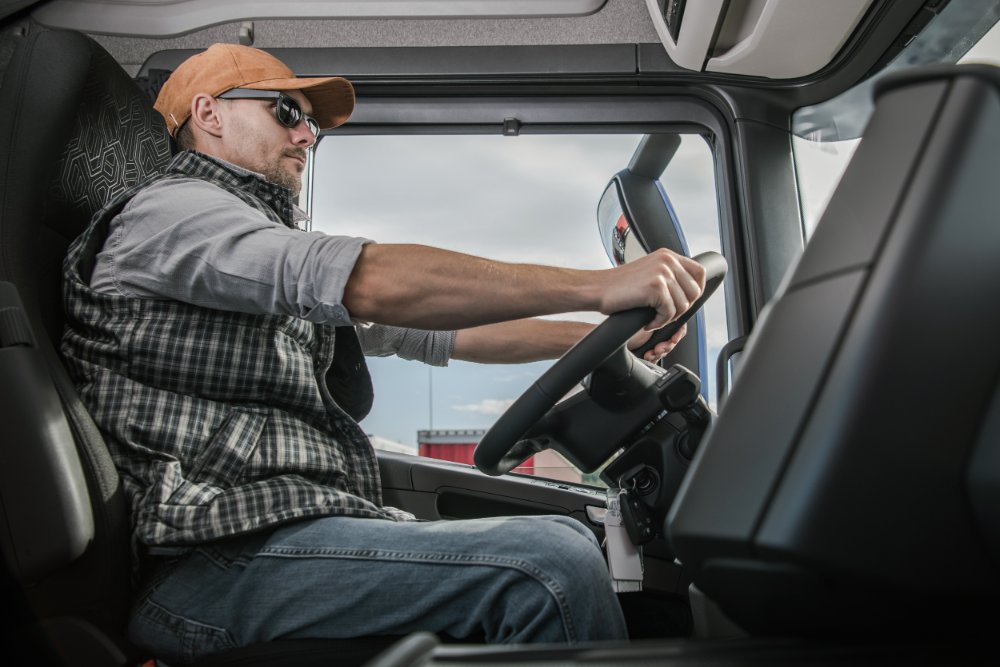
Large commercial trucks are built for transporting heavy loads, but their size also creates visibility challenges that ordinary passenger vehicles do not have. A tractor-trailer can have substantial areas around its front, sides, and rear where the driver may have difficulty seeing nearby vehicles. That limited visibility becomes especially dangerous during lane changes, merges, turns, and heavy traffic.
A blind spot by itself does not automatically establish fault. The important question is how the driver responded to the surrounding traffic and whether reasonable precautions were taken before making a maneuver. When a truck moves into an occupied lane without properly checking its surroundings, the resulting collision can cause significant vehicle damage and serious injuries.
Understanding the Four Major Truck Blind Spots
Truck blind spots are not limited to one location. Their size and position can vary depending on the truck’s design, mirrors, trailer length, and other equipment. The Federal Motor Carrier Safety Administration recognizes that commercial vehicles have substantial areas that drivers may not be able to see directly.
The most important areas include:
- Front blind spot: A truck driver may have limited visibility immediately in front of the cab, making following distance particularly important.
- Left-side blind spot: Vehicles traveling beside the driver’s side can become difficult to see, especially around the trailer area.
- Right-side blind spot: This can be particularly extensive because of the truck’s position, mirrors, and trailer dimensions.
- Rear blind spot: Vehicles directly behind a trailer may be difficult or impossible for the driver to see through ordinary mirrors.
How Blind Spot Truck Accidents Happen
Many blind spot collisions occur during routine driving maneuvers. A truck may begin changing lanes while another vehicle is traveling alongside the trailer. If the driver fails to identify that vehicle before moving over, the truck can strike the smaller vehicle with considerable force.
Other crashes happen when a driver follows too closely, becomes distracted, misjudges another vehicle’s position, or relies too heavily on technology without properly monitoring traffic. The target page also identifies failure to check blind spots, distracted driving, aggressive driving, and inadequate traffic monitoring as potential causes of truck blind spot collisions.
Common Collision Types Linked to Truck Blind Spots
The location of the smaller vehicle often determines the type of crash that follows. A lane-change error can produce a sideswipe, while a vehicle hidden behind a trailer can become involved in a rear-end collision. In some situations, the consequences can be even more serious.
| Collision Type | How It Can Occur | Key Evidence |
| Sideswipe | Truck moves into an occupied lane | Damage patterns, witnesses, cameras |
| Rear-end | Truck fails to see traffic ahead | Vehicle damage, braking evidence |
| T-bone | Truck enters another vehicle’s path | Intersection footage, right-of-way evidence |
| Underride | Smaller vehicle enters the truck’s rear or side area | Vehicle positions, truck equipment |
| Rollover | Sudden maneuver or impact destabilizes truck | Scene photographs, reconstruction |
| Jackknife | Trailer swings relative to tractor | Skid marks, vehicle positions |
Who May Be Responsible for a Blind Spot Collision?
Liability depends on the facts of the individual crash. A truck driver may be responsible when negligent conduct, such as failing to check traffic before changing lanes, causes the collision. A driver of a passenger vehicle can also potentially share responsibility if their conduct contributed to the crash.
The investigation may need to look beyond the two drivers as well. Depending on the circumstances, a trucking company, vehicle owner, maintenance provider, cargo-loading party, or another responsible entity could become relevant. Truck accident cases can involve multiple layers of evidence because commercial vehicles operate within a larger business and regulatory system.
What Evidence Can Strengthen a Truck Accident Claim?
Evidence can disappear quickly after a commercial vehicle collision. Vehicles may be repaired, surveillance footage may be overwritten, and witnesses may become difficult to locate. Acting promptly can help preserve information that may later become important to determining fault.
Useful evidence may include:
- Photographs of vehicle positions and visible damage.
- Dashcam or nearby surveillance footage.
- Names and contact information for witnesses.
- Police reports and accident-scene documentation.
- Medical records and treatment documentation.
- Truck photographs showing mirrors, cameras, and other visibility equipment.
- Available electronic or vehicle data.
- Employment, income, and property-damage records.
Why Legal Investigation Matters in Blind Spot Cases
An insurance company may view a blind spot collision as a simple lane-change accident. That description can leave important questions unanswered. Was the truck driver properly monitoring traffic? Was the turn signal used? How long was the passenger vehicle alongside the truck? Did road conditions affect visibility? Was the truck carrying a properly secured load?
A Blind Spot Truck Accident Attorney can evaluate these questions as part of a broader investigation. Morris, King & Hodge, P.C.’s truck accident resources specifically identify blind spot collisions, inadequate surveillance, lane changes, following too closely, and several types of resulting crashes as important issues in truck accident cases.
Injuries and Financial Losses Can Extend Beyond the Crash
The physical difference between a commercial truck and a passenger vehicle can make the consequences of a collision substantial. Depending on the circumstances, an injured person may require emergency treatment, follow-up appointments, rehabilitation, medication, or extended time away from work.
A claim may involve medical expenses and property damage, along with other losses permitted under applicable law. When an injury affects someone’s ability to work or perform ordinary activities, future consequences may need to be considered rather than focusing only on bills that have already arrived.
What Drivers Should Do After a Truck Blind Spot Collision
The first priority after any crash is immediate safety and appropriate medical attention. Once urgent concerns have been addressed, preserving information can help create a clearer record of the event.
Drivers should avoid guessing about what caused the crash when speaking with others. Instead, they can describe what they personally observed and preserve relevant documents, photographs, and communications. If injuries or significant property damage are involved, obtaining legal advice before resolving the claim may help the person understand the available options.
Conclusion
A truck driver’s inability to see a nearby vehicle can become a serious safety issue when proper precautions are not taken. Blind spot collisions often involve more than a simple question of where two vehicles were positioned. Visibility, lane changes, driver attention, vehicle equipment, road conditions, and the actions of everyone involved may all matter.
For someone injured in a commercial truck collision, a careful investigation can help establish what happened and identify the losses that may be connected to the crash. Preserving evidence early and obtaining informed legal guidance can make it easier to evaluate the claim based on facts rather than assumptions.
Find a Home-Based Business to Start-Up >>> Hundreds of Business Listings.