









































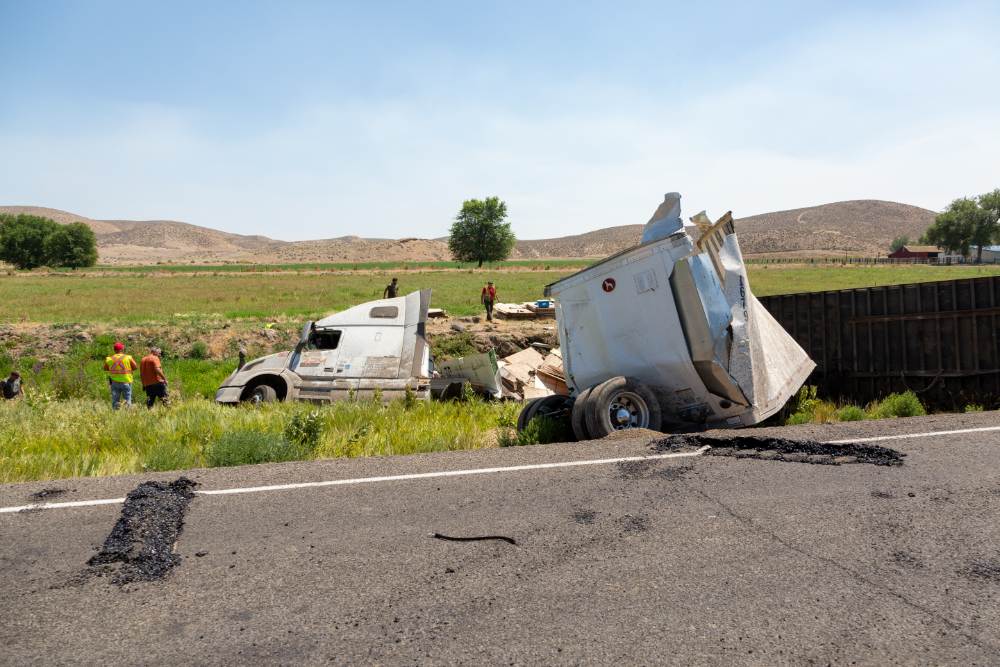
A rollover truck crash can turn an ordinary drive into a life-changing event within seconds. A large commercial vehicle that tips onto its side can strike multiple vehicles, block traffic lanes, scatter cargo, and create serious hazards for everyone nearby. For people involved in the collision, the consequences may include substantial medical treatment, missed work, vehicle damage, and long-term physical limitations.
The difficult part often begins after the wreck. Determining why a truck rolled over is rarely as simple as pointing to the driver. Speed, road conditions, cargo distribution, tire or brake problems, driver fatigue, sudden steering movements, and mechanical failures can all become relevant. A proper investigation looks beyond the final moment and reconstructs the events that led to the rollover.
Why Rollover Truck Crashes Are Especially Complex
A rollover involves forces that can affect the truck, trailer, cargo, and surrounding vehicles in different ways. The Federal Motor Carrier Safety Administration identifies vehicle design and performance, load effects, highway factors, and driver factors as important considerations in rollover prevention.
Cargo is particularly important because the way weight is distributed can influence vehicle stability. A load that shifts during a turn can change the truck’s center of gravity and make maintaining control more difficult. An investigation may therefore need to examine loading procedures rather than focusing solely on the person behind the wheel.
The Cause of a Rollover May Be Hidden in the Details
A truck can roll over after a sudden steering maneuver, but the steering movement itself may not explain why the incident happened. For example, a driver may have swerved to avoid another vehicle, reacted to an obstacle, or attempted to correct an earlier loss of control.
The investigation should therefore establish a timeline. What was happening several seconds before the rollover? How fast was the truck traveling? Was the trailer properly loaded? Were the tires and brakes functioning correctly? Did the roadway present unusual conditions? Was the driver operating within applicable hours-of-service requirements?
Common Factors Investigators Examine After a Rollover
Commercial rollover cases often require several evidence sources to be considered together. The most relevant evidence depends on how the particular crash occurred.
- Driver conduct, including speed, distraction, fatigue, and sudden maneuvers.
- Cargo weight, distribution, loading procedures, and securement.
- Tire condition, brake performance, steering components, and maintenance history.
- Roadway design, surface conditions, weather, visibility, and construction zones.
- Driver qualification, training, dispatch information, and hours-of-service records.
- Electronic data, photographs, surveillance footage, witness statements, and accident-scene evidence.
Who May Be Responsible for a Rollover Truck Crash?
The truck driver is only one possible source of liability. Depending on the circumstances, the trucking company, maintenance contractor, cargo loader, shipper, manufacturer, or another motorist may also become relevant.
A carrier could face questions about driver training, supervision, maintenance, scheduling, or safety policies. A cargo-loading company could become important if an improperly distributed or unsecured load contributed to the rollover. A maintenance provider may need to answer questions if defective brakes, tires, steering components, or another mechanical problem played a role.
Some cases can also involve product-liability issues when a defective component allegedly contributes to the crash. The important point is that responsibility must be established from the facts of the particular accident.
Evidence Preservation Can Make a Major Difference
Commercial trucking companies often maintain records that an injured motorist does not possess. These records can provide information about what the driver and vehicle were doing before the collision.
A careful investigation may seek driver logs, electronic logging device information, inspection reports, maintenance records, dispatch communications, cargo documents, post-crash inspection information, and available electronic vehicle data. St. Louis truck accident practices commonly emphasize obtaining these records quickly because they can be central to determining how a commercial crash occurred.
Video evidence can also be valuable. Traffic cameras, business surveillance systems, dashboard cameras, and nearby vehicles may capture portions of the collision or events immediately before it.
Missouri Comparative Fault Can Change the Value of a Claim
Missouri personal-injury claims can involve comparative fault when more than one party contributed to an accident. If an injured person is found partly responsible, the amount of damages recoverable can be affected by the person’s assigned share of fault.
This issue can become important after a rollover because insurers may argue that another motorist contributed to the collision. They may point to lane position, speed, following distance, or an alleged failure to react.
Those arguments should be evaluated against the available evidence. A percentage suggested by an insurance adjuster is not automatically the final answer. Accident reconstruction, photographs, vehicle damage, witness testimony, roadway evidence, and electronic records may tell a different story.
How a Rollover Truck Claim Is Investigated
If you are searching for a St. Louis Rollover Truck Accident Lawyer, look for experience with commercial-vehicle investigations rather than assuming every personal-injury practice handles rollover cases in the same way.
A serious investigation may begin with the police report and medical records, then move into evidence from the truck and trailer. An attorney may work with accident reconstruction professionals to determine vehicle speed, movement, impact sequence, and the mechanics of the rollover.
The physical evidence can be particularly important. Damage patterns may help establish where contact occurred, while tire marks, debris, roadway measurements, and vehicle positions can help reconstruct the sequence of events.
The investigation may also examine the trucking company’s role. If records show maintenance concerns, repeated safety problems, unusual scheduling, or cargo-handling issues, those facts could become relevant to liability.
The Injuries Can Affect More Than Immediate Medical Bills
Rollover crashes can produce significant injuries because occupants may experience multiple impacts during the collision. Depending on the circumstances, victims may suffer fractures, spinal injuries, traumatic brain injuries, soft-tissue injuries, or other serious conditions.
The financial consequences can continue after emergency treatment ends. Someone may need physical therapy, follow-up appointments, medication, rehabilitation, or future medical care. An injury may also prevent a person from returning to the same job or performing the same duties.
A complete damages assessment should therefore consider both present losses and reasonably supported future consequences. Medical records, employment documentation, wage information, and professional opinions can help establish the extent of those losses.
What to Do After a Rollover Truck Accident
The first priority after any serious collision is getting to safety and obtaining appropriate medical attention. Once immediate concerns are handled, preserving information can help with any later claim.
- Obtain the available crash-report information and document the location.
- Photograph the vehicles, roadway, traffic controls, and visible damage when it is safe.
- Keep medical records, bills, prescriptions, treatment notes, and wage-loss documentation.
- Save communications received from trucking companies and insurance representatives.
- Record the names and contact information of witnesses when possible.
- Avoid making assumptions about fault before the evidence has been reviewed.
Choosing the Right Legal Help for a Rollover Case
A rollover claim can involve trucking regulations, Missouri negligence law, commercial insurance coverage, accident reconstruction, medical evidence, and several potentially responsible parties. That combination makes relevant experience particularly important.
When evaluating a St. Louis Rollover Truck Accident Lawyer, ask how the attorney handles trucking records, evidence preservation, accident reconstruction, comparative fault, and claims involving multiple defendants.
A good consultation should also involve realistic expectations. No responsible attorney can guarantee a specific settlement or verdict before reviewing the evidence. What counsel can do is explain the legal issues, identify important evidence, and outline the potential paths forward.
Conclusion
A rollover truck crash raises questions that cannot always be answered by looking at the overturned vehicle alone. The truck’s speed, cargo, maintenance history, driver conduct, roadway conditions, electronic records, and events immediately before the collision can all help explain why the crash occurred.
For victims, the consequences may continue long after the accident scene has been cleared. Medical treatment, lost income, vehicle damage, rehabilitation, and long-term limitations can create a financial burden at the same time a person is trying to recover.
A careful investigation can help identify the responsible parties and establish how the collision affected the injured person. If you need a St. Louis Rollover Truck Accident Lawyer, choosing counsel familiar with commercial trucking evidence and Missouri injury claims can provide a clearer path for evaluating your legal options.
Find a Home-Based Business to Start-Up >>> Hundreds of Business Listings.