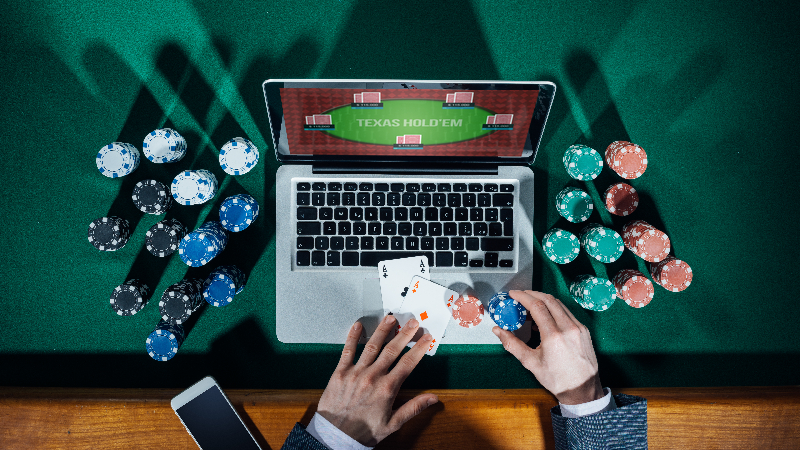










































Ask a room full of home-based founders what a poker sweepstakes site “is,” and most answer without blinking: an online card room with a friendlier signup. That answer feels obvious, and it is wrong. The card game is the product’s front door, not its business model. Underneath sits something a home entrepreneur will recognize once they stop looking at the felt and start looking at the paperwork. It is a promotional-law business, built on the same “no purchase necessary” scaffolding that powers cereal-box giveaways and retail prize draws.
That distinction is not pedantry. Home entrepreneurs spend their weeks choosing a legal structure, writing terms of service, and testing revenue models, and this category gets misread because people skip the paperwork and stare at the cards. If you want the mechanics laid out plainly rather than mythologized, Lineups’ review of one poker sweepstakes platform walks through how Global Poker’s dual-currency system works, what Gold Coins and Sweeps Coins each do, and why the redemption path is the whole point. Read it the way you would read a competitor’s pricing page.
Here is the frame that makes the rest click that it is a promotional-law business. This is a sweepstakes promotion, not real-money gambling, built for players 18 and older. Once you accept that, the signals below stop looking like gimmicks and start looking like deliberate compliance choices.
The Myth, Stated Plainly
The myth is that you are paying to sit at a poker table for money. Follow the cash and it falls apart. Nobody is required to buy anything to play or to win, which is the exact line the U.S. sweepstakes framework was built around. Remove mandatory payment and you remove “consideration,” one of the three legal elements of gambling. What is left is a promotion. The poker is the wrapper; the promotional-law structure is the entity a founder should study.
The Signals That Give It Away
A promotional-law business leaves fingerprints. Learn to spot them and you can classify almost any of these platforms in about two minutes, without playing a hand.
Dual currency is the first fingerprint: a play currency you use for the games and a promotional currency that can eventually be redeemed. The moment a product runs two currencies with two different jobs, someone drafted rules to keep them legally separate.
The second is a free entry path that actually functions. Mail-in requests, daily bonuses, and social giveaways are not decoration. They are the mechanism that keeps purchase optional, which keeps the whole thing a promotion rather than a wager.
The third is geo-restriction that looks arbitrary until you read it as compliance. Access gets blocked in a handful of states, commonly Washington, Idaho, Michigan, and Nevada, because promotional law is written state by state. A card room would not care where you live in that granular a way. A promotions business has to.
How to Read Each Signal
Read dual currency as a firewall, not a gimmick. The play token has no cash value by design, so the platform can market it freely. Read the free-entry path as the load-bearing wall: pull it out and the structure legally collapses into gambling. Read the geo-blocks as a map of where counsel got comfortable. Each signal answers a legal question, not a gameplay one.
Claim Versus Reality
Put the common claims beside what the structure actually is, and the pattern is hard to miss.
| Common Claim | Promotional-Law Reality |
|---|---|
| “It is an online card room.” | It is a sweepstakes promotion that happens to use poker. |
| “You buy chips to gamble.” | Purchases are optional; free entry must always exist. |
| “The play currency is money.” | Gold Coins carry no cash value and cannot be redeemed. |
| “Blocked states are a tech glitch.” | Blocks map to state promotional and gaming law. |
| “Winning means a cash payout.” | Redemption follows sweepstakes rules and eligibility checks. |
Common Misreads
The costliest misread is treating the play currency as money. It is a promotional token with no redemption value, and confusing the two leads people to overspend chasing something that was never cash. A second is assuming the free entry path is a loophole nobody uses. It is the opposite, the feature that keeps the model legal for a promotional-law business. The third is reading geo-blocks as weakness; they are evidence someone did the state-by-state homework, a maturity signal rather than a red flag.
A Disciplined Approach for the Curious Founder
Treat these platforms like any of the online business models home entrepreneurs are testing this year. Read the official rules first, as you would a franchise disclosure. Trace the redemption path end to end, note where eligibility checks sit, and map the currencies to their jobs. Then, if you play, set a fixed entertainment budget and treat the free-entry route as the default.
One honest note belongs here. A promotional structure changes the legal category, not the math. Outcomes inside the games are driven by odds and random deals, and no reading of the rulebook removes the built-in edge. This is entertainment for adults 18 and older, no purchase is necessary, and it is void where prohibited. If play ever stops feeling optional, help is available at 1-800-GAMBLER.
FAQ
Is a poker sweepstakes platform safe to use?
Safety here means two things: a real free-entry path and clear, published rules. A legitimate promotion states “no purchase necessary” plainly and keeps the redemption terms accessible. Read those before you sign up.
Do I have to spend money to play?
No. Mandatory payment would turn a promotion into gambling, so a free entry path always exists. Purchasing is a convenience, not a requirement, and it does not increase your odds.
Why is it blocked in some states?
Promotional and gaming law is written state by state, so operators restrict access where the rules are unclear or unfavorable, commonly Washington, Idaho, Michigan, and Nevada. The blocks reflect legal caution, not a glitch.
Does the free entry path really give the same chance to win?
Yes, that equal chance is the legal core of the model. A purchase cannot improve your odds, which keeps the promotion separate from gambling.
How should I play responsibly?
Set a fixed entertainment budget, treat the free-entry route as your default, and remember the games run on odds no rulebook removes. This is for adults 18 and older. If it stops feeling fun, call 1-800-GAMBLER.
Find a Home-Based Business to Start-Up >>> Hundreds of Business Listings.