










































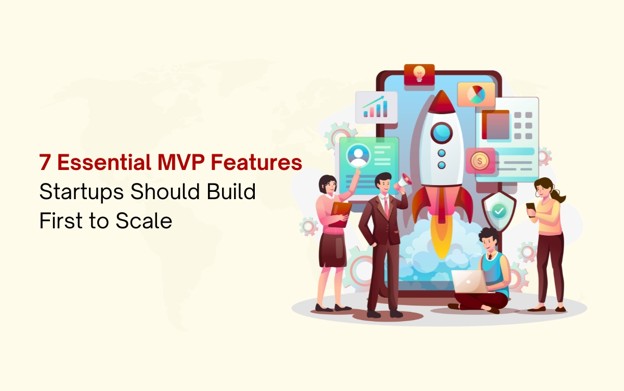
Choosing the right MVP features is crucial for startups to quickly validate their product ideas and avoid wasted resources. By focusing on essential features, you can build a minimum viable product that solves user needs and drives early engagement.
Building the right MVP isn’t about adding every feature, but about solving a core pain point effectively for early users. With the right features in place, you’ll be able to gather user feedback, iterate based on insights, and set the stage for scaling your product. This blog outlines the 7 MVP features startups should build first to launch with confidence and gather valuable insights.
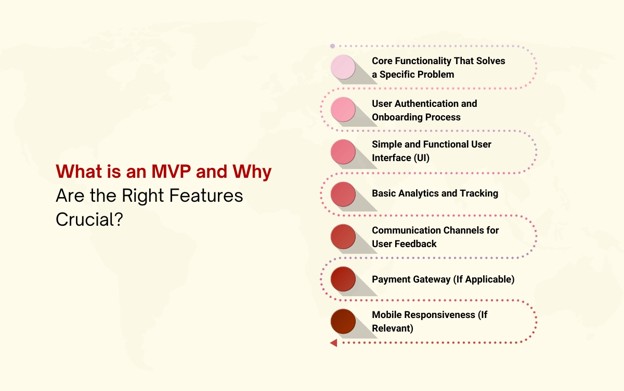
What is an MVP and Why Are the Right Features Crucial?
An MVP (Minimum Viable Product) is the simplest version of your product that allows you to test your core idea with real users while saving time and resources. Instead of building a comprehensive MVP, focus on the essential features that directly address a specific pain point for your target audience.
According to Gartner the failure rate is almost 40-80 % in the software industry. That is why a proper MVP with right features can be your saviour.
So, having a trusted MVP development partner can help you validate ideas and iterate quickly to build a product that the market needs.
Why the Right MVP Features Matter when startups should build first:
-
Product-Market Fit:
By building an MVP with the right features, you increase your chances of achieving product-market fit. It helps you quickly identify whether there’s a market demand for your solution.
-
Lean Startup Method:
The lean startup methodology emphasizes building a minimum viable product that can be iterated upon. This allows you to validate your assumptions early and accelerate the development process based on real user feedback.
-
Cost Efficiency:
Focusing on core functionality ensures you invest only in the features necessary to test your idea, reducing development time and costs.
Feature #1: Core Functionality That Solves a Specific Problem
The first MVP feature startups should build is to always address the core problem your product is solving. Focusing on core functionality ensures your MVP does exactly what it needs to: validate your product idea and prove its value to real users.
The Problem:
Many startups fall into the trap of overcomplicating their MVP by adding unnecessary features. This results in a prototype that doesn’t focus on the core value proposition and makes it difficult to assess whether you’ve truly met the user’s needs.
Why It’s Crucial:
-
Market Validation:
By focusing on solving a specific problem exceptionally well, you can determine whether users are willing to engage with your product and whether it meets a market need.
-
Clear Focus:
This approach gives you a clear path to success by ensuring that the MVP solves the most pressing pain point for your target audience.
-
Foundation for Future Features:
Once the core functionality is validated, you can confidently move forward with additional features based on user feedback and the iteration process.
Feature #2: User Authentication and Onboarding Process
The second crucial MVP feature is a user authentication and onboarding process. This feature is essential for providing a seamless entry point for users and ensuring that you collect meaningful data to refine the product.
The Problem:
A common mistake for many startups is neglecting the user experience from the very beginning. Without an easy way for users to get started, you may struggle to retain early adopters, who drop off before fully engaging with the product.
Why It’s Crucial:
-
First Impressions Matter:
A smooth, intuitive onboarding process ensures that early users don’t get frustrated by complex setups or unclear steps.
-
Gather Insights Early:
The onboarding phase is an opportunity to collect valuable user feedback about how your product features are perceived and whether they meet user needs.
-
Improve Retention:
A simple user authentication process and clear onboarding increase the chances of retaining early adopters, which are critical for gathering the insights necessary for product development and iteration.
Feature #3: Simple and Functional User Interface (UI)
A clean and intuitive user interface (UI) is a must-have MVP feature that a startup should build to ensure its product is easy to navigate and visually appealing. While it doesn’t need to be perfect, the UI must be functional and focused on the core features.
The Problem:
Many startups overlook user experience during the MVP phase, resulting in a confusing or unpolished UI. This can deter early adopters from fully engaging with your product and providing valuable user feedback.
Why It’s Crucial:
-
User Engagement:
A simple and well-designed UI makes it easier for real users to interact with your product and explore its features without feeling overwhelmed.
-
First Impressions Count:
The UI is often the first thing users notice. A clean, intuitive interface sets a positive tone and encourages users to keep using your product.
-
Scalability:
Starting with a solid UI design makes updates and additions easier as your product grows. A good UI framework sets the foundation for future iterations and product development.
Feature #4: Basic Analytics and Tracking
Integrating analytics into your MVP is crucial for understanding how users are interacting with your product. Without basic tracking, you won’t have the data needed to make informed decisions about your MVP’s performance and its core features.
The Problem:
Failing to track key metrics early on can lead to missing valuable insights into your user base. You won’t know what’s working, what isn’t, and how to improve the product based on real feedback.
Why It’s Crucial:
-
Data-Driven Decisions:
With analytics in place, you can measure user behavior, engagement, and conversion rates, allowing you to refine the product and ensure that it aligns with user needs.
-
Validate Assumptions:
By tracking key metrics, you can validate whether the product solves the core problem for your target audience, helping you understand whether you’re on the right track.
-
Optimize Iteration:
Analytics provide the data you need to iterate quickly, improving the product after each cycle and ensuring it gets closer to fulfilling your product idea and meeting market demand.
Feature #5: Communication Channels for User Feedback
A crucial MVP feature that’s often overlooked is providing communication channels for users to give feedback. Allowing real users to voice their opinions early helps you gather insights on the product’s strengths and weaknesses and refine it accordingly.
The Problem:
Without user feedback channels, you risk building a product without knowing whether it truly addresses user needs. You might think you’ve solved a problem, but without feedback, you can’t be sure if the solution resonates with your target audience.
Why It’s Crucial:
-
Iterate Based on Feedback:
User feedback provides essential insights to refine the product and improve its core functionality. This helps you adjust features and better meet user expectations.
-
Build Trust with Users:
Offering an easy way for users to provide feedback, such as through in-app surveys or feedback forms, builds trust and makes them feel heard, improving overall user experience.
-
Validate Product-Market Fit:
Feedback channels help you assess whether your MVP is hitting the mark with your target audience and whether your value proposition is clear and compelling.
Feature #6: Payment Gateway (If Applicable)
If your MVP involves transactions or paid features, integrating a payment gateway should be one of your first priorities. Even in the early stages, it’s important to test your revenue model and validate whether users are willing to pay for your product.
The Problem:
Many startups delay adding payment functionality to their MVP, thinking it’s too early. However, this can lead to missing an opportunity to validate willingness to pay and adjust the pricing model based on real data.
Why It’s Crucial:
-
Validate Willingness to Pay:
Integrating a payment system early lets you test whether users are willing to pay for the solution you’re offering, a key aspect of product-market fit.
-
Revenue Model Testing:
A payment gateway gives you the chance to test your revenue model (subscription, one-time payment, etc.) and refine it based on early usage.
-
Trust and Credibility:
Offering a secure payment gateway increases trust and credibility, reassuring users that their transactions are safe and providing an easier path to monetization.
Feature #7: Mobile Responsiveness (If Relevant)
In today’s digital landscape, ensuring that your MVP is mobile-responsive is crucial but similarly, it needs to be clear that not all MVPs have to go for a mobile app. More users are accessing products and services via smartphones, and an MVP app development that doesn’t cater to mobile users could limit your potential user base.
The Problem:
Many startups overlook or overestimate mobile optimization, thinking it’s too early to worry about or worry too much. However, with more than 50% of website traffic coming from mobile devices, neglecting mobile responsiveness can significantly impact your user engagement. But, starting a mobile app alongside mvp is not always a wise choice.
Why It’s Crucial:
-
Wider Reach:
A mobile-responsive MVP helps you reach a broader audience by ensuring that your product works well on all devices. Which is especially important if you’re looking to attract early users or early adopters.
-
User Experience:
A product that doesn’t function well on mobile can create a poor user experience, driving potential users away and impacting your MVP launch.
-
Scalability:
Starting with mobile responsiveness in mind sets the foundation for future development and scalability as your product grows.
Conclusion: Building the Right MVP Features to Ensure Success
Selecting the right MVP features is crucial for startups to build, quickly validate their product idea, and confirm whether it meets user needs. By focusing on solving a specific pain point with the core functionality, ensuring a seamless user onboarding process, and prioritizing key features, you lay a strong foundation for successful MVP development for tech startups.
Incorporating features such as a simple UI design, basic analytics, and user feedback channels will help your development team refine the product and ensure you’re addressing real market demand. As your product evolves, adding new features based on real user feedback will drive future iterations and scalability, especially when following an agile development approach.
By focusing on these core features, you’re not only setting up for a successful MVP launch but also laying the foundation for an agile MVP that can evolve based on what your users truly need.
FAQ
1. What Are the Key Features to Include in an MVP?
The key features of an MVP should focus on solving a core problem, offering essential functionality, providing an easy user interface, including user feedback channels, and ensuring onboarding, while keeping the product simple and quick to launch.
2. How Long Does It Take to Launch an MVP?
The time-to-market for an MVP is generally shorter than for a full product. It typically takes a few months to build a version of a product with core features to test market demand and gather initial feedback.
3. Why Is a Mobile App Important for an MVP?
A mobile app ensures your MVP reaches users who prefer accessing products on mobile devices. It enhances the user experience, helping you gather valuable user feedback from a broader audience and accelerates the MVP development process.
4. How Does an MVP Help Startups Reduce Risks?
An MVP allows startups to test assumptions early and validate a product idea with real users, reducing the risk of investing in a full product that might not meet market demand or solve user pain points.
5. How Do I Choose the Right MVP Development Company?
Look for an MVP development partner with expertise in agile practices, a solid track record in MVP software development, and the ability to help you validate ideas and iterate quickly to build a product that fits user needs.
Find a Home-Based Business to Start-Up >>> Hundreds of Business Listings.


