








































There is also something really unique about an advent calendar that most other seasonal things can’t quite nail. It’s not just a one-off buy; it’s twenty-four (or however many) little moments, over weeks, that each add to the excitement of the next. That extended, repeated experience is exactly why the Advent Calendar packaging can mean more than a normal seasonal one. The packaging isn’t just protecting but it’s part of the item being sold.
Why Advent Calendars Are a Packaging Challenge
Most seasonal products open only once. Advent calendars open every day, sometimes for upwards of three weeks at a stretch. That repetitive stress puts serious structural requirements on the box – the flaps must endure hundreds of repeated openings and closings, each compartment must remain able to contain the lovely chocolates even after small (or very hungry) hands have been repeatedly reaching into it each day, and the whole thing must stand up to weeks on display on a table or chimney-piece without looking battered by the time December 25th arrives.
Much more of a design challenge than a box like a gift box that is once opened and set aside. The folds, the doors, and the perforations on the advent calendar box must all be designed with multiple uses in mind, rather than just that one unboxing moment.
Compartment Design: The Heart of the Product
The compartments are really what make an advent calendar work, and they are much more difficult to do than you think. They have to open effortlessly without ripping, close at the right time, and keep what is in them—be it chocolate, little toys, sample-sized cosmetics, or small bottles of booze—in place so it doesn’t move around and drop into the wrong space.
Numbers can be more important than you think as well. Good placement of the numbers on each compartment will save you the aggravation of the wrong person opening the door on day twelve when it’s only day three. Some brands go the more creative route and use illustrated numbers or seasonal icons instead of normal numbers.
If your brand is manufacturing large quantities, one of the major issues you are likely to encounter when ordering Advent Calendar Wholesale is consistency. When you’re knocking out thousands of units, it’s not just about ensuring that every compartment opens and closes the same way in each individual box, but that the entire batch is uniform. If a batch has just a tiny proportion of its boxes with compartments that aren’t secure, you’ll find your customer complaints echoing through the online space via social media reviews and unboxing videos.
Structure and Material: Built to Last the Season
Most advent calendars are still cardboard for many reasons; it’s cheap, light, and easily die-cut into the types of intricate compartment shapes that are very difficult to make with softer paper-based packaging. In terms of durability, the thickness of the cardboard is far more important than it is for packaging meant for one use.
Rigid board is becoming more common in premium advents, especially in the spirits, beauty, and luxury gifting markets. It provides a more robust, higher-quality feel and also generally looks better for photographing, which has become almost more important than the initial purchase in recent years. If the calendar isn’t viewed as an attractive stocking filler but a luxury product, the premium price of the rigid structure will normally be seen in the consumer perception.
Printing That Builds Anticipation
Visual design is a much bigger factor in the successful packaging of advent calendars than with most other product types, mainly because the box remains visible for a lot longer than any short-term application. Advent Packaging Boxes with a season-appropriate drawing—winter scenes, joyful figures, warm colour schemes—are more successful because they are likely to be sitting somewhere seen throughout all of December.
A foil detail is a popular addition to most, whether it be gold or silver or even red for the holiday season; it just adds a bit of glamour to a design and really catches the light under the Christmas lights. Matte can be more sophisticated and elegant, more commonly seen on the higher-end brands, whereas gloss adds vibrancy and works well with fun, family graphics aimed at children.
Here are a few examples of brands using interactive printed elements — scratch-off numbers, concealed pictures hidden behind each door, or tiny printed notes associated with each day. These are really just tiny added complications to production, but they help give the impression of thoughtful design rather than a pre-fab product.
Sizing and Layout Considerations
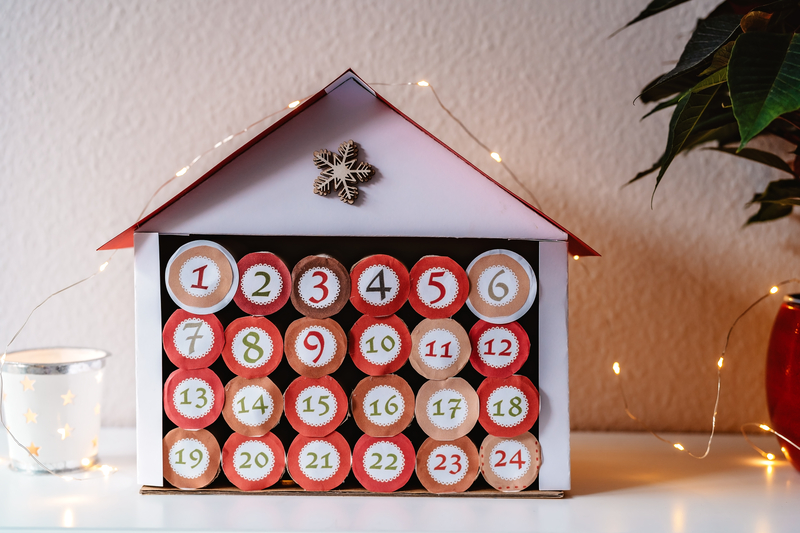
Advent calendars appear in all sorts of formats – flat design for wall-hanging, box calendars you can stand on a table, drawers, house-shaped calendars with compartments built into the house shape itself, as well as many variations thereof. Each needs packaging in order to meet its own strict design criteria. The flat calendar should stay flat, not bow or curl when hung on a door or wall, whereas the standing design needs a solid base so that it does not fall over when several compartments have been emptied and the balance shifts.
If you have any brand with several product ranges within a calendar (for example, a mixture of chocolate and small toys, etc), then the compartment sizing should reflect the largest item within the range, even if the majority of the other compartments will be smaller items.
This is normally a good general rule to follow to prevent either wasting a lot of space or worse, having items that don’t fit properly into the compartments, and so detracting from the overall feel of the finished product.
Sustainability in a High-Waste Season
The holidays also mean a lot of packaging waste, and advent calendars—covering dozens of little compartments—may be heavier on packaging than regular packaging itself. This has encouraged an increasing number of brands to switch to recyclable cardboard, eliminate plastic elements, and use soy-based or water-based inks for printing.
Reusable calendar formats have also been introduced—designs that can be filled up again the following year rather than thrown away each season—that definitely appeal to eco-conscious customers, while keeping the same holiday magic.
The Wholesale Side of the Business
In bulk, if you’re a retailer or brand ordering advent calendar packaging, you should be ordering far in advance of the Christmas market. The lead times for custom compartment structures are longer than normal box orders due to the complexities of die-cutting and assembly. If you wait until the last minute, you’re likely to be left with limited options and under pressure to produce a rush job that limits quality; not something you want for a product based on visual appeal!
Final Thoughts
Advent calendar packaging is definitely a different experience. It’s not a one-off opening experience but a long-term, month-long engagement between the product and the opener, door a day. Creating the right format, making sure the compartments stay intact over the weeks of constant use, balancing that with shelf appeal for a month — it’s definitely a challenge.
But when done well, an advent calendar becomes more than just a seasonal gift with a unique daily experience that customers truly anticipate.
Find a Home-Based Business to Start-Up >>> Hundreds of Business Listings.