









































Quick Answer
GFCI vs AFCI comes down to what each device guards. A ground fault interrupter watches for current leaking off its intended path and cuts power fast enough to stop a shock, usually in wet zones like bathrooms and kitchens. An arc fault unit detects the erratic sparking inside damaged wiring that can start a fire. Most homes need both, placed where local codes call for each one.
Introduction
Picture a breaker that trips every time you run the microwave and the toaster together, with no obvious problem in sight. That frustration is usually a protective component doing its job, even when the cause feels invisible. Modern houses rely on a quiet layer of safety built into the wiring, yet most people never think about it until something sparks or goes dark.
These small parts carry an outsized responsibility. Knowing how they differ helps homeowners ask sharper questions during electrical safety inspections and understand why a licensed contractor suggests one fix over another. The right safeguard depends on the room, the moisture, and the age of the cabling behind the walls.
The reality is that two technologies, GFCI vs AFCI, handle two very different dangers. One keeps people from being shocked, while the other keeps wiring from igniting a blaze.
How These Two Safeguards Actually Work
Every circuit carries a balance of current flowing out along the hot wire and back along the neutral. When that balance breaks, or when the flow turns unstable, trouble follows. Two specialized protectors watch for these faults, and each responds to a different warning sign.
The Hazards They Catch
A standard breaker reacts only to overloads and shorts, so it shields the cabling rather than the people nearby. The more capable electrical safety devices close that gap by sensing subtler faults before anyone gets hurt.
- A ground fault happens when current slips its intended loop, often through water or a person, creating a shock risk a plain breaker would miss.
- An arc fault appears when electricity jumps across a frayed or loose joint, throwing off enough heat to ignite framing or insulation.
- A dual-function model handles both threats on one line, which suits spaces where damp air and hidden cabling overlap.
Where Each One Belongs
Placement follows the conditions in the room. Splash-prone areas call for shock defence, while bedrooms and hallways gain more from arc sensing because of the conductors tucked inside the walls. A careful GFCI outlet installation in a kitchen or bath covers the exact spots where wet hands and live metal tend to meet.
Small Tip: Press the test button on any protective receptacle monthly. If it refuses to click off and cut power, the unit has failed inside and needs replacing, however new it looks.
The upshot is a layered defence, with each guardian matched to the threat it reads best.
Picking the Right Spot for Protection

Once you know which danger a circuit faces, the next call is where the safeguard physically sits. The same protection can ride at the outlet or back at the panel, and each spot brings trade-offs worth weighing before work starts.
At the Outlet or at the Panel
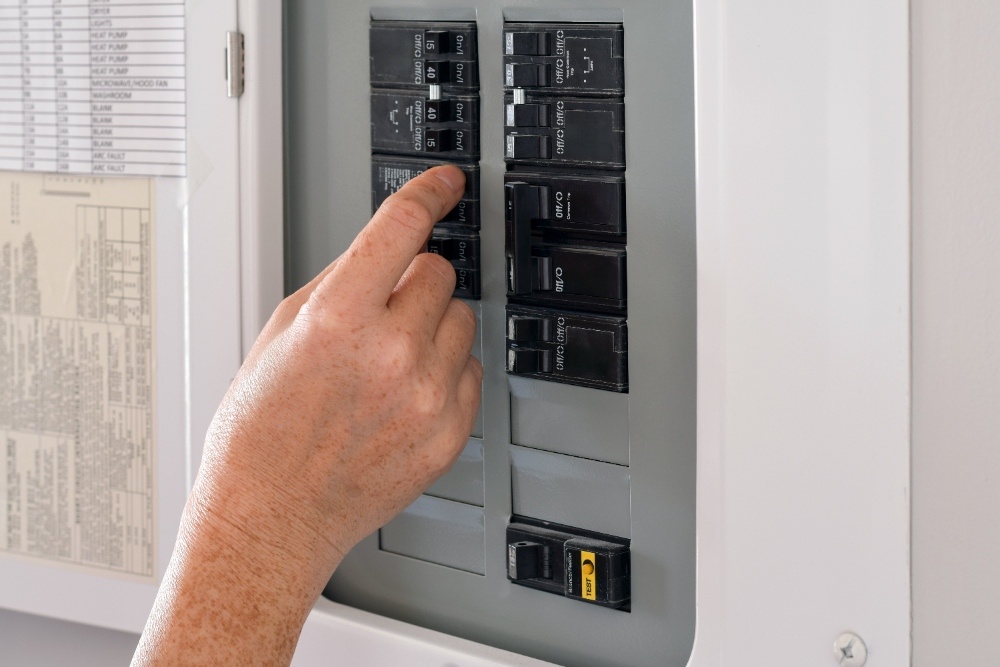
A protected receptacle covers the point of use plus anything wired downstream from it, a neat remedy for a single trouble spot. A panel-mounted version instead shields a whole run from the source. An AFCI breaker lives in the service panel and watches the entire line for the jittery sparking that flags failing conductors.
The table below sets the two methods side by side across the factors that usually decide the matter.
| Factor | Receptacle Unit | Panel-Mounted Unit |
| Coverage | One outlet plus downstream points | Whole line from the panel |
| Retrofit cost | Lower, swapped in minutes | Higher, panel work needed |
| Best use | Targeted wet spots | Whole-room fire defence |
| Reset access | At the outlet | At the panel |
As the comparison makes clear, point-of-use parts win on cost and ease, while panel hardware delivers wider circuit breaker protection through rooms full of concealed cabling.
Fitting the Method to the House
Older homes with shared neutrals or tired conductors often respond better to panel-based coverage, since one switch can secure a long, tangled run.
- Confirm the line type and what it feeds before buying hardware.
- Pair damp zones with point-of-use shock defence.
- Save panel units for whole-line fire cover.
Mark every protected line on the panel directory so a tripped part is fast to find later. The decision rests on coverage, building age, and budget rather than any single rule.
Solving Constant Trips and Staying Safe
A safeguard that keeps killing power feels broken, yet it is often reading a real condition that earns attention. Sorting a true fault from a compatibility quirk is where many homeowners stall, and where rival guides go quiet.
Reading a Trip the Right Way
Not every shutoff points to damaged cabling. Some trips trace to the gear plugged in or to how the line was first wired. Frequent causes include the following.
- Older motor-driven machines, such as vacuums or treadmills, whose brushes echo the pattern of a hazardous arc.
- Shared neutral wiring across two lines, which can puzzle a sensor expecting one clean return.
- Long cable stretches sitting near electromagnetic noise from dimmers or radios.
- Damp creeping into an outdoor box after a storm, which the local climate makes worth a seasonal check.
Habits That Keep Units Honest
Small routines separate dependable cover from a false sense of calm. Treat the steps below as a rhythm, not a chore.
- Test each part monthly with its own button, then reset.
- Retest after a storm or after any work on the line.
- Swap out any unit that will not trip or will not reset.
Pro Tip: Keep a short dated log of test results by the panel. A part that trips more often over time is flagging wear, not bad luck.
When trouble lingers after the easy causes clear, the wiring itself earns a professional look. A licensed electrician can pin down whether the flaw sits in the part, the cable, or the connected load.
Making Sense of GFCI vs AFCI for a Safer Home
Both protectors save lives in ways a plain breaker cannot, one by halting shocks and the other by smothering fires before they spread. Matching the right safeguard to each room, then testing it on a steady schedule, keeps that protection trustworthy for years. For any homeowner weighing GFCI vs AFCI, the takeaway is simple: these are complementary tools, not rivals, and a code-compliant home usually leans on both.
Find a Home-Based Business to Start-Up >>> Hundreds of Business Listings.