








































Most vending operators do not realize the extent of loss incurred when machines are not able to accept modern payment methods.
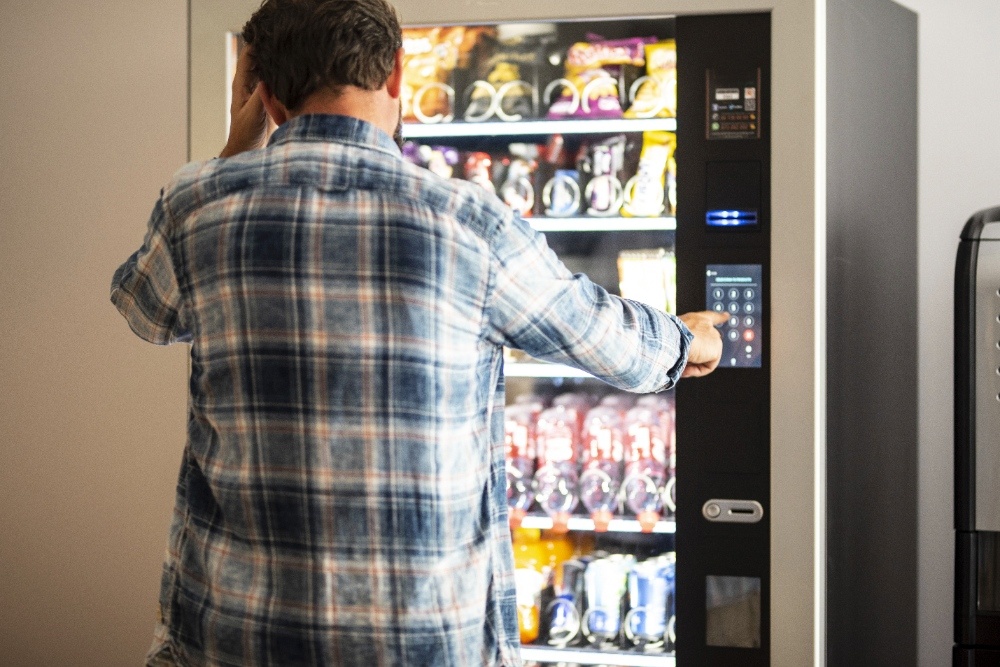
A customer who is in front of an automated machine hardly has accurate change nowadays. Hence, when the payment is a bit slow or restricted, the purchase may be dropped within a few seconds. Over time, these minor missed transactions accumulate into a considerable decline in daily sales across various machines.
From a technical standpoint, the transition is simple: it involves moving into vending machines that have built-in credit card and contactless payment options. These solutions remove friction at the point of purchase and ensure machines stay aligned with how people pay today. In addition to payment, most of these systems also enhance machine performance visibility and help operators minimize downtime and operational inefficiencies.
This article provides an overview of the top providers that offer credit card reader solutions for vending machines.
1. Nayax
The current market of the vending environment has been changed into full-stack platforms, and Nayax is not an exception. A vending machine with credit card reader ecosystem is no longer just about accepting payments. It involves the integration of machines, transaction data, and customer behavior into a unified operation. Nayax evolves in this direction by integrating the payment hardware, telemetry, and the management software into a unified solution.
Moreover, they help operators to stop using disjointed vending infrastructure. They do not have to balance between individual card readers, reporting software, and inventory tracking platforms, but operate on the same centralized dashboard.
Smaller operators can run a smaller number of machines and scale up slowly, whereas larger vending fleets can run thousands of endpoints on a shared system. Real-time monitoring also enables the operator to identify the stock problems, technological shortcomings, and maintenance requirements before they turn into a loss of sales. Studies released indicate that IoT-based unattended retail systems enhance operational efficiency and minimize downtime.
2. Cantaloupe

Cantaloupe pays intense attention to end-to-end vending payment infrastructure, and it is used intensively in North America. Its systems are designed so that operators would tend to have predictable transaction processing and reliable backend reporting without complicated customization. Overall, the emphasis is on stability and consistent payment flow across large machine networks.
One of the company’s core strengths is reliability in high-volume environments. A lot of vending operators, rather than focusing on advanced feature sets, focus on uptime, and Cantaloupe fits that requirement. This is particularly critical in schools, hospitals, and transportation centers where vending machines should be constantly operational without any delays.
Studies on the cashless retail setting indicate that better transaction reliability is strongly associated with better customer retention in automated retail systems. This, in turn, solidifies the impact of payment stability directly on repetition behavior and the sustaining of long-term revenue performance in vending operations.
3. 365 Retail Markets
365 Retail Markets is a driven micro-market and unattended retail business. The company is not typical of traditional vending-focused providers as it broadens into wider self-checkout ecosystems, which integrate vending, kiosks, and grab-and-go types of retail into a single model.
Its solutions are often implemented in office breakrooms and corporate settings where vending machines form a part of a broader self-service system. In this context, this strategy does not encourage single-machine optimization but instead manages the whole environment that involves numerous retail touchpoints to serve employees and visitors.
The platform combines payment acceptance, inventory management, and user engagement in a manner that enables greater basket sizes than what is afforded by traditional vending machines. As a result, operators benefit from increased average transaction value rather than just transaction volume, which changes the economics of unattended retail locations.
4. Square

Square is widely known for small business payment systems, but it has also expanded into unattended retail solutions. Its entry into vending-related environments is driven by simplicity and fast deployment rather than deep vending specialization or enterprise-level customization.
Operators often choose Square when they want a quick setup without complex hardware integration or long onboarding cycles. The system supports card payments, mobile wallets, and basic reporting features, making it suitable for small-scale vending operations or pilot deployments where speed matters more than advanced infrastructure.
However, Square is less specialized in machine telemetry or vending-specific optimization. That means operators using Square typically need additional tools for inventory tracking and machine-level diagnostics. Despite this limitation, Square still plays an important role in lowering the barrier to entry for operators moving from cash-based vending to digital payments.
5. Avanti Markets
Avanti Markets is very concentrated on micro-markets and internal retailing, particularly in the workplace. Its systems are modeled after controlled settings like offices, warehouses, and campuses, where vending machines are included in a larger system of employee conveniences. This setup allows businesses to create a more tailored retail experience within private environments. It also supports consistent usage from a defined group of users.
Contrary to conventional vending suppliers, Avanti focuses on customer experience within intimate settings. Specifically, that encompasses product diversity, self-check-out machines, and in-built payment mechanisms that accommodate frictionless employee shopping.
As a result, operators enjoy increased transaction values as opposed to traditional vending machines. This is due, to a significant extent, to the fact that micro-markets enable greater product diversification and a more liberal shopping experience.
6. Cardknox

Cardknox operates as a payment gateway rather than a full vending system provider. It enables vending operators and hardware manufacturers to integrate secure credit card processing into machines without being locked into a single ecosystem or proprietary hardware stack.
This flexibility makes Cardknox attractive to developers and OEMs building custom vending solutions. Instead of adopting a full end-to-end platform, operators can design modular systems and use Cardknox as the payment backbone that connects different components together. This approach allows greater control over system architecture and vendor selection. It also supports easier integration with existing vending infrastructure without requiring a complete system overhaul.
The platform supports EMV, NFC, and mobile wallet transactions, which are now standard in unattended retail environments. However, it does not include machine telemetry or operational dashboards, so it typically needs to be paired with separate systems for monitoring and performance analytics.
Conclusion
Vending payment systems have evolved far beyond simple card readers. They now function as full operational platforms that connect payments, data, and machine performance into one system. The providers discussed each represent a different approach to solving the same core problem: enabling frictionless, cashless vending operations.
For operators, the key decision is not just acceptance of payments, but control over the entire machine lifecycle. Systems that integrate visibility and scalability will continue to outperform isolated payment tools.
The most practical step today is to evaluate your current machine setup and identify where cashless adoption and data visibility gaps exist. Closing those gaps is where revenue improvements typically begin.
Find a Home-Based Business to Start-Up >>> Hundreds of Business Listings.