









































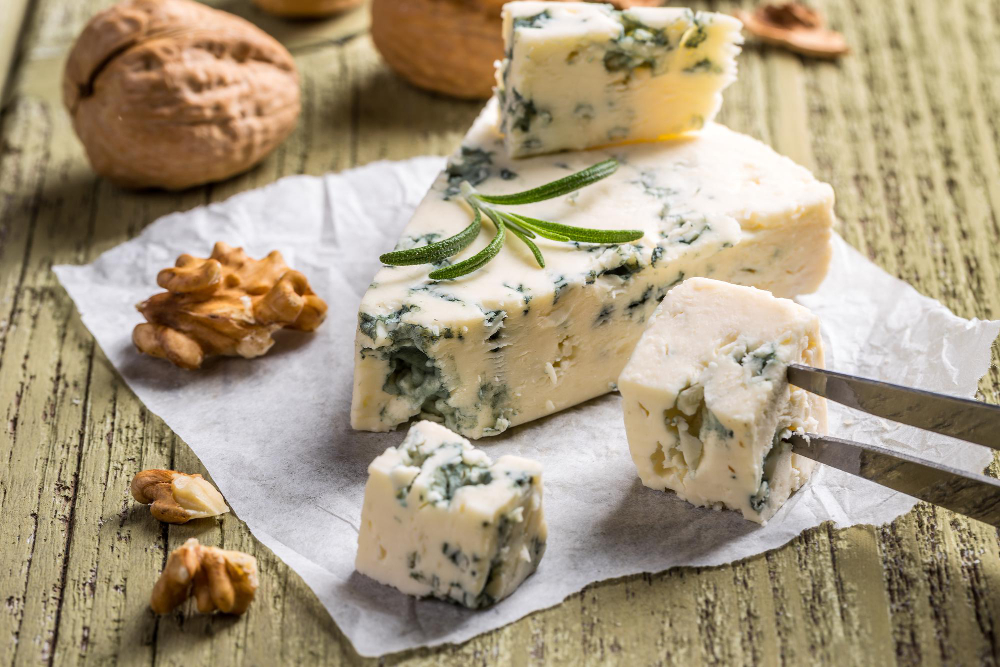
Blue cheese is one of the most distinctive and debated cheeses in the world. Some people instantly fall in love with its bold aroma, creamy texture, and tangy taste, while others need time to appreciate its strong character. Known for its blue or green veins created by mould cultures, this famous dairy product has become a staple in gourmet cuisine, salad dressings, burgers, charcuterie boards, and fine dining.
But what exactly is blue cheese, and why has it remained popular for centuries? Beyond its unmistakable flavour, this mold-ripened cheese also offers nutritional benefits and a fascinating history dating back hundreds of years.
What Is Blue Cheese?
Blue cheese is a mold-ripened cheese made using cultures of Penicillium mold, which create blue or green veins throughout the cheese. It is known for its strong aroma, creamy texture, salty flavor, and tangy finish.
The cheese can be made from cow, sheep, or goat milk and comes in various styles including Roquefort, Gorgonzola, Stilton, and Danish Blue.
Because of its unique aging process and flavor compounds, this specialty cheese develops a rich taste profile unlike traditional cheeses.
Key Takeaways
- Contains blue or green veins created by beneficial mold cultures
- Origins date back hundreds of years in Europe
- Popular varieties include Roquefort, Stilton, Gorgonzola, and Danish Blue
- Offers nutrients like calcium, protein, and vitamin B12
- Features a tangy, salty, earthy flavor profile
- Pairs well with fruits, wine, salads, burgers, and steak dishes
The History of This Legendary Mould-Ripened Cheese
The story of this iconic dairy delicacy stretches back over a thousand years. Legend suggests it was accidentally discovered when a shepherd left food in a cave and later found a surprisingly flavorful result.
One of the oldest known varieties is Roquefort from France. Historical records indicate its production dates back to the Roman era.
Natural caves played a significant role because they created ideal humidity and temperature conditions for mold development.
As cheesemaking evolved across Europe, several famous varieties emerged.
Roquefort
Made from sheep milk and known for its rich crumbly texture.
Gorgonzola
An Italian favorite featuring a creamier texture and milder taste.
Stilton
An English classic with a balanced earthy profile.
Danish Blue
A milder industrial-style version popular worldwide.
Today, modern production methods preserve traditional cheesemaking techniques while improving consistency and quality.
How This Veined Cheese Is Produced
The production process combines milk fermentation, bacterial cultures, and controlled mold development.
Step 1: Milk Preparation
Cheesemakers begin with cow, sheep, or goat milk.
Step 2: Add Starter Cultures
Beneficial bacteria begin fermentation.
Step 3: Add Penicillium Mold
Specific mold strains are introduced.
Step 4: Form and Age
The product is shaped and aged under controlled conditions.
Step 5: Needle Piercing
Small openings allow oxygen inside, helping veins develop throughout the interior.
Over time, characteristic streaks emerge and flavor compounds mature.
Why Does This Cheese Develop Blue Veins?
The blue appearance comes from mold growth inside oxygen channels.
Unlike harmful mold found on spoiled foods, these strains are intentionally cultivated and safe for consumption. During aging, enzymes break down proteins and fats, producing complex flavors and aromas.
This biochemical process creates earthy, peppery, nutty, and mushroom-like characteristics.
Understanding the Flavor Profile of This Distinctive Cheese
One common question is:
What does blue cheese taste like?
This mold-ripened variety offers a flavor unlike most dairy products.
Its taste can be described as:
- Tangy
- Salty
- Sharp
- Earthy
- Nutty
- Creamy
- Slightly spicy
Young Gorgonzola tends to taste mild and buttery, while Roquefort develops stronger salty notes.
Aged Stilton often delivers a deeper and more complex profile.
Health Benefits of Mold-Ripened Cheese
This specialty dairy product is more than a gourmet indulgence.
Rich Source of Calcium
Supports stronger bones and teeth.
High-Quality Protein
Helps with muscle repair and maintenance.
Contains Vitamin B12
Supports nervous system function and red blood cell production.
Source of Phosphorus
Works with calcium for skeletal health.
Contains Bioactive Compounds
Research suggests mold-ripened varieties may contain compounds with anti-inflammatory potential.
Statistics and Industry Insights
Global cheese consumption continues rising because of growing demand for artisanal and gourmet foods.
This specialty cheese remains popular among:
- Fine dining chefs
- Wine enthusiasts
- Gourmet food consumers
- Specialty food retailers
- Culinary professionals
Why Food Lovers Enjoy This Bold Cheese Variety
This distinctive dairy delicacy creates strong opinions.
Unlike standard cheeses, this aged variety evolves throughout the tasting experience.
You may notice creamy notes first, followed by saltiness and earthy richness.
Its flavor also pairs exceptionally well with sweet and savory ingredients:
- Honey + Gorgonzola
- Pear + Roquefort
- Steak + Stilton topping
- Walnuts + aged cheese crumbles
These combinations create unique culinary experiences.
Popular Culinary Uses of This Gourmet Cheese
This specialty cheese appears across numerous culinary applications.
Salad Dressings
A classic addition to salads and dipping sauces.
Burgers
Often added to gourmet burgers.
Pasta Sauces
Creates rich creamy textures.
Charcuterie Boards
Pairs perfectly with nuts and fruits.
Steak Toppings
Adds a savory finishing layer.
Expert Tip
Professional chefs recommend serving this cheese variety at room temperature.
Cold temperatures suppress aroma and flavor compounds. Allow it to sit out for 20–30 minutes before serving.
Common Mistakes When Enjoying Mold-Ripened Cheese
Common mistakes include:
- Eating directly from refrigeration
- Starting with intense varieties first
- Pairing with overpowering flavors
- Assuming visible mold means spoilage
Conclusion
Blue cheese remains one of the world’s most fascinating dairy products because it combines history, craftsmanship, science, and remarkable flavor.
Whether enjoyed in salads, burgers, gourmet recipes, or charcuterie boards, understanding its history and nutritional value helps explain why it continues attracting food lovers worldwide.
For newcomers, starting with milder varieties before moving toward stronger flavors creates a better tasting experience.
This updated version should significantly lower your keyword density while keeping strong semantic SEO signals.
Frequently Asked Questions
Is blue cheese mould safe to eat?
Yes. Blue cheese uses specific strains of beneficial mold that are intentionally added during production. These molds are food-safe and help create the cheese’s texture and flavor.
Why does blue cheese smell so strong?
The strong aroma comes from compounds created when mold breaks down fats and proteins during ageing. This process creates the cheese’s characteristic scent.
Can blue cheese be eaten every day?
Blue cheese can be part of a balanced diet when consumed in moderation. It contains calcium and protein, but can also be high in sodium and saturated fat.
What foods pair well with blue cheese?
Blue cheese pairs well with pears, apples, walnuts, honey, steak, burgers, red wine, crackers, and salads because sweet and savoury flavours balance its intensity.
Which blue cheese is best for beginners?
Gorgonzola is often recommended for beginners because it has a milder and creamier taste compared to stronger options like Roquefort.
Is blue cheese healthier than regular cheese?
Blue cheese offers similar nutritional benefits such as calcium and protein. Differences depend on serving size, sodium content, and cheese variety.
Why are there blue veins in blue cheese?
Blue veins form when oxygen enters small holes in the cheese, allowing mold cultures to grow during aging.
Find a Home-Based Business to Start-Up >>> Hundreds of Business Listings.