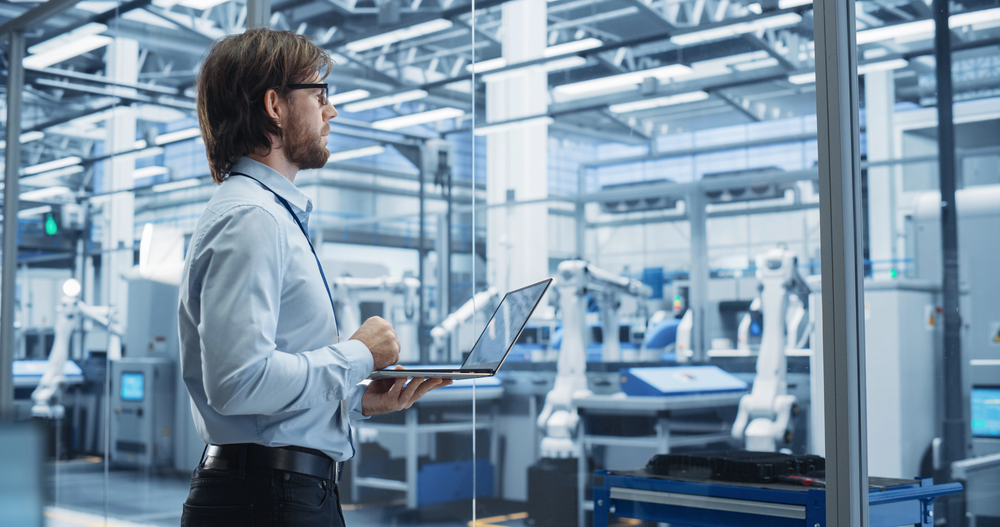










































Conveyor systems are the cornerstone of countless industries, effortlessly moving raw materials, finished products and components and driving production efficiency and automation with increased accuracy, reduced labour costs and improved employee and inventory safety. Staples in essential sectors including manufacturing, warehousing and food processing, conveyors streamline daily operations with speed, dependability and adaptability to varied business settings and needs.
Conveyor Basics

Conveyor systems are mechanical assemblies designed to move goods, products, and bulk materials from one point to another efficiently and continuously. Driven by core components like motors, pulleys, frames, and belting, durable and well-designed conveyors follow a pre-configured path tailored to the operation. Configurations range widely in scale and purpose: from small, nimble systems sorting lightweight items in electronics and food processing to colossal overland setups moving tons of ore or routing thousands of pieces of luggage across major international airports.
Key Parts and How They Work
While designs vary based on the application and industry, conveyors consist of several key components:
-
Frames:
This is the main structural element, providing the rigidity and stability for all other parts. Typically constructed from steel sections welded together to withstand vibrations and stress, conveyor frames can be tailored to operation specifics, ensuring strength and correct alignment when moving items of different bulk and weight.
-
Legs and Support Structures:
Often anchored to the floor and supporting frames, legs provide height adjustability to ensure compatibility with other machinery, such as sorting lines. Their role is to eliminate or reduce vibrations and premature wear in moving parts.
-
Guarding and Safety Components:
Guarding keeps items clear of pulleys, belts and drive trains, and ensures safe maintenance. Auxiliary safety features, such as emergency stop cords and control unit enclosures, ensure employee safety and regulatory compliance.
The actual task of transporting goods is delegated to moving parts, including belts, pulleys, rollers and idlers. Belts are often the most prominent conveyor component, comprising a consistent loop and the main moving surface. Constructed of varied materials, including natural or synthetic rubber (when moving heavy or abrasive items such as ores), food-grade polyurethane in food and beverages, metals for applications with temperature extremes and PVC in packaging, belts provide the necessary tensile strength and durability to withstand demanding daily use.
Moving belts along their path is done by pulleys. In motorised systems, drive pulleys connect to motors and gears and ensure continuous moving speeds. Positioned at the opposite end are unpowered tail pulleys to guide belts around and complete the loop. In wet and demanding environments, systems can additionally include snub and bend pulleys in smooth or textured surfaces to prevent belt slippage.
Completing the moving portion are idlers or rollers. These are positioned along the frame to support the belt and the materials and products it moves. Carrying idlers support loaded belts, while return idlers support empty belts on their way back to the tail pulleys.
Drive Groups: Motors and Gearboxes
Drive groups provide the force to move belts and loads. These consist of electric motors (in power ratings ranging from 500W to 500kW), gear reducers to reduce rotational speeds and increase torque and couplings that connect motors to reducer shafts and drive pulleys. Assemblies can be configured to suit different conveyor lengths, operating speeds, incline angles and gear ratios to efficiently and safely move loads in varying weight.
Common Conveyor System Types and Applications

Different loads require different types of conveyors. More common types are:
-
Belt Conveyors:
These are the simplest in their construction (described above) and most widespread. They’re found in diverse settings, ranging from supermarket checkouts and mail rooms, to warehouses, food processing plants and recycling centres. Ideal uses are transporting packaged goods and raw materials.
-
Roller:
These feature rollers mounted on separate axles. They come in two varieties – simple gravity-based conveyors, relying on downward slopes or a manual push to move smaller items in logistics, pharmaceutical and electronics manufacturing, automotive assembly lines and general material handling. Motorised systems are found in similar settings, but often for high-volume production, transport and loading and unloading of large and heavy components or raw materials stored in drums, pallets and cartons.
-
Chain:
These use a continuous loop of heavy-duty chains to move materials and products along production and assembly lines. Responsible for moving exceptionally heavy goods, such as car engines, scrap metal, palletised items and bulk grain, they’re heavy-duty alternatives to belt systems.
-
Overhead Conveyor Systems:
These use metal rails suspended from ceilings or support structures and an assembly of carriers or trolleys and motors (separate or trolley-integrated). They’re common in the transportation of large and bulky machinery along production lines, car bodies and engines during welding, parts assembly and inspection and moving metal components during surface treatment.
Why Implement Conveyors in Your Business?
Integrating carefully-configured systems into existing businesses dealing with high volumes of heavy, fragile or packaged goods provides multiple benefits:
-
Increased Productivity:
By automating the movement of goods and streamlining operations, conveyor equipment reduces the need for manual material handling, cuts bottlenecks with repeatable speeds, and reduces downtime with continuous operation.
-
Adaptability:
Systems can be configured into existing material handling operations, set in vertical or horizontal orientation to adjust to space needs or production and assembly methods, and sourced in different types, sizes and capacities. Modular designs also mean they easily adjust to changing operational and floorplan requirements.
-
Improved Safety and Reduced Labour Costs:
By cutting out the need for manual material handling, conveyor systems significantly lower labour costs, the likelihood of injuries or fatigue, and any chances of human error leading to damage to property or inventory.
-
High Reliability and Low Maintenance:
Straightforward mechanical designs with few parts and robust builds ensure long-term dependability. Moreover, modular systems provide easier and less costly repairs.
-
Simplified Automation:
Recent conveyor models effectively integrate with advanced sensors, barcode readers and robotic arms to streamline sorting, parts assembly and packaging.
Key Buying Considerations
Before committing to any conveyor for sale, assess key buying factors and considerations. These include the specifics of the products conveyors must transport (size, weight, shape); how fast materials and products need to be processed, assembled or sorted and the physical layout and working conditions (temperature, humidity, dust, etc) where these mechanical assemblies will be used. Also, consider total cost of ownership and operation, including equipment and installation costs, power usage, maintenance needs, and the availability of replacement parts. Lastly, consider scalability with modularity and automation as your business and material handling needs grow.
Find a Home-Based Business to Start-Up >>> Hundreds of Business Listings.