







































To make your business last, you have to compete for attention alongside brands with whole packaging departments. Your customers decide how serious you look before the parcel is even opened. However, the distance between you and those big brands has been closing for a few years. Suppliers who once dealt only with large retailers now accept small orders, and premium materials have become affordable at the quantities you actually buy. Here are some packaging trends e-commerce solopreneurs may want to consider for their businesses as well.
Move Your Product Into a High-Barrier Flexible Pouch
If you sell coffee, snacks, supplements, or pet treats, the bag your product sits in matters as much as your product page. A good idea is to opt for high-barrier flexible pouches, as they feature a thin layer that blocks oxygen and moisture, keeping your product fresh for longer. There are other benefits as well, including:
- Printing across the whole surface to make them look attractive on a shelf
- Shipping them flat and save money as they don’t weigh much
To compete with bigger brands, start with the pouch’s finish. A matte film with a soft-touch coating and metallic accents looks expensive and creates a great impression. However, matte films and soft-touch coatings are harder to produce than plain printed bags. That’s mainly because a premium pouch is a laminate of two or three films. Heat holds these layers together, so controlling that heat can be tricky.
Using convertors with heat transfer rolls can help in this situation by circulating hot or cold fluid within the roll body. This helps maintain a uniform temperature across the web from edge to edge. Remember, only even heat can give you flat pouches with print that lines up.
You should always ask about heat control when you compare suppliers. Ask about how they control web temperature on the laminating line. Request samples from a real production run, not a digital mockup, to get an idea of what you will receive in the end.
Print Short Runs Instead of Committing to a Pallet
If a supplier has ever quoted you ten thousand units for a single design, you already know how packaging used to be priced. Printing plates cost real money to make, so a low price per unit required an order large enough to spread that cost across thousands of bags. Packaging trends e-commerce solopreneurs are following have changed that model, making smaller runs more accessible. Small brands were left either buying three years’ worth of stock or settling for blank bags and stickers.
A good alternative is to use digital printing, which eliminates the need for a plate in the process. Therefore, your per-unit price barely changes across a range from a few hundred to a few thousand pouches. A small order doesn’t cost you as much per bag as a large one.
The money you save matters less than the freedom you gain because you can now test two designs against each other. You can print a seasonal version that exists for six weeks, or run a small batch for a collaboration. You can also update your artwork the same month your recipe changes, without throwing away a pallet of old bags.
Large retailers move slowly here because their large order quantities keep a single design on the shelf for months. Your primer can quote you at 300, 1,000, or even 3,000 units before you commit to anything. The smallest run that covers your next two months of sales is usually the safest order to place.
Shrink The Box Around the Product
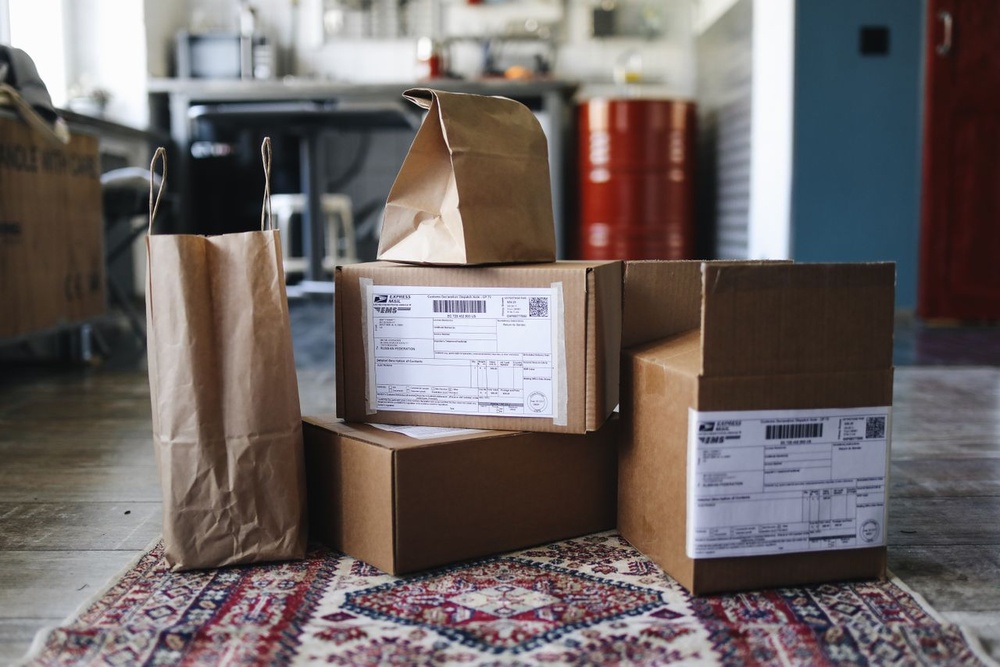
If you ship a small product in whatever box is on the shelf, you are probably paying your carrier for the empty space around it. Carriers charge the greater of what a parcel weighs and the space it takes up. US carriers tightened those rules again in 2026, so more parcels are now priced based on size alone.
You have to take this issue seriously and go with custom packaging because brands that match the box to the product within an inch or two report a clear drop in shipping costs. Your first move should be to measure your three best sellers, then order two to three box sizes that genuinely fit them.
Flat mailers work for anything that will not break under pressure, and a flexible pouch does the same job for the products in the first section. Your shipping labels from last month will show which parcels cost you the most, so start measuring there.
Endnote
Packaging trends e-commerce solopreneurs can leverage are changing how small brands approach packaging. Your packaging no longer depends on how much you can afford to order at once. The suppliers have changed, and materials that once sat behind a pallet minimum are now within reach of a one-person brand. What decides your results now is who you choose to print for you, and how honestly you judge the sample they send back. You can begin with one product; order the smallest run your printer quotes and let that sample decide whether the bigger order is worth placing.
Find a Home-Based Business to Start-Up >>> Hundreds of Business Listings.


