











































Learning to drive involves a mix of instruction, repetition, and real-world experience. But there are some driving situations that are difficult to teach safely on an actual road. A new driver can read about avoiding a collision, driving in bad weather, or dealing with a distracted motorist. But understanding what to do when one of those situations happens requires practice.
That is one reason simulation technology has come into the picture. It has become increasingly useful in driver education and safety training.
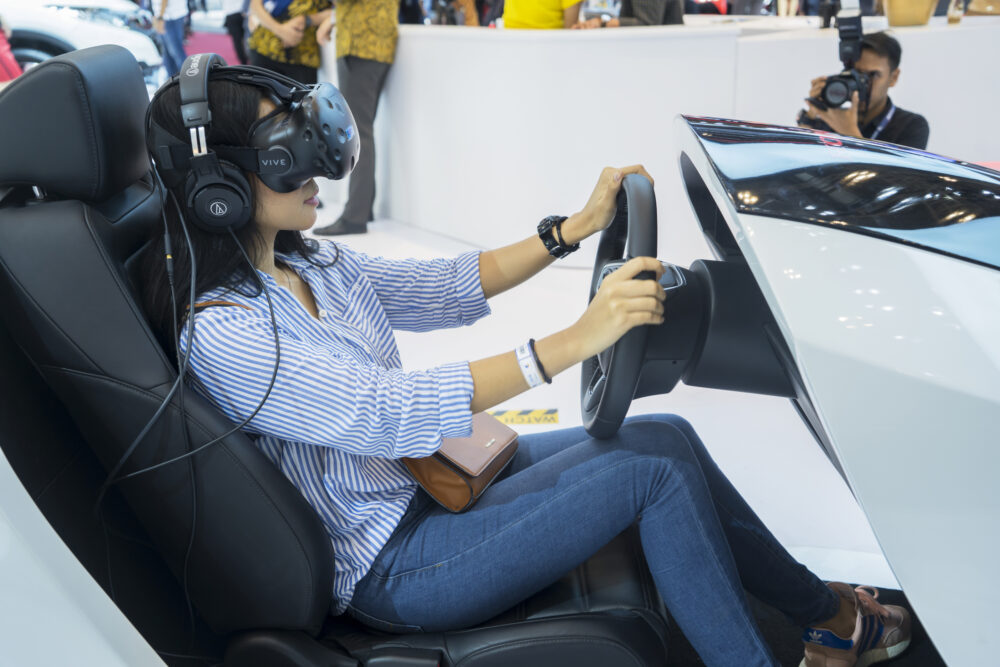
A modern car testing simulator can recreate realistic driving environments and introduce situations that would be difficult, risky, or impractical to stage on public roads. Drivers can practice making decisions, responding to hazards, and managing a vehicle in a controlled setting. For Pathway Dynamics, this approach is about giving drivers another way to build practical skills before they have to rely on them behind the wheel.
What Is a Car Testing Simulator?
A car testing simulator is designed to reproduce key elements of driving without requiring the vehicle to be operated on an actual road. The system may include a steering wheel, pedals, turn signals, headlights, windshield wipers, displays, sensors, and software that generates a virtual driving environment.
The technology is used for both research and training. The National Highway Traffic Safety Administration (NHTSA), for example, operates the National Advanced Driving Simulator (NADS) for research into driver behavior and the interaction between drivers, vehicles, and road environments. Its research capabilities allow scenarios to be studied in conditions that could be difficult or unsafe to reproduce with a real vehicle.
The same basic principle can be applied to driver training: give people a chance to experience challenging situations without putting them or other road users in danger.
Why Simulated Driving Has a Place in Driver Training
Safe driving involves much more than knowing traffic laws.
Drivers need to watch what is happening around them, maintain an appropriate speed, judge following distances, recognize potential hazards, and decide how to respond when conditions change. These skills develop through practice, but not every type of practice needs to happen on a busy road.
Simulated driving allows instructors to introduce specific situations and observe how a driver responds.
A learner might encounter a vehicle pulling into traffic unexpectedly, a pedestrian entering the roadway, changing traffic patterns, poor visibility, an intersection conflict, or a distraction while driving. Afterwards, the instructor can discuss the driver’s decisions and identify areas that need more work.
This is particularly useful because some hazards are difficult to recreate during conventional lessons. NHTSA research has used driving simulators to study driver responses to controlled scenarios, including situations where researchers need precise and repeatable conditions.
Simulation, in other words, creates a space where mistakes can become learning opportunities rather than accidents.
Practicing Dangerous Situations Without the Real-World Risk
One of the biggest advantages of simulation is that the driver can experience a dangerous situation without actually being placed in danger.
Think about driving during heavy rain. An instructor can explain the importance of reducing speed and increasing following distance. But repeatedly recreating difficult weather conditions on public roads isn’t practical. A car testing simulator can introduce those conditions while keeping the learner in a controlled environment.
The same applies to nighttime driving, distracted driving, sudden hazards, intersections, traffic conflicts, and other situations where a mistake could have serious consequences.
Making Driver Performance Easier to Evaluate
There is another benefit that is easy to overlook: consistency.
Real roads are unpredictable. Traffic changes from one lesson to another, weather can change, and different instructors may focus on different areas of a student’s performance. Those variables are part of driving, but they can make it difficult to compare one training session with another.
Simulation provides a more controlled environment.
A learner can complete the same or similar scenarios more than once. If the driver repeatedly approaches intersections too quickly, follows other vehicles too closely, misses hazards, or reacts late to developing situations, those patterns can become easier to identify.
Pathway Dynamics says its system is designed to standardize instruction and track performance. It gives instructors another way to assess driving competencies. Its platform combines a complete training curriculum with a driver management system.
For organizations training groups of drivers, that consistency can be especially valuable.
Building Confidence Through Practice
Confidence is another part of learning to drive, although it needs to be approached carefully.
A nervous driver may hesitate when faced with an unfamiliar situation. A driver who becomes overly confident without developing the necessary skills can make the opposite mistake and underestimate risk.
Simulation gives learners a place to become familiar with different situations before facing them independently on the road.
Instead of simply being told what to do when something unexpected happens, they can practice responding to it. That repetition can make unfamiliar situations feel more manageable.
The goal, however, should not be to create a driver who believes they can handle anything. Good training should build confidence alongside awareness, judgment, and respect for risk.
The Role of Dynamic Driving Simulation
Technology has also made simulation considerably more immersive.
Modern dynamic driving simulation can combine realistic controls, graphics, traffic conditions, road environments, and changing scenarios to create a more engaging training experience. Instead of simply watching a video about safe driving, the learner becomes an active participant.
That distinction matters.
A driver has to make choices. Should they slow down? Where should they look? Is there enough space to change lanes? What is the safest response to the vehicle ahead?
Pathway Dynamics uses realistic controls, including a full-size steering wheel with automotive turn signals, headlights, and wipers, alongside immersive graphics. Its training is also available in more than 20 languages.
Its curriculum currently includes 12 lessons and 50 chapters, covering both fundamental driving skills and more advanced defensive driving concepts.
What Research Says About Simulator Training
There is good reason to be interested in simulator-based training, but the research also calls for some caution.
A 2024 systematic review published in the Journal of Safety Research examined 15 studies involving driving simulator interventions for young novice drivers. The researchers found evidence that simulator training can improve certain simulated driving skills, including lane maintenance, speed regulation, and responses to stimuli.
However, the review found that it remained unclear whether those improvements consistently translate into real-world driving skills or yield lasting improvements in road safety. The researchers therefore recommended using simulation as a supplement to classroom and on-road instruction rather than as a replacement.
Where Driver Simulation Training Fits
The strongest approach is not to choose between simulation and traditional driver education. It is to use the two together.
Driver simulation training can introduce concepts, reinforce defensive driving habits, expose learners to hazards, and help instructors identify weaknesses. Classroom instruction provides the knowledge behind those skills, while supervised road training gives drivers the opportunity to apply them in an unpredictable environment.
For fleet operators, simulation can also provide a practical way to train employees without taking vehicles out of service for every exercise. Pathway Dynamics says its technology can help reduce vehicle downtime, lower training costs, standardize instruction, and provide scalable training for both new and professional drivers.
That combination makes simulation particularly interesting for organizations that need to train many drivers while maintaining a consistent standard.
Looking Ahead at Driver Safety Technology
Vehicles are becoming more technologically advanced, and driver training has to keep up. Driver-assistance systems, connected vehicles, automated features, and increasingly complex road environments are changing the skills drivers need to develop.
Simulation gives educators and organizations a flexible way to prepare drivers for those changes.
A car testing simulator cannot reproduce every detail of driving a real vehicle. It should not replace supervised road experience, either. Its value comes from what it makes possible: repeated practice, controlled hazards, consistent scenarios, and opportunities to examine decisions without putting people at unnecessary risk.
For Pathway Dynamics, simulation is more than an impressive piece of technology. Used as part of a broader training program, it can help drivers practice the decisions and habits that matter when conditions become unpredictable.
The road will always present situations that cannot be perfectly anticipated. The better prepared a driver is before encountering them, the better their chances of responding thoughtfully and safely.
Find a Home-Based Business to Start-Up >>> Hundreds of Business Listings.


