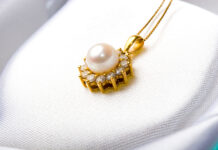









































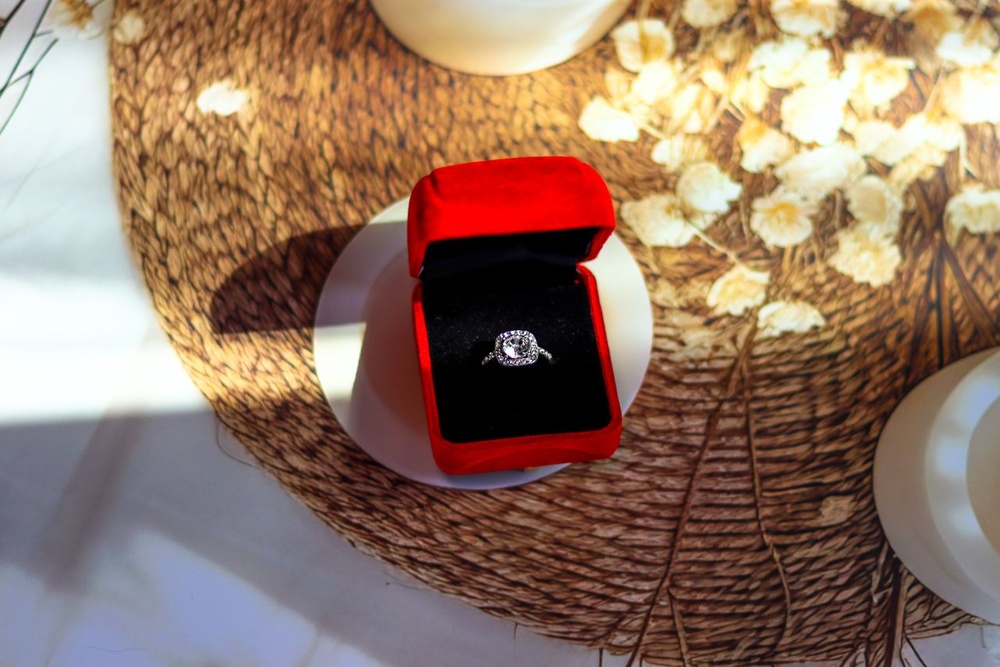
Picture her hand on a coffee cup on a normal morning. A thin gold band she never takes off, a signet from her grandmother, a pair of small hoops in the same warm metal. That hand has a look already, assembled piece by piece without a committee. The engagement ring has to join that hand and belong among the pieces already on it. When you choose an engagement ring, the best ones look like they were always part of the set. A bad match announces itself as the newcomer it is.
Inventory Her Daily Pieces
Start with what she actually wears day to day. Skip the box saved for weddings, because the daily pieces are the real signal, the ones she reaches for without planning. Note three things about it. The metal tone matters most, warm or cool. Scale comes next, delicate or substantial. Finish is the third, bright polish or muted brushing. A woman whose daily pieces are all fine yellow gold chains and small studs has told you, without a word, that a giant white-gold halo will look wrong on her. The special-occasion jewelry often lies, since much of it was bought for one event or received as a gift she would never have picked. The everyday collection is the part she voted for with her own habits. Photograph her hand if you can do it without notice. A picture removes the guesswork and settles arguments with yourself later, in the shop, when every option starts to look fine.
Match the Dominant Metal First
Metal is the loudest cue, so get it right before anything else. If her daily jewelry is yellow gold, the ring should be yellow gold, full stop. Yellow gold appears on about 36% of engagement rings, and on a warm-metal woman it is rarely the wrong call. Her undertone usually explains the pattern. Cool skin tends to gather silver and white metals, while warm skin gathers yellow and rose. Whatever she already owns has quietly passed that test, so matching it flatters her twice, once for the metal and once for the match. The same logic holds for white gold, platinum, and rose. The one exception is a deliberate mixed-metal look, and even that follows a rule. Keep 60% to 70% of the visible metal in her dominant tone and let the second metal play accent, through a two-tone setting or a single contrasting band. Mixed metals work only when the proportions look planned.
Shape and the Daily Stack
Shape matters less than metal for cohesion, but some shapes work in a stack better than others. An elongated stone follows the line of the finger and lies flat enough to wear beside other rings. A marquise diamond ring is a strong example, its long, pointed outline looks larger than its carat weight and lengthens the hand, while a low setting keeps it from knocking against everyday pieces.
The marquise is only an example. The real move is choosing a profile that shares space with the rings she already wears.
Scale and the Everyday Hand
Scale is the second cohesion cue and the one people get wrong most. A stone that overwhelms her daily pieces makes the whole hand look unbalanced, and a stone too timid for a hand used to substantial jewelry disappears against it. Match the ring to the weight of what she wears. Delicate chains and thin bands call for a modest center stone on a fine band. A hand already used to chunky signets and wide cuffs can take real size without it looking like a costume. The marquise helps here because it faces up about 20% to 25% larger than a round of the same weight, giving presence on a delicate hand without adding real bulk. That is the trick of an elongated shape, the eye sees length and takes it for size, while the hand wears no extra weight. It is a small optical illusion, and a useful one when her everyday pieces are delicate.
Finish, Detail, and Cohesion
After metal and scale, the small stuff decides if the ring truly belongs. Finish is part of it. A high-polish ring next to brushed, matte daily pieces will always look like a newcomer. If her jewelry is mostly matte, ask for a matching finish on at least the band. Some metals also take on a patina as they age, a faint warmth that older worn pieces already have, and a ring meant to be worn beside them should be allowed to soften the same way. Repeating details help too. A milgrain edge that echoes a band she already wears, or a bezel that quietly matches a bezel pendant. None of this is required, but each small echo makes the ring look like part of a collection a person built on purpose. These echoes also separate a ring chosen for her from one chosen off a chart of bestsellers. The detail does not have to shout to work, and a quiet nod to something she already owns is enough.
Stacking With a Wedding Band
The engagement ring will almost never be worn alone. A wedding band joins it within a year or two, and her other everyday rings are on nearby fingers. When you choose an engagement ring, plan for that from the start. A marquise or other elongated stone needs a band contoured to its shape, and the pointed tips need protective prongs, so confirm that a matching band is possible before buying. Metal hardness, the property the Mohs scale measures, matters once rings rub together daily. Softer gold worn against harder platinum will wear down, so keep stacked rings in compatible metals. Width is the other thing to plan, since a wide engagement ring leaves little room for a band beside it, and a slimmer profile keeps her options open as the stack grows. Aim for a stack that looks cohesive and feels effortless, the kind that never becomes a daily negotiation between rings that were never meant to share a finger.
Mismatched Daily Collections
Some people have no through-line at all. Silver one day, gold the next, a drawer of unrelated pieces with nothing in common. An engagement ring will not fix that, and it should not try. The proposal is not the moment for decluttering her whole collection. When her jewelry refuses to settle on a style, choose an engagement ring to match the single piece she wears most, the one item that never comes off. That piece is the truest signal in a mixed set. If even that is unclear, fall back on a neutral, classic setting in her most-worn metal and let the wedding band and future pieces build around it. A versatile shape like the marquise is forgiving here, because it works across enough styles to survive a collection that has not decided what it is yet.
Back to the Coffee Cup
Go back to that hand on the coffee cup. The right engagement ring is the one that, six months in, she stops seeing as separate from the rest of her jewelry. When you choose an engagement ring, it should match the metal she already loves, keep to the scale of her daily pieces, pick up a finish or a detail from something she owns, and stack without a fight. Day to day, it should look like it was always there, one more piece in a collection she has been building her whole life, with this one finally at the center.
Find a Home-Based Business to Start-Up >>> Hundreds of Business Listings.