








































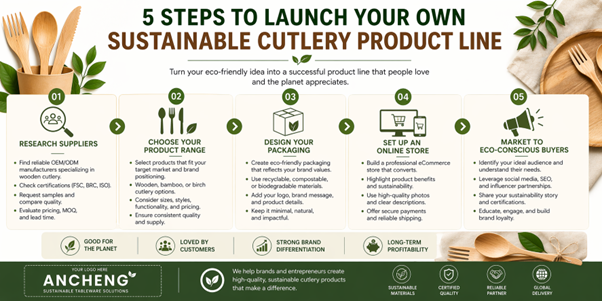
Starting a home business in 2025 is easier than ever. However, standing out is harder. Many beginners jump into saturated markets without a clear edge. If you want a real opportunity, sustainability is where the demand is growing fast. One of the most promising niches is eco-friendly cutlery. With rising environmental awareness and plastic bans, the market for a cutlery product line that is sustainable is expanding quickly. The key is not just selling products, but building a reliable and scalable system. This guide will show you how to start a sustainable cutlery product line from home, step by step.
Why a Sustainable Cutlery Product Line Is a Smart Business Idea
The demand for eco-friendly alternatives is increasing globally. Governments are banning plastic cutlery, and consumers are actively looking for better options.
Wooden and bamboo cutlery are becoming popular because they are biodegradable and made from renewable resources.
This creates a strong opportunity for new businesses. You are not trying to convince people. The demand already exists.
Step 1: Choose Your Product Focus
Do not try to sell everything at once. Focus on a specific product line first.
Popular options include:
- Wooden forks, spoons, and knives
- Bamboo cutlery sets
- Travel cutlery kits
- Event or catering packs
Choosing a niche helps you position your brand clearly.
For example, for your sustainable cutlery product line you could target:
- Eco-conscious households
- Small cafes and food vendors
- Event planners
- Online marketplaces
Clarity at this stage will save you time later.
Step 2: Understand the Manufacturing Process
Before selling, you need to understand how the product is made. This helps you choose better suppliers and maintain quality.
Wooden cutlery production involves several steps:
- Raw material selection, often birch wood or bamboo
- Cutting and shaping into utensils
- Pressing and molding for uniform design
- Drying to remove moisture
- Sanding and polishing for smooth edges
- Final quality inspection and packaging
A reliable supplier will control each step carefully. This ensures durability, safety, and consistency for your sustainable cutlery product line.
Step 3: Find the Right Manufacturing Partner
This is where most beginners make mistakes. Choosing the wrong supplier can destroy your business early.
You need a manufacturer that offers:
- Consistent quality
- Customization options
- Certifications for food safety
- Reliable production capacity
Working with an experienced provider like Ancheng cutlery manufacturing gives you access to a full production system, from raw materials to final packaging. This reduces risk and helps you scale faster.
According to industry data, manufacturers with integrated production and quality control systems produce more consistent and compliant products.
Step 4: Build Your Brand Positioning
Do not compete on price alone. That is a losing game.
Focus on value and positioning for your cutlery product line instead.
Ask yourself:
- What makes your brand different?
- Who is your ideal customer?
- What problem are you solving?
Your branding should highlight:
- Sustainability
- Safety and quality
- Practical use cases
A clear message builds trust and improves conversions.
Step 5: Create a Simple Cutlery Product Line
Start small. You do not need dozens of products.
Begin with 2–3 core items, such as:
- Basic wooden cutlery set
- Premium eco-friendly bundle
- Customized event pack
Keep it simple and test what sells.
Once you understand your market, you can expand your product range.
Step 6: Choose Your Sales Channels
You have multiple options for selling your products:
- E-commerce platforms like Etsy or Amazon
- Your own website
- Wholesale to local businesses
- Social media shops
Each channel has different advantages.
For beginners, marketplaces are easier to start. They already have traffic. Later, you can build your own website for better control and higher margins.
Step 7: Focus on Packaging and Presentation
Packaging matters more than most people think. It directly affects customer perception.
Eco-friendly products must have eco-friendly packaging.
For your cutlery product line use:
- Recyclable paper packaging
- Minimalist design
- Clear labeling
Good packaging increases perceived value and builds trust.
Step 8: Understand Costs and Pricing
You need to know your numbers before launching.
Key costs include:
- Product sourcing
- Shipping and logistics
- Packaging
- Platform fees
- Marketing
Set your pricing based on value, not just cost.
Customers buying eco-friendly products are often willing to pay more for quality and sustainability.
Step 9: Start Small and Scale Smart
Do not overinvest at the beginning. Test your idea first.
Start with small inventory batches. Analyze what works for your cutlery product line.
Track:
- Sales performance
- Customer feedback
- Product quality issues
Once you see consistent demand, scale gradually.
Step 10: Stay Consistent and Improve
Success will not happen overnight. Most people quit too early.
Focus on:
- Improving your product
- Building customer trust
- Strengthening your supply chain
Sustainable businesses grow through consistency, not shortcuts.
Common Mistakes to Avoid
Many beginners fail because they ignore basics.
Avoid these mistakes:
- Choosing low-quality suppliers
- Copying competitors without differentiation
- Ignoring branding
- Overcomplicating product lines
- Expecting quick profits
Stay focused and build step by step.
The Future of Sustainable Home Businesses
The shift toward eco-friendly products is not temporary. It will continue to grow.
Consumers, governments, and businesses are all moving in the same direction.
A sustainable cutlery product line is just one entry point. Once established, you can expand into:
- Eco-friendly packaging
- Reusable kitchen products
- Zero-waste lifestyle items
This gives you long-term growth potential.
Conclusion
Starting a sustainable cutlery product line is a practical and scalable business idea in 2025. The demand is already there, and the barriers to entry are manageable. The key is to approach it strategically. Choose the right niche, work with reliable manufacturers, and build a strong brand. Focus on quality, not shortcuts. If you stay consistent and make smart decisions, this can grow from a simple home business into a profitable long-term venture.
Find a Home-Based Business to Start-Up >>> Hundreds of Business Listings.