










































Artemis II and the New Space Economy
NASA’s Artemis II mission, which successfully concluded its 10-day lunar flyby on April 11, 2026, has officially cleared the path toward establishing permanent human operations on the Moon. As the first crewed lunar expedition since 1972, it was both a significant scientific milestone and a driver for reshaping the space industry by providing new business opportunities to private firms like SpaceX and Blue Origin.
Artemis II — the first mission of NASA’s extended lunar exploration program — was a 10-day mission to the Moon. Unlike future operations, it did not include a landing, but aimed to test essential systems and validate the Orion spacecraft and life-support technologies for future Moon landing missions. As a whole, the program had two main goals: bring humans back to the Moon and create a permanent lunar base that will later serve for future Mars missions. This serves as a vital link between previous uncrewed missions and upcoming landing operations.
The successful execution of Artemis II has provided the architectural validation necessary to move from experimental flights to advanced mission phases, including lunar landings and base construction operations. The mission represented a fundamental transformation in the space exploration economy, affecting all aspects of space research activities.
It operated through NASA’s Space Launch System (SLS) and Orion spacecraft, built by traditional aerospace contractors. These systems faced criticism as their launch costs reached between $2 billion and $4 billion and depended on non-reusable equipment. The situation became critical, highlighting how existing systems rely on outdated methods, while new commercial systems opt for reusable components to reduce operational costs — creating an opportunity for private players to step in.
Commercial Impact and Industry Shift
The Artemis program gave significant advantages to SpaceX and Blue Origin within the operational framework, as these firms have essential functions for future missions. NASA has already awarded contracts to these companies to develop lunar landing systems, making them essential partners for the next program development stages. Given this strategic support and industry leadership, Musk’s company may effectively appear on market and premarket movers lists once it completes its IPO, which is expected later this year.
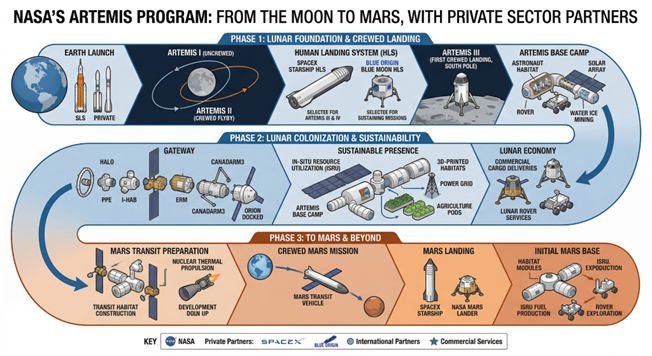
The Artemis II mission demonstrated spacecraft design for permanent Moon operations, enabling private companies to enhance their capabilities across transportation activities, cargo handling tasks, and infrastructure building.
The implications are far-reaching. Artemis II reflected how space exploration has evolved the economy from a government-exclusive domain into a new system in which private companies play a leading role. By showing what traditional systems can achieve and where their limits lie, the mission provided evidence that commercial providers should receive greater operational control over space activities. This development will potentially intensify competition across the industry, resulting in lower costs and creating a lunar economy that involves multiple business partners.
The system confirms NASA’s current technological capabilities while accelerating the integration of commercial partners into the project, thereby creating a new era of cooperation between government and private companies aimed at expanding human presence beyond Earth.
Find a Home-Based Business to Start-Up >>> Hundreds of Business Listings.