









































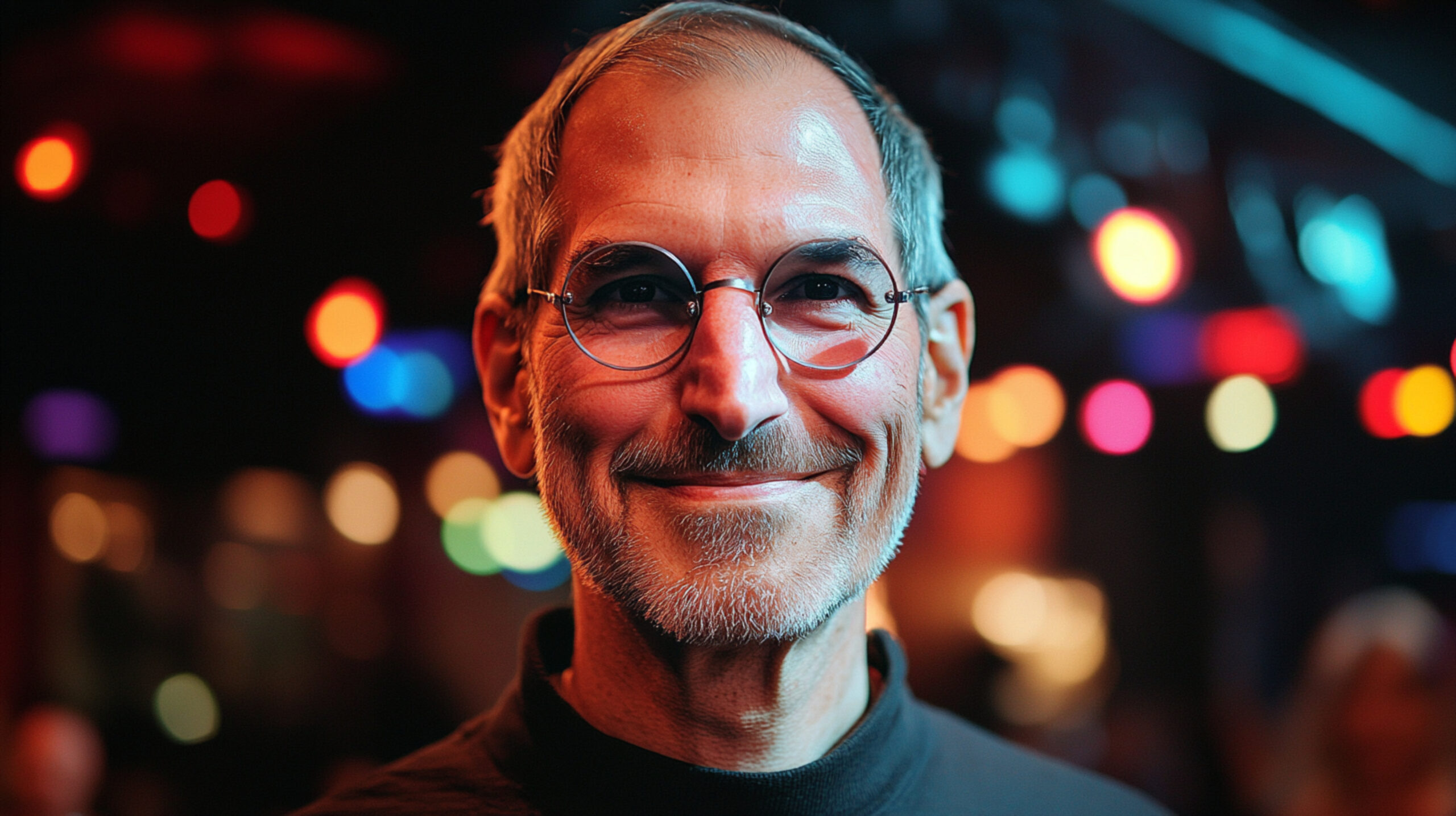
Steve Jobs was not just the co-founder of Apple and one of the most influential technology entrepreneurs in history — he was a philosopher of work, creativity, and purpose. His words have inspired millions of entrepreneurs, designers, students, and leaders across every industry worldwide. Whether he was speaking about innovation, failure, love, simplicity, or death, Jobs had a rare gift for distilling complex truths into sentences that cut straight to the bone. This curated collection of the 100 best Steve Jobs quotes is organized by theme, explained in context, and designed to give you not just the words — but the meaning and lessons behind them.
Quick Answer: What Is Steve Jobs’s Most Famous Quote?
Most Famous Quote: Steve Jobs’s single most quoted line is: “Stay hungry, stay foolish.” He borrowed it from the 1974 farewell edition of The Whole Earth Catalog and delivered it at the close of his legendary 2005 Stanford Commencement Address — one of the most watched speeches in the history of the internet. It encapsulates his entire philosophy: never stop learning, never stop taking risks, and never let comfort kill your curiosity.
Key Takeaways
- Steve Jobs quotes span themes of innovation, simplicity, creativity, leadership, failure, and mortality.
- His most famous quote — “Stay hungry, stay foolish” — was delivered at Stanford’s 2005 Commencement.
- Jobs believed deeply that loving your work was not optional — it was the only path to greatness.
- Many of his most powerful quotes came from interviews, product launches, and his Stanford speech.
- His philosophy was shaped by Zen Buddhism, calligraphy, the counterculture movement, and a fierce perfectionism.
- Steve Jobs quotes continue to be among the most searched and shared motivational content on the internet.
- His words remain as relevant today — in the age of AI and rapid change — as when he spoke them.Who Was Steve Jobs? The Mind Behind the WordsSteven Paul Jobs (February 24, 1955 – October 5, 2011) was the co-founder, chairman, and CEO of Apple Inc., the co-founder of Pixar Animation Studios, and the founder of NeXT. He is widely recognized as one of the most transformative business leaders of the 20th and 21st centuries, credited with revolutionizing personal computing, animated film, music, phones, tablet computing, and digital publishing — six industries in a single lifetime.What made Jobs’s words so enduringly powerful was that they were not polished corporate messaging — they were the raw output of a mind that thought differently about everything. Shaped by early exposure to Zen Buddhism, a love of calligraphy, the California counterculture, and the relentless perfectionism of craftspeople he admired, Jobs developed a worldview that was simultaneously idealistic and brutally pragmatic. His quotes reflect that tension at every turn.
Steve Jobs Quotes on Innovation and Creativity
INNOVATION & CREATIVITY
Steve Jobs understood innovation not as a department or a process, but as a way of seeing. He believed the most creative work happened at the intersection of technology and the humanities — and that true innovation required the courage to think differently about everything.
“Innovation distinguishes between a leader and a follower.”
— Steve Jobs
“Creativity is just connecting things. When you ask creative people how they did something, they feel a little guilty because they didn’t really do it, they just saw something. It seemed obvious to them after a while.”
— Steve Jobs, Wired, 1996
“The people who are crazy enough to think they can change the world are the ones who do.”
— Steve Jobs — Think Different campaign, 1997
“You can’t just ask customers what they want and then try to give that to them. By the time you get it built, they’ll want something new.”
— Steve Jobs, Inc. Magazine, 1989
“Design is not just what it looks like and feels like. Design is how it works.”
— Steve Jobs, The New York Times Magazine, 2003
“Sometimes when you innovate, you make mistakes. It is best to admit them quickly, and get on with improving your other innovations.”
— Steve Jobs
“Deciding what not to do is as important as deciding what to do.”
— Steve Jobs — on product focus and simplicity
“Creativity is seeing what others see and thinking what no one else has ever thought.”
— Steve Jobs
The lesson embedded in Jobs’s innovation quotes is consistent: creativity is not about generating ideas from nothing — it is about synthesizing existing experiences, knowledge, and observations in ways others have not yet attempted. His insistence on designing for the user experience rather than for technical specifications alone redefined what consumer technology could be.
Steve Jobs Quotes on Success and Hard Work
SUCCESS & HARD WORK
Jobs was famously demanding — both of himself and of everyone around him. But behind that intensity was a genuine belief that work could be more than a means to an end. It could be a form of self-expression, a craft, even a calling.
“Your work is going to fill a large part of your life, and the only way to be truly satisfied is to do what you believe is great work. And the only way to do great work is to love what you do.”
— Steve Jobs — Stanford Commencement Address, 2005
“I’m convinced that about half of what separates successful entrepreneurs from the non-successful ones is pure perseverance.”
— Steve Jobs
“If you really look closely, most overnight successes took a long time.”
— Steve Jobs
“The ones who are crazy enough to think that they can change the world, are the ones who do.”
— Steve Jobs
“Great things in business are never done by one person. They’re done by a team of people.”
— Steve Jobs
“I’m as proud of many of the things we haven’t done as the things we have done. Innovation is saying no to a thousand things.”
— Steve Jobs, Apple Worldwide Developers Conference, 1997
“Quality is more important than quantity. One home run is much better than two doubles.”
— Steve Jobs
“Sometimes life hits you in the head with a brick. Don’t lose faith.”
— Steve Jobs — Stanford Commencement Address, 2005
Expert Insight: Steve Jobs believed that passion was not something you found — it was something you built through mastery. His quotes on success consistently reflect the idea that loving your work comes AFTER you become exceptional at it, not before.
Steve Jobs Quotes on Life, Death & Purpose
LIFE, DEATH & PURPOSE
Perhaps no aspect of Jobs’s thinking is more profound than his relationship with mortality. His 2003 pancreatic cancer diagnosis transformed his already intense sense of purpose into something almost incandescent. The quotes from this period of his life are among the most widely shared words ever spoken by a business leader.
“Remembering that you are going to die is the best way I know to avoid the trap of thinking you have something to lose.”
— Steve Jobs — Stanford Commencement Address, 2005
“Your time is limited, so don’t waste it living someone else’s life.”
— Steve Jobs — Stanford Commencement Address, 2005
“Stay hungry. Stay foolish.”
— Steve Jobs — Stanford Commencement Address, 2005 (borrowed from The Whole Earth Catalog)
“Almost everything — all external expectations, all pride, all fear of embarrassment or failure — these things just fall away in the face of death, leaving only what is truly important.”
— Steve Jobs — Stanford Commencement Address, 2005
“We’re here to put a dent in the universe. Otherwise, why else even be here?”
— Steve Jobs
“I want to put a ding in the universe.”
— Steve Jobs — early Apple mission statement
“The journey is the reward.”
— Steve Jobs — paraphrasing an ancient Chinese proverb he lived by
“For the past 33 years, I have looked in the mirror every morning and asked myself: if today were the last day of my life, would I want to do what I am about to do today?”
— Steve Jobs — Stanford Commencement Address, 2005
“No one wants to die. Even people who want to go to heaven don’t want to die to get there. And yet death is the destination we all share.”
— Steve Jobs — Stanford Commencement Address, 2005
Steve Jobs Quotes on Leadership and Management
LEADERSHIP & MANAGEMENT
Jobs was one of the most studied — and most controversial — leaders in corporate history. His approach to leadership was built on a fierce belief in hiring the best people, maintaining absolute clarity of vision, and never accepting mediocrity as an outcome.
“It doesn’t make sense to hire smart people and then tell them what to do; we hire smart people so they can tell us what to do.”
— Steve Jobs
“My model for business is The Beatles: they were four guys who kept each other’s negative tendencies in check. They balanced each other, and the total was greater than the sum of its parts.”
— Steve Jobs
“The people who are doing the work are the moving force behind the Macintosh. My job is to create a space for them, to clear out the rest of the organization and keep it at bay.”
— Steve Jobs
“I’ve always been attracted to the more revolutionary changes. I don’t know why. Because they’re harder. They’re much more stressful emotionally. And you usually go through a period where everybody tells you that you’ve completely lost your mind.”
— Steve Jobs
“You have to be burning with an idea, or a problem, or a wrong that you want to right. If you’re not passionate enough from the start, you’ll never stick it out.”
— Steve Jobs
“Management is about persuading people to do things they do not want to do, while leadership is about inspiring people to do things they never thought they could.”
— Steve Jobs
“The most powerful person in the world is the storyteller. The storyteller sets the vision, values and agenda of an entire generation that is to come.”
— Steve Jobs
Steve Jobs Quotes on Simplicity and Design
SIMPLICITY & DESIGN
No theme runs more consistently through Steve Jobs’s philosophy than simplicity. Influenced by the Japanese aesthetic of wabi-sabi and his study of Zen Buddhism, Jobs believed that removing the unnecessary was not an act of subtraction — it was the highest form of sophistication.
“Simple can be harder than complex: You have to work hard to get your thinking clean to make it simple. But it’s worth it in the end because once you get there, you can move mountains.”
— Steve Jobs, BusinessWeek, 1998
“That’s been one of my mantras — focus and simplicity. Simple can be harder than complex.”
— Steve Jobs
“Design is not just what it looks like and feels like. Design is how it works.”
— Steve Jobs, The New York Times Magazine, 2003
“When you first start off trying to solve a problem, the first solutions you come up with are very complex, and most people stop there. But if you keep going, and live with the problem and peel more layers of the onion off, you can often times arrive at some very elegant and simple solutions.”
— Steve Jobs
“It takes a lot of hard work to make something simple, to truly understand the underlying challenges and come up with elegant solutions.”
— Steve Jobs
Steve Jobs Quotes on Failure, Resilience & Starting Over
FAILURE & RESILIENCE
In 1985, Jobs was forced out of Apple — the company he had co-founded. Rather than breaking him, the experience forged him. His quotes on failure carry the hard-won credibility of someone who actually experienced professional devastation at the highest level and rebuilt from it.
“I didn’t see it then, but it turned out that getting fired from Apple was the best thing that could have ever happened to me.”
— Steve Jobs — Stanford Commencement Address, 2005
“I’m actually as proud of the things we haven’t done as the things I have done. Innovation is saying no to 1,000 things.”
— Steve Jobs
“You’ve got to have the courage of your convictions. And I’ve found that when you push through the skeptics, there’s something truly transformative waiting on the other side.”
— Steve Jobs
“The heaviness of being successful was replaced by the lightness of being a beginner again, less sure about everything. It freed me to enter one of the most creative periods of my life.”
— Steve Jobs — on being fired from Apple, Stanford 2005
“Don’t let the noise of others’ opinions drown out your own inner voice.”
— Steve Jobs — Stanford Commencement Address, 2005
“Have the courage to follow your heart and intuition. They somehow already know what you truly want to become.”
— Steve Jobs — Stanford Commencement Address, 2005
Context: Steve Jobs was 30 years old when Apple’s board sided with CEO John Sculley and removed him from the company he founded. He went on to build NeXT and buy Pixar, which produced Toy Story. When Apple acquired NeXT in 1997, Jobs returned — and within a decade had made Apple the most valuable company in the world.
Steve Jobs Quotes on Customers and Products
CUSTOMERS & PRODUCTS
“Get closer than ever to your customers. So close that you tell them what they need well before they realize it themselves.”
— Steve Jobs
“We made the buttons on the screen look so good you’ll want to lick them.”
— Steve Jobs — on OS X interface design
“The customer experience is the marketing.”
— Steve Jobs
“A lot of times, people don’t know what they want until you show it to them.”
— Steve Jobs, BusinessWeek, 1998
“This is what customers pay us for — to sweat all these details so it’s easier and more pleasant for them to use our computers.”
— Steve Jobs
“We think basically you watch television to turn your brain off, and you work on your computer when you want to turn your brain on.”
— Steve Jobs, Macworld, 2004
Steve Jobs Short Quotes — Powerful One-Liners
POWERFUL ONE-LINERS
Some of Jobs’s most enduring wisdom came in the shortest packages. These one-liners are the most widely shared Steve Jobs quotes across social media, posters, and presentations worldwide.
“Stay hungry. Stay foolish.”
— Steve Jobs — Stanford, 2005
“Think different.”
— Steve Jobs — Apple tagline, 1997
“Real artists ship.”
— Steve Jobs — internal Apple motto
“One more thing…”
— Steve Jobs — legendary keynote phrase
“The only way to do great work is to love what you do.”
— Steve Jobs
“Details matter, it’s worth waiting to get it right.”
— Steve Jobs
“We’re just enthusiastic about what we do.”
— Steve Jobs
“I want to make a ding in the universe.”
— Steve Jobs
“Older people sit down and ask, ‘What is it?’ But the boy asks, ‘What can I do with it?’”
— Steve Jobs — on curiosity and youth
Steve Jobs Quotes by Theme: Quick Reference Guide
Theme Best Quote (Summary) Best Used For Innovation “Creativity is just connecting things.” Product teams, startups, design Success “The only way to do great work is to love what you do.” Career advice, motivation Life & Purpose “Stay hungry, stay foolish.” Graduation speeches, personal growth Leadership “Hire smart people so they can tell us what to do.” Management, team building Simplicity “Simple can be harder than complex.” Design, UX, product strategy Failure “Getting fired from Apple was the best thing for me.” Resilience, entrepreneurship Customers “Get closer than ever to your customers.” Marketing, sales, CX One-Liners “Real artists ship.” / “Think different.” Presentations, social media, posters Why Steve Jobs Quotes Still Resonate in 2026
Steve Jobs passed away on October 5, 2011. Yet his quotes remain among the most searched, shared, and cited words on the internet — more than a decade after his death. This is not an accident. Jobs’s words endure for three specific reasons.
-
They Are Rooted in Lived Experience
Jobs did not quote-generate for motivational posters. Every powerful line he delivered came from something he had actually done, risked, lost, or built. Being fired from Apple. Mortgaging his house to fund NeXT. Sitting in a Zen monastery. Receiving a cancer diagnosis. His quotes carry weight because they carry personal history.
-
They Speak to Universal Human Experiences
Creativity, purpose, fear of death, the desire to matter — these are not tech industry concerns. They are human concerns. Jobs happened to articulate them through the lens of building products, but the truths he expressed apply equally to artists, athletes, teachers, parents, and anyone who has ever wanted to do something that actually mattered.
-
They Are Structurally Brilliant
Jobs was a master of the memorable sentence. His quotes work because they are short enough to be remembered, specific enough to be credible, and paradoxical enough to be interesting. “Simple can be harder than complex” works because it inverts the expected. “Real artists ship” works because it is brutally honest in four words. These are not accidents — they are the product of a mind that spent decades obsessing over the perfect word, just as it obsessed over the perfect pixel.
Expert Tip: If you are using Steve Jobs quotes in presentations, content, or speeches, always include the original context — where and when he said it, and what was happening in his life at the time. Context transforms a quote from decoration into wisdom.
Steve Jobs Quotes: Key Facts and Data
- “Steve Jobs quotes” receives an estimated 90,000–135,000 Google searches per month globally, making it one of the top motivational quote keywords online.
- His 2005 Stanford Commencement Address has been viewed over 40 million times on YouTube, making it one of the most-watched speeches in internet history.
- The phrase “Stay hungry, stay foolish” has been reproduced on over 1 million products, posters, and social media posts worldwide.
- Steve Jobs is one of the top 5 most-quoted business leaders on LinkedIn, regularly appearing alongside Warren Buffett, Elon Musk, and Albert Einstein.
- Walter Isaacson’s authorized biography, Steve Jobs (2011), has sold over 4 million copies globally and contains hundreds of direct quotations from Jobs across his lifetime.
- Apple’s “Think Different” campaign — built around Jobs’s philosophy — is consistently ranked among the top 10 greatest advertising campaigns in history by Ad Age.
FAQ — People Also Ask About Steve Jobs Quotes
Q: What is Steve Jobs’s most famous quote?
Steve Jobs’s most famous quote is “Stay hungry, stay foolish,” which he delivered at the close of his 2005 Stanford University Commencement Address. He borrowed the phrase from the farewell edition of The Whole Earth Catalog. The quote encapsulates his philosophy of maintaining curiosity, ambition, and the willingness to take risks regardless of how successful you have already become. It remains one of the most widely shared quotes in internet history.
Q: What did Steve Jobs say about success?
Steve Jobs said that the only way to do great work is to love what you do — and that perseverance separates successful entrepreneurs from unsuccessful ones. He believed success came from focus, passion, and the willingness to say no to a thousand things in order to say yes to the one that truly mattered. He also said that most overnight successes took a very long time, rejecting the myth of effortless achievement.
Q: What did Steve Jobs say about creativity and innovation?
Jobs defined creativity as “just connecting things” — the ability to synthesize diverse experiences and knowledge into something new. He believed innovation came from saying no to a thousand things, not from generating infinite ideas. His most actionable creativity quote is: “You can’t just ask customers what they want and then try to give that to them. By the time you get it built, they’ll want something new.” He pushed teams to design for unarticulated needs rather than stated preferences.
Q: What did Steve Jobs say about death?
Jobs spoke powerfully about death in his 2005 Stanford Commencement Address. He said that remembering you are going to die is the best way to avoid the trap of thinking you have something to lose. He described death as “life’s change agent” that clears out the old to make way for the new. His own cancer diagnosis in 2003 profoundly deepened this perspective, making his quotes on mortality unusually direct and personal for a CEO of a publicly traded company.
Q: What did Steve Jobs say about design and simplicity?
Jobs’s most cited design quote is: “Design is not just what it looks like and feels like. Design is how it works.” He believed simplicity was the ultimate sophistication and that making something truly simple required more work, not less. He often said that deciding what NOT to do was as important as deciding what to do — a principle that guided Apple’s notoriously focused product lineup throughout his tenure.
Q: What did Steve Jobs say about failure?
Jobs was remarkably candid about failure, largely because he experienced it publicly at the highest level when Apple’s board removed him from the company in 1985. He later said it was the best thing that could have happened to him, freeing him to enter one of the most creative periods of his life. He used this experience to counsel others that failure is not the opposite of success — it is a necessary and often clarifying part of the path toward it.
Q: What did Steve Jobs say about following your passion?
Jobs was a passionate advocate for loving your work, but he was also nuanced about it. He acknowledged that you rarely find your passion immediately — it often develops through mastery and deep engagement with a craft over time. His most memorable line on this subject is: “Your work is going to fill a large part of your life, and the only way to be truly satisfied is to do what you believe is great work. And the only way to do great work is to love what you do.” He urged people not to settle until they found work they could love.
Q: Where did Steve Jobs say “Stay hungry, stay foolish”?
Steve Jobs said “Stay hungry, stay foolish” at the conclusion of his Stanford University Commencement Address on June 12, 2005. He did not originate the phrase — he borrowed it from the back cover of the final 1974 edition of The Whole Earth Catalog, a counterculture publication he had discovered as a young man in the 1970s. He described it as a farewell message that had always stayed with him, and chose it as his parting gift to the graduating class.
Conclusion: What Steve Jobs’s Words Still Teach Us
More than a decade after his death, Steve Jobs’s quotes continue to shape how we think about creativity, leadership, failure, and the meaning of work. They endure not because they are motivational filler, but because they emerged from a life lived with unusual intentionality and unusual courage — a life that risked everything, lost everything, and rebuilt everything in pursuit of a vision that most people thought was impossible.
The deepest lesson across all of Steve Jobs’s quotes is the same one: it is not enough to be smart, or well-funded, or well-connected. The people who change the world are the ones who care enough to be unreasonable, stay hungry when they are comfortable, and remain foolish enough to keep believing when everyone else has stopped.
-
Find a Home-Based Business to Start-Up >>> Hundreds of Business Listings.