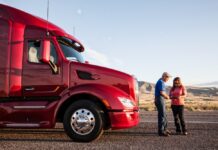










































What Is Commercial Truck Fleet Insurance?
Commercial truck fleet insurance is a single policy — or coordinated policy program — that covers multiple commercial vehicles under one account, typically offering a volume discount versus insuring each truck individually. It includes commercial auto liability, physical damage, and often cargo, workers’ compensation, and umbrella coverage. Fleet insurance cost in 2026 commonly runs $150–$900+ per vehicle per month, with a 20-truck operation potentially spending over $300,000 annually at record-high insurance rates.
Key Takeaways
- Fleet insurance cost in 2026 averages $150–$900+ per vehicle per month, depending on truck type, cargo, operating radius, and driver quality.
- Insurance cost per mile hit a record $0.102 in 2026, per ATRI’s operational cost data — the highest ever recorded.
- A 20-truck fleet could face $300,000+ in annual premiums at average current rates.
- Nuclear verdicts — jury awards exceeding $10 million — are the single biggest driver of rate increases. There were 135 nuclear verdicts against corporations in 2024.
- Fleet policies typically trigger at 2–5 vehicles; mini-fleet pricing starts at 2–3 units with many carriers.
- GPS tracking and AI dash cameras can reduce premiums 15–30% and typically pay for themselves in 1–2 years.
- Casualty/commercial auto rates jumped 9% overall in 2025; trucking fleet umbrella rates spiked 18%.
What Fleet Insurance Covers
A commercial truck fleet insurance program typically combines several coverages into one policy structure:
Primary Auto Liability
covers bodily injury and property damage caused to third parties when a driver is at fault. FMCSA requires a minimum of $750,000 for general freight and up to $5 million for hazardous materials.
Physical Damage (Collision + Comprehensive)
covers your own vehicles against accident damage, theft, fire, vandalism, and weather events.
Motor Truck Cargo
covers the freight your trucks are hauling. Required by most freight brokers and shippers.
Workers’ Compensation
covers driver injuries and medical costs. Required in most states.
Umbrella / Excess Liability
provides coverage above and beyond primary limits — essential in today’s nuclear verdict environment, where a single severe accident can exceed $10 million in damages.
Non-Trucking Liability (Bobtail)
covers drivers operating the truck outside of dispatched loads — driving to fuel stops or returning home between deliveries.
Why Fleet Insurance Costs Hit Record Highs in 2026
Fleet insurance costs have reached a crisis point in 2026. Several forces converge to drive this unprecedented pressure:
Nuclear verdicts are the single largest factor. The relentless rise of “social inflation” — particularly massive jury awards in personal injury and wrongful death cases involving commercial trucks — has pushed insurers to reserve more aggressively and price for worst-case scenarios. In 2024, there were 135 nuclear verdicts against corporations. Trucking companies are among the most frequently targeted defendants.
Rising repair costs — modern trucks packed with advanced driver-assistance systems (ADAS) and sensors make repairs dramatically more expensive. A single front-end collision on a sensor-equipped semi can cost $40,000+ to repair, versus $8,000–$12,000 on an older vehicle.
State litigation environments play a significant role. New York averages $666/month for $1 million liability — 58% above the national average. Maine averages $275/month — 35% below average. Florida, California, New Jersey, and Louisiana consistently rank as the most expensive states for commercial truck insurance.
Rate trend: Even clean fleets with no claims are seeing 7–15% rate increases at renewal in 2026.
Fleet Insurance Cost by Fleet Size (2026)
| Fleet Size | Estimated Monthly Premium | Annual Total | Notes |
|---|---|---|---|
| 2–4 vehicles (mini-fleet) | $300–$900/vehicle | $7,200–$43,200 | Mini-fleet pricing available |
| 5–10 vehicles | $250–$800/vehicle | $15,000–$96,000 | Fleet rating begins |
| 11–25 vehicles | $200–$700/vehicle | $26,400–$210,000 | Volume discount applies |
| 25+ vehicles | $150–$600/vehicle | $45,000–$432,000+ | Best volume discounts |
Rates assume standard freight, clean MVRs, and no HAZMAT. HAZMAT fleets, passenger transport, and long-haul petroleum carriers face substantially higher rates.
How to Reduce Fleet Insurance Costs in 2026
Deploy GPS tracking and AI dash cameras.
This is the single highest-ROI action available to fleet operators in 2026. Carriers offering 15–30% premium reductions to fleets with documented safety technology are now widespread. The technology typically pays for itself in reduced insurance costs within 1–2 years, before considering the value of defended claims.
Build a strong MVR management program.
Driver record monitoring — running MVRs at hire and semi-annually — and removing high-risk drivers from the fleet before renewal materially impacts pricing. Underwriters score fleets on driver safety data, and a fleet with documented monitoring programs earns preferential pricing.
Invest in CSA scores.
The FMCSA’s Compliance, Safety, Accountability (CSA) scoring system tracks violations by carrier. A poor CSA score signals higher risk to underwriters and can push premiums up 20–40%. Proactive compliance management and safety program documentation can meaningfully improve scores over 12–18 months.
Negotiate umbrella limits proactively.
Don’t wait for a renewal to discover umbrella rates spiked 18%. Many fleet operators are now purchasing umbrella coverage earlier in the policy year and negotiating multi-year rate locks where carriers will offer them.
Consider a captive or group insurance program.
For larger fleets (30+ units), captive insurance structures allow the business to essentially self-insure and capture underwriting profits. Trucking associations also offer group programs that aggregate risk across multiple operators for more favourable pricing.
Expert Tip
The fastest way to lower fleet insurance costs in 2026 is also the most underutilized: call your carrier before renewal and present your safety data proactively. Bring three years of MVR records, CSA scores, dashcam footage highlights, and any safety training completion records. Underwriters respond to documented evidence of risk reduction. Fleets that present a “safety portfolio” at renewal consistently outperform those that simply wait for a renewal quote.
FAQ
What is commercial truck fleet insurance?
It is a policy or policy program that covers multiple commercial vehicles under one account. It includes primary auto liability, physical damage, cargo, workers’ compensation, and often umbrella coverage, typically at a volume discount versus individual vehicle policies.
How much does fleet insurance cost per truck in 2026?
Fleet insurance runs $150–$900+ per vehicle per month in 2026, depending on truck type, cargo, operating radius, driver quality, and claims history. A 20-truck operation can face $300,000+ in annual premiums at current rates.
Why is commercial truck insurance so expensive in 2026?
The primary driver is nuclear verdicts — jury awards exceeding $10 million in accidents involving commercial trucks. Combined with rising repair costs for sensor-equipped vehicles, high-litigation states, and continued social inflation, trucking fleet umbrella rates alone jumped 18% in 2025.
How many trucks do I need for fleet insurance?
Most carriers traditionally define a fleet at 5+ vehicles, but many now offer “mini-fleet” pricing starting at 2–3 vehicles. Contact your carrier or broker to confirm the threshold that unlocks fleet pricing for your operation.
Can GPS and dashcams really lower my truck insurance?
Yes. GPS tracking and AI dashcam programs can reduce commercial truck fleet premiums by 15–30%. They lower risk, reduce fraudulent claims, and signal a safety commitment to underwriters. The technology typically pays for itself within 1–2 years through premium savings alone.
Find a Home-Based Business to Start-Up >>> Hundreds of Business Listings.