









































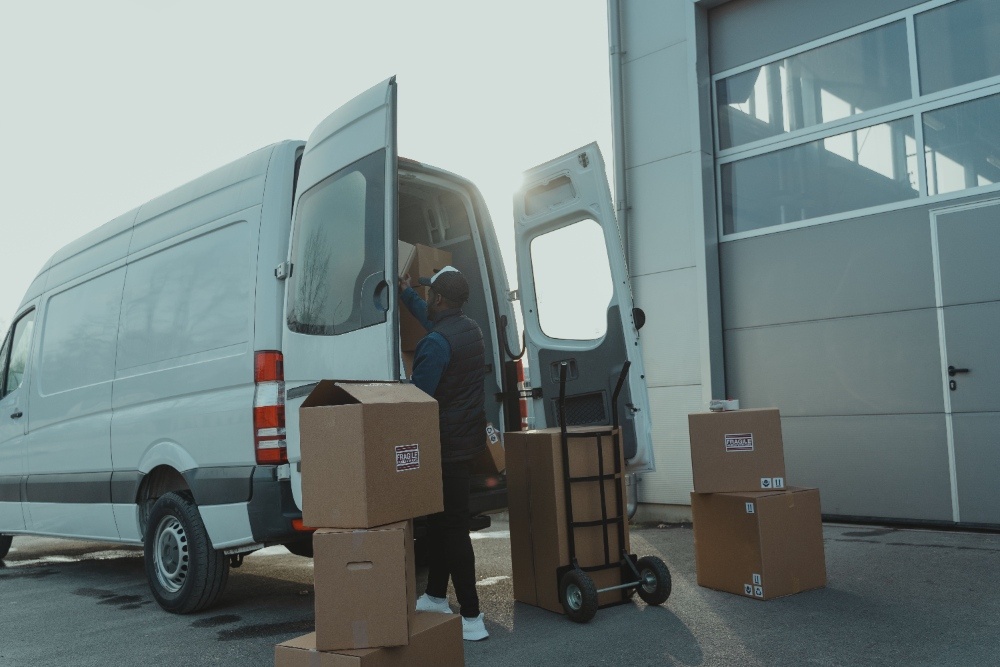
When you work for yourself, your vehicle is often your business. The van that carries your tools, the car that gets you to clients, the truck that makes the deliveries. Lose the right to drive it, and the income stops with it.
That is why a license suspension lands harder on the self-employed than on anyone else. Owners who need to get back on the road with a SR-22 treat the filing as a business priority, not just a legal box to tick. This guide explains what the SR-22 form means and how to handle it fast for a self-employed driver.
What Is an SR-22, Exactly?
It is not insurance itself. Understanding what an SR-22 means for a self-employed driver is important because it is simply a certificate your insurer files with the state to prove you carry the required minimum coverage. It is a guarantee, not a policy.
States usually require one after a serious driving issue, such as a DUI, driving uninsured, or too many violations in a short window. The certificate tells the DMV you are now covered and legal to drive.
You typically have to keep it active for about 3 years. If your coverage lapses during that time, the insurer notifies the state, and your license can be suspended again. Continuity is the whole point.
The filing fee is small, often $15 to $50, though the underlying policy usually costs more after a violation. A clear overview of how SR-22s work is worth reading before you call an insurer.
Which Business Owners Rely Most On Driving?
More than you might think. For a large share of small operations, the vehicle is not a perk, it is the production line. The owners hit hardest include:
- Plumbers, electricians, and contractors who haul tools and reach job sites.
- Delivery and courier services. Where every mile driven is billable work.
- Mobile services. Cleaners, groomers, and repair techs who come to the client.
- Rideshare and transport drivers. Including a non-emergency medical transport
- Sales and field reps. Who live between client meetings on the road.
For any of these, a grounded vehicle means a grounded business. The work simply cannot happen from a desk, so a lapse in driving rights stops revenue cold.
That dependence is exactly why these owners cannot afford a slow fix. The faster the paperwork clears, the sooner the jobs resume.
How Does a License Problem Hit a Small Business?
Immediately, and on several fronts at once. The most obvious is lost revenue, since missed jobs are missed income that rarely comes back.
Then there is reputation. A contractor who cannot show up, or a courier who cannot deliver, risks the client relationships that took years to build. Word travels fast in a local market.
There are knock-on costs too. You may pay others to cover routes, turn down new work, or lean on savings to bridge the gap. Even a side hustle can stall when the owner cannot drive to fulfill it.
This is why treating the SR-22 as urgent matters. The cost of staying off the road for weeks usually dwarfs the cost of the filing and the higher premium combined.
How Do You Get Back On the Road Fast?
By moving quickly and in the right order. The process is more straightforward than most owners fear. The table below lays out the steps.
| Step | What to Do |
| Confirm the requirement | Check the exact filing your state ordered |
| Call an SR-22 insurer | Not every company files them, so ask first |
| Buy the policy | Coverage must meet at least the state minimum |
| File the certificate | The insurer submits the SR-22 to the DMV |
| Keep it active | Avoid any lapse for the full required term |
Each step removes a delay. Calling an insurer that actually files SR-22s, rather than one that does not, can save days of back and forth. A quick phone call up front beats a week of lost work.
It also pays to treat this as part of running the company. Checking your state’s insurance rules first makes sure the policy meets the exact filing requirement, so there is no costly do-over later on.
What to Keep In Mind
- For the self-employed driver, an SR-22 license issue is a direct hit to income.
- An SR-22 is a state filing that proves you carry minimum coverage.
- It usually must stay active for about three years with no lapse.
- Driving-dependent trades feel a suspension the fastest and hardest.
- Acting quickly on the filing limits the damage to the business.

Keeping the Business Moving
For an owner-operator, getting back behind the wheel is not a convenience, it is survival for the business. The SR-22 itself is a small, manageable piece of paper, but the speed with which you handle it decides how much work you lose. Confirm the requirement, line up an insurer that files them, and keep the coverage clean for the full term. Do that, and a setback that could have closed the doors becomes a short detour instead.
Frequently Asked Questions
Is an SR-22 a Type of Insurance?
No. An SR-22 is a certificate your insurer files with the state to confirm you carry at least the minimum required coverage. The insurance is the underlying policy; the SR-22 is just the proof. You buy a qualifying policy, and the insurer submits the form on your behalf.
How Long Do I Need to Keep an SR-22?
Most states require it for around three years, though the exact term depends on the violation and where you live. The key rule is no lapse: if your coverage drops during that period, the insurer alerts the state and your license can be suspended again.
Can a Suspended License Really Affect My Business?
Absolutely. If your work depends on driving, a suspension stops jobs, delays deliveries, and can cost you clients. For tradespeople, couriers, and mobile services, the vehicle is the business, so resolving the filing quickly protects both your income and your reputation.
How Quickly Can I Get an SR-22 Filed?
Often within a day or two. Once you buy a qualifying policy from an insurer that handles SR-22s, many file the certificate electronically the same day. The main delay is usually finding the right insurer, so call ahead and confirm they file before you sign anything.
Find a Home-Based Business to Start-Up >>> Hundreds of Business Listings.