





































Quick Answer
A parking coating is a layered protective system applied over structural concrete to block water, resist chemical spills, and handle constant vehicle weight. The base layer seals moisture out while a textured wear layer adds grip and absorbs daily abuse. Choosing the right build comes down to traffic volume, exposure, and the local climate, since each factor changes how the surface performs over its working life.
Introduction
Anyone responsible for a multi-level deck knows the warning signs. Hairline cracks spread, dark stains bloom near the joints, and before long, the slab below starts to spall. A quality parking coating system is the difference between a structure that ages gracefully and one that drains a maintenance budget through repeated patch repairs. The reality is that most failures trace back to decisions made long before the first coat goes down.
Specifiers who treat these systems as a single product tend to get burned because performance depends on the substrate, resin chemistry, and application conditions. Owners weighing options often compare a thin sealer against a full membrane or a heavier build, such as epoxy garage flooring, each suited to a different demand. Matching the system to genuine working conditions, rather than to a price point, is what shields the slab underneath for decades.
What a Layered Deck System Actually Does
Structural concrete looks tough, yet it behaves like a sponge at the microscopic level. Water, road salt, and chemical residues migrate into the pore network, reach the steel reinforcement, and trigger corrosion that lifts and fractures the slab. A properly built commercial floor coating interrupts that cycle by forming a continuous barrier across the surface, sealing the deck against the very contaminants that shorten its life.
The Layered System at Work
Most protective builds rely on three working layers rather than a single film. Each one has a distinct role, and the strength of the whole depends on how well they bond.
- Primer: Penetrates the surface, anchors the build, and improves adhesion to the prepared slab.
- Membrane or base coat: Delivers the concrete waterproofing function, bridging fine cracks and blocking moisture intrusion.
- Wear course: Carries aggregate for traction and absorbs the abrasion from daily vehicle movement.
Why a Sealed Surface Wins
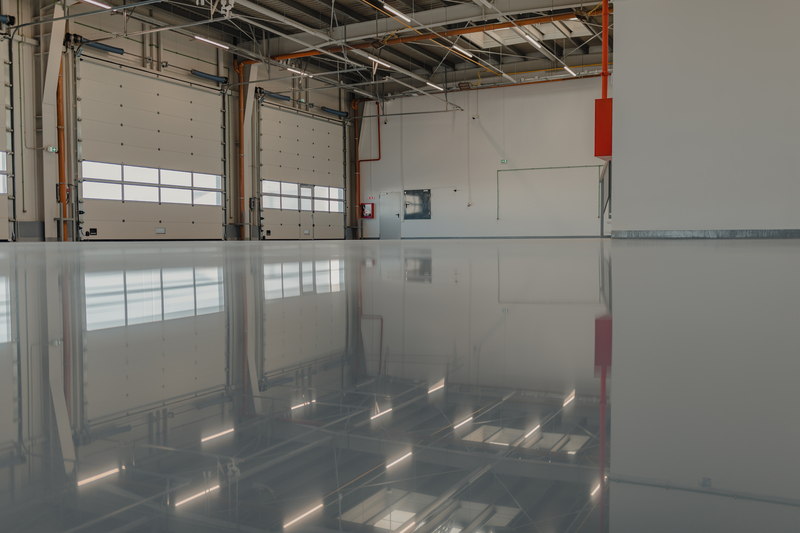
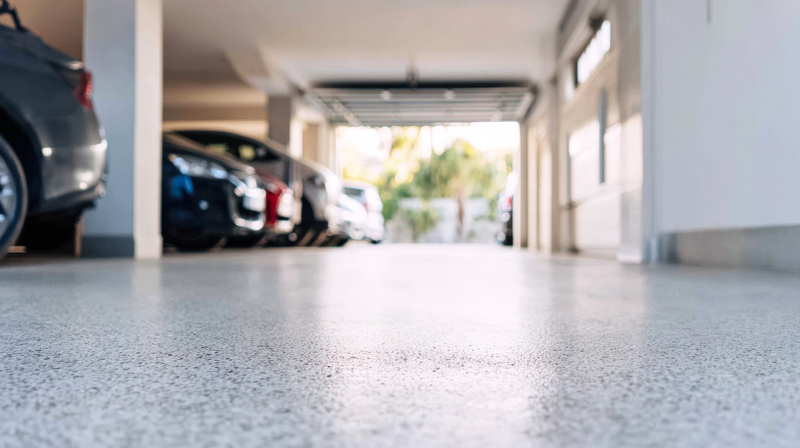
The reality is that a bare deck degrades quietly until repair bills spike. A protected surface resists chloride attack, limits freeze and thaw damage, and keeps line markings legible far longer. Beyond the structural gains, a uniform finish brightens dim interiors and improves safety underfoot, which matters in any facility built for heavy use.
Pro Tip: Specify the wear course aggregate by traffic type, not by appearance. Turning lanes and ramp curves face shear forces that flat parking bays never see, so those zones often need a heavier broadcast of grit to hold their grip.
A robust build only performs when it suits the demands placed on it, which is where material selection becomes the deciding factor.
Picking the Right Resin for the Job
No single build suits every deck, so the smart approach starts with how the surface will actually be used. Sunlight, the volume of daily movement, and the regional climate all push the decision toward one chemistry over another.
Weighing the Common Resin Families
The table below sets out the three systems specifiers weigh most often, with the trade-offs that surface once the deck is in service.
| System | Best Use | Strength | Limitation |
| Epoxy | Sheltered interior bays | High abrasion and chemical resistance | Chalks and fades under direct sun |
| Polyurethane | Top decks and ramps | Flexible, strong UV stability | Higher material cost |
| Methyl methacrylate | Cold areas, fast turnaround | Cures quickly at low temperatures | Strong odour during application |
Selecting a traffic coating for concrete rarely means choosing a single product outright. Many structures pair an epoxy base in protected areas with a flexible topcoat on exposed levels, balancing cost against the punishment each zone takes.
Reading the Site Before You Specify
In practice, a quick walkthrough answers most of the specification questions before a single sample is ordered. Survey the structure and weigh these factors:
- Sun exposure, since open upper levels demand colour-stable, flexible resins.
- Traffic load, where forklifts and delivery trucks call for a tougher wear course.
- Moisture history, because a damp slab narrows the field of viable products sharply.
The result is a parking coating system build matched to real conditions rather than to a brochure. That fit decides whether the finish lasts, though even the correct chemistry fails when the groundwork beneath it falls short.
Groundwork and Cold-Weather Timing That Prevent Failure
Most breakdowns have nothing to do with the product on the label. They trace back to the slab condition and the weather during application, the two variables that crews control yet often rush.
Preparation Decides Adhesion
A finish can only grip what sits beneath it, so surface readiness drives the entire outcome. Skipping a moisture check is the single most common mistake because trapped vapour pushes upward and peels even a premium membrane off the deck.
- Mechanically profile the surface through shot blasting or grinding to open the pores.
- Test the moisture with a calcium chloride or relative humidity reading before any primer goes down.
- Repair defects by filling spalls and routing cracks so the build bonds to sound material.
Curing in the Local Climate
In colder parts of the region, temperature governs the application window as tightly as the calendar does. Resins thicken and set slowly as the mercury drops, and condensation on a chilled slab can ruin a fresh film outright.
- Track the dew point and keep the surface several degrees above it through the cure.
- Choose cold-tolerant chemistries, such as fast-setting products, when the season is short.
- Shelter the work with heated enclosures so each layer sets within its rated range.
On the other hand, patience here pays off for years, since a film cured under proper conditions holds its bond far longer. Disciplined prep and smart scheduling turn a good specification into a deck that earns its keep.
Key Takeaways for a Durable Deck
A lasting result depends on three linked choices, namely the right layered build, a resin matched to real exposure, and disciplined groundwork before application. Treat moisture testing and the cure window as seriously as the product itself, since both decide whether the bond survives. When those pieces align with the local climate and traffic demands, a well-specified concrete parking coating system protects the structure beneath it and holds its value for many years of heavy service.
Find a Home-Based Business to Start-Up >>> Hundreds of Business Listings.