



























Quick Answer
Interior design trends 2026 are moving toward layered window treatments that balance thermal performance, privacy control, and refined aesthetics. Expect natural woven textures, motorized shading systems, and solar fabrics with low openness factors to dominate residential and commercial specifications. Colour palettes are shifting toward warm neutrals and earthy tones, while smart home integration is becoming a baseline expectation rather than a premium feature in new builds and renovations.
Introduction
Choosing window coverings has never been a simple finish selection. Clients arrive with inspiration images pulled from international design platforms, contractors need products that meet energy performance targets, and everyone expects installation to be seamless. The gap between what looks beautiful online and what actually performs in a real building is where most specification decisions go wrong.
The window covering industry is responding to this pressure with a new generation of products that treat function and form as equal priorities. Professionals working with Shade It are seeing this shift play out across residential renovations and commercial fit-outs alike, where clients are requesting treatments that contribute to thermal comfort, acoustic control, and refined visual layering all within a single window opening.
What Interior Design Trends 2026 Reveal About Window Coverings
Window covering trends are undergoing a quiet but significant recalibration. After several years dominated by minimalist roller blinds and stark white sheers, the market is shifting toward treatments that carry visual weight, textural depth, and measurable performance credentials. This change is being driven by a more informed client base, tighter building energy codes, and a design culture that increasingly values materiality over simplicity.
The Return of Natural Texture and Layered Systems
Woven natural fibres are reclaiming serious ground in both residential and hospitality specifications. Materials like grasscloth, linen weaves, and bamboo derivatives are appearing in roller and panel configurations that would previously have featured synthetic fabrics exclusively. The appeal is twofold: these materials carry an organic warmth that photographs well and ages gracefully, and they respond to the broader trends.
Layering has moved from a styling suggestion to a functional strategy. Pairing a solar roller with a sheer curtain panel and a blackout option behind it gives occupants precise control over daylight, privacy, and thermal comfort across different times of day, something a single treatment system simply cannot replicate.
Colour Direction for the Coming Season
Colour in window coverings is no longer treated as a neutral background decision. The palettes gaining momentum draw from warm mineral tones, specifically terracotta clay, warm white, stone grey, and dusty sage, and these are being specified to anchor room schemes rather than disappear into them.
Key colour directions confirmed across major textile trade shows include:
- Warm whites and off-whites replacing cool grey as the dominant neutral
- Earthy ochres and clay tones used as accent roller or panel colours
- Deep forest greens and charcoal blues in blackout and room-darkening fabrics
- Textured stone and sand tones in woven shades and natural roller materials
When specifying colour for south or west-facing rooms, always request a physical sample viewed under the room’s actual light conditions. Digital swatches shift significantly between screen and installation.
Modern Window Treatment Ideas Driving the 2026 Market
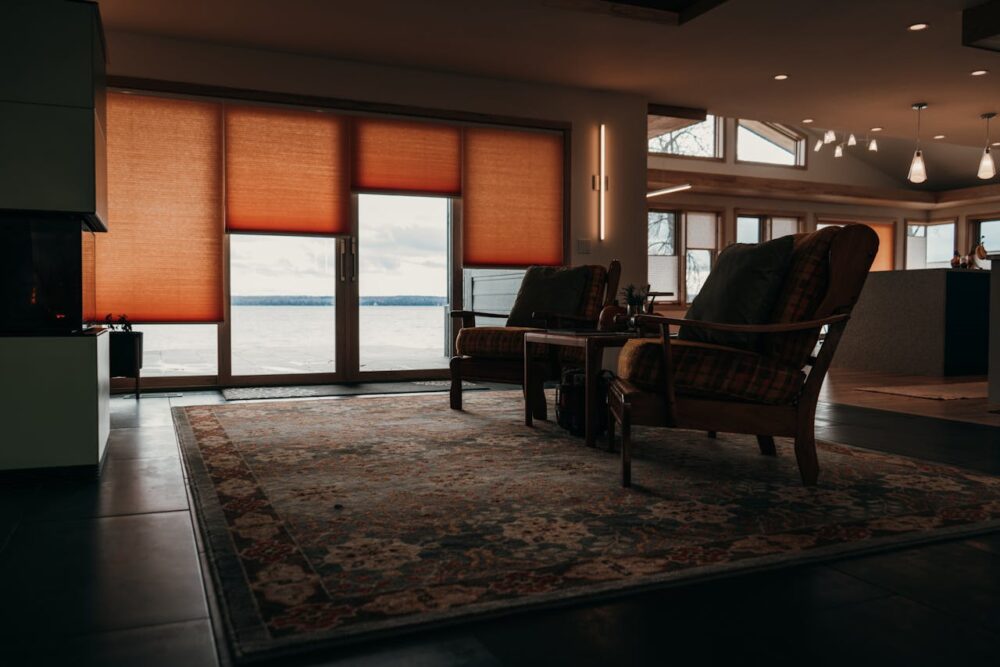
Technology and material science are converging in ways that are fundamentally changing what clients expect from a window treatment specification. Smart motorization in Shade It Blinds, once reserved for high-end commercial projects, has crossed into mainstream residential renovation budgets, and the fabric options supporting these systems have expanded considerably.
In practice, the most significant shift is not the technology itself but the expectation that it will be present as a baseline feature rather than a luxury upgrade.
Motorization and Smart Home Integration
Motorized shading systems are now being specified with direct integration into platforms like Google Home, Amazon Alexa, and Apple HomeKit as a standard deliverable. Position memory, scheduled automation, and sun-tracking logic are features clients are requesting from the initial consultation rather than adding later as afterthoughts.
The operational categories worth understanding include:
- Battery-operated motorized rollers for retrofit projects where hardwiring is not feasible
- Hardwired low-voltage systems for new builds and full renovations with ceiling access
- Solar-powered motors gaining traction in rooms with consistent direct sun exposure
- Zigbee and Z-Wave protocol blinds for integration into broader smart home ecosystems without a dedicated hub
Solar Fabric Performance: A Specification Comparison
Beyond aesthetics, solar fabric selection is where modern window treatment ideas deliver measurable building performance. The openness factor of a fabric determines how much direct light and radiant heat passes through, and this factor carries real consequences for occupant comfort and cooling loads.
| Fabric Openness Factor | Light Transmission | Privacy (Day) | Solar Heat Reduction | Best Application |
| 1% | Very Low | High | Excellent | West and south-facing glazing |
| 3% | Low to Medium | Good | Strong | Living areas, offices |
| 5% | Medium | Moderate | Good | General residential use |
| 10% | High | Low | Moderate | View preservation priority |
| 14%+ | Very High | Minimal | Low | Diffused light, low glare only |
Selecting the correct openness factor requires knowing the window orientation, the glazing specification, and the occupant’s tolerance for glare versus their preference for view. Treating this as a purely aesthetic decision is one of the most common and costly specification errors made at the design stage.
Innovative Window Blinds Redefining the Category
Dual-fabric roller systems, which house two separate fabrics on a single cassette and allow the occupant to alternate between sheer and blackout with one operating chain or motor, are gaining rapid adoption in bedrooms and media rooms. Transitional sheer shadings, a category that blends the soft appearance of a curtain with the light-control precision of a blind, are appearing in living areas where clients want warmth without sacrificing solar management.
Specifying Luxury Blinds and Innovative Window Blinds That Last
Selecting a treatment that looks exceptional on installation day is only part of the professional obligation. The harder question is how that product performs across five, ten, and fifteen years of daily operation, seasonal temperature swings, and UV exposure. This is the specification layer that most design guides skip entirely, and it is precisely where informed clients and professionals separate quality investments from costly replacements.
Material Durability and UV Degradation
UV stabilization is the single most important technical property to verify when specifying fabrics for sun-exposed glazing. Untreated or poorly stabilized fabrics will yellow, stiffen, and lose their openness factor consistency within two to three years in rooms with significant solar exposure. The local climate in many Canadian regions compounds this issue, where intense summer sun combined with dry indoor heating cycles creates accelerated degradation conditions.
When evaluating fabric longevity, the metrics worth requesting from suppliers include:
- Lightfastness rating of 6 or higher on the Blue Wool Scale for any sun-facing application
- Pilling and abrasion resistance scores for operating systems that require frequent fabric movement
- Antimicrobial treatment certifications for high-humidity environments like bathrooms and kitchens
- Warranty period covering both fabric integrity and operating mechanism performance
- PVC content disclosure relevant for clients pursuing low-VOC interior specifications
Operating System Longevity and Maintenance Intervals
The fabric and the operating mechanism age at different rates, and a specification that ignores this reality will create client service problems down the line. Clutch-based chain systems on quality rollers are rated for between 10,000 and 20,000 operating cycles, depending on the manufacturer and bracket grade.
Motorized systems introduce additional variables, including battery replacement schedules, firmware update requirements, and motor torque ratings relative to fabric weight.
What the 2026 Window Covering Trends Tell Us
The direction is clear for window covering trends in 2026. Natural textures, intelligent operating systems, and performance-grade fabrics are no longer niche preferences reserved for high-end projects. They represent the new baseline for informed specification decisions across residential and commercial applications.
Professionals who understand the technical layer behind these shifts, from fabric openness factors to UV stabilization ratings, will consistently deliver installations that age well and satisfy clients long after completion.
Find a Home-Based Business to Start-Up >>> Hundreds of Business Listings.