









































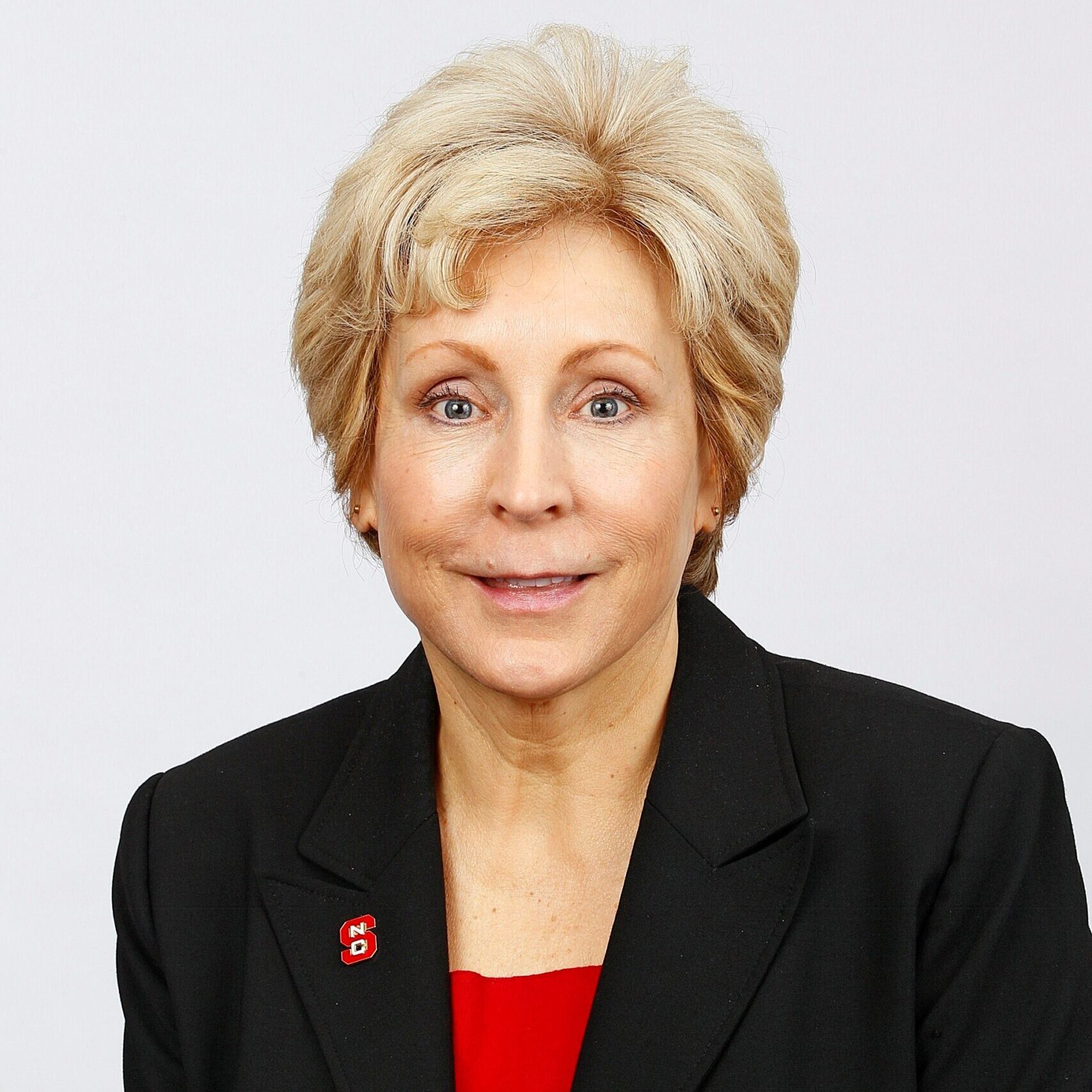
The lesson Debbie Yow comes back to most (derrived from college athletics) has nothing to do with authority. It has everything to do with restraint.
Knowing when to hold firm. Knowing when to let go. Knowing that the scoreboard doesn’t always reflect your decisions.
You Can’t Win a Game You’re Trying to Referee
The impulse to control is understandable in high-stakes environments, as in college athletics.
Athletics departments run on pressure. Pressure to win big. Pressure to balance budgets.
Pressure to build better facilities. Pressure to provide, as well as possible, for the growing needs of student athletes.
And lately, the pressure to garner NIL (name, image and likeness) funds and provide revenue share money for athletes.
Budgets, personnel, facilities, coaching hires, donor relationships, faculty interaction, student athlete collaborations, and media relations. The variables are endless, and the margin for error is thin. The natural instinct is to grip tighter. Account for everything. Leave nothing to chance.
Debbie Yow has lived that instinct. She has also learned to question it.
“You don’t control everything, and at some point you have to stop trying if you want to maintain your sanity,” she says. You can have an opinion, you can look for ways to influence the outcome of specific initiatives, but control, that was never really yours in many circumstances, because college athletics is not a true business. It is a quasi-business model, with many stakeholders weighing in with different perspectives to begin with.
Sounds simple.
In practice, as with college athletics, it requires real discipline.
Acting decisively while accepting that outcomes will always be partially out of reach. Many leaders never reconcile those two things. The ones who do tend to build programs that outlast them.
Hesitation Is a Play Call, Not a Fumble
In a culture that rewards decisiveness, pausing feels like a liability.
It isn’t.
The willingness to sit with uncertainty, to hold off on signing the deal, making the hire, or calling the play before the moment demands it, can separate administrators who survive from those who build something lasting.
Debbie Yow’s career in college athletics is full of these moments.
The Saint Louis University interview where, rather than pitching herself, she asked the all-male booster selection committee what they actually wanted for their program, which at one time had the #1 ranked men’s basketball program in the initial AP poll of 1949.
The hire of coach Charlie Spoonhour at Saint Louis, who was named in year #2 as National Coach of the Year for returning St. Louis to the NCAA Tournament after a 37 year absence.
The Brenda Frese hire at Maryland, which drew questions about why Frese would ever leave Minnesota for College Park, and produced a national championship four years later.
The NC State turnaround that began with one audacious goal of a Top 25 finish in the national Director’s Cup, announced at her initial press conference (while ranking #89), and closed with a #15 national ranking in 2018, the program’s highest finish ever.
None of those happened because she controlled the room. They happened because she read it.
As with in college athletics, there will always be decisions that are unpopular. A real leader carries that weight without demanding acknowledgement for it.
“Sometimes you don’t make the right call because of strategy. You slow down, something happens, and you realize later you got saved from yourself.” Yow explains.
The Best Insurance: Hire Well
Control is a myth. Talent is not.
If there is one lever a leader actually controls, it is who they put in the room.
Everything else: the outcomes, the culture, the legacy, flows from that single decision, made over and over again across a career.
Debbie Yow learned this early, and she learned it from someone worth learning it from.
For 12 of her 16 years at the University of Maryland, she worked alongside Dr. Dan Mote, one of the most effective university presidents in the country.
His influence on her leadership was considerable. But one principle above all others stuck.
“‘A’ people hire other ‘A’ people,” Mote told her. “‘B’ people hire ‘C’ people.”
The distinction is worth sitting with.
High-performing leaders want to be surrounded by the best people they can attract.
They’re not threatened by excellence in the room, but rather, they depend on it.
Average leaders, by contrast, hire down. Quietly. Often without realizing it.
The instinct to avoid being overshadowed is rarely conscious, but it is almost always costly.
The Scoreboard Nobody Hangs in the Rafters
The control myth doesn’t stop at decisions.
It shapes how leaders think about culture, specifically, the idea that culture can be designed and then declared.
Write the values on the wall. Send the all-hands email. Distribute the handbook. While those choices all matter, Yow has a simpler, harder definition.
“Culture is what you do and what you say repeatedly,” she says.
The example she returns to is work ethic.
A leader can preach it constantly and cancel it entirely by showing up late and leaving early. Reputation isn’t built in speeches. It builds up in the small, repeated choices that the people around you are always watching, even when you think they aren’t.
At NC State, the athletics program tied for the #1 ranking among all campus units for employee engagement and satisfaction in 2018. No policy initiative produced that result. A culture modeled, day after day, at the top did. The survey was anonymous. The outcome was not.
That kind of result doesn’t get manufactured. It gets earned.
The Trophy That Lives in a Breakfast Room
Leaders who fixate on control tend to optimize for outcomes they can predict. Win-loss records. Revenue figures. Rankings.
Those things matter.
Debbie Yow has the numbers across three college atheltics programs and three decades to prove it. The moments she returns to most, though, aren’t the championships.
“Graduation morning,” she says, without hesitation. We always had a senior breakfast. Parents, grandparents, siblings all there. The energy in that room was something else to behold. You knew what they’d accomplished by earning their degrees was going to carry them for the rest of their lives to opportunities that otherwise would not exist.”
16 NCAA titles. A Forbes list. The Corbett Award, the highest administrative honor in collegiate athletics. Yet the metric that registers deepest is an annual breakfast.
That is what happens when a leader releases the idea that they are the reason everything works.
They become, instead, the reason others don’t need them to be.
The myth of total control doesn’t protect a program. It limits one. The leaders worth following have always known the difference.
Find a Home-Based Business to Start-Up >>> Hundreds of Business Listings.