








































For years, self-storage was treated as one of the simplest plays in commercial real estate: acquire a facility, find occupancy, and let time do the rest. It was predictable, fragmented, and often overlooked.
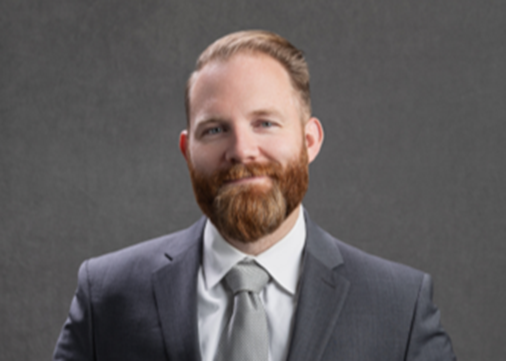
AJ Osborne saw something else entirely.
With more than 20 years of experience as an owner, operator, and developer, Osborne built his career by challenging the assumptions that kept others on the sidelines. Today, as the founder of Cedar Creek Capital, board member of Storelocal, and co-founder of Tenant Inc., he has helped reshape how investors think about self-storage, not as a passive asset but as a dynamic, operational business.
And this is at the center of one of the fastest-growing self-storage syndication strategies in the country.
Seeing Opportunity Where Others Saw Simplicity
When AJ Osborne got into self-storage syndication, it was during a time when the industry lacked institutional participation, not because it lacked potential but because it lacked infrastructure. There were no scalable third-party operators, which made it difficult for large capital to enter. At the same time, the industry remained highly fragmented, dominated by independent owners with varying levels of operational sophistication.
But beyond the structural gaps, Osborne identified something deeper: a shift in how people relate to space.

As real estate costs rise, regulations tighten, and consumer behavior evolves, storage is no longer temporary. It is embedded in everyday life. Businesses are more distributed, and households are more mobile. The need for flexible space has become constant rather than occasional.
For Osborne, that meant one thing: the runway for growth was far longer than most investors realized.
The Core Principle: This Is a Business, Not Real Estate
Where many investors focused on occupancy rates and location, Osborne focused on operations.
“The core principle was simple,” he explains. “This is not a real estate asset. It’s a business.”
That mindset reshaped everything, from how deals are underwritten to how value is created.
Instead of relying on market appreciation or rent growth alone, his team looks for what he calls “money on the table”: untapped revenue within existing assets. These are facilities with poor visibility, inconsistent pricing, weak marketing, or underutilized demand.
In many cases, the opportunity lies not in changing the market but in correcting inefficiencies.
Facilities that prioritize occupancy without strategic pricing leave revenue behind. Others fail to market effectively, meaning potential customers simply do not know they exist. By improving operations — marketing, rate management, customer acquisition — Osborne’s model captures value that is already there, regardless of broader market conditions.
It is a shift from passive ownership to active optimization.
Rethinking Demand in Fragmented Markets
One of Osborne’s more nuanced insights challenges a basic assumption that market demand is evenly distributed. In theory, it should be. But in practice, it rarely is.
Customers do not see every facility. They see the ones that are visible, well-marketed, and easy to access. That means a handful of operators can capture a disproportionate share of demand, while others remain invisible.
“Demand is not spread equally,” Osborne explains. “It only works that way if customers know all the options.”
This creates a competitive advantage for operators who understand how to influence visibility and conversion. It is not just about having units available but about being the facility that customers actually find and choose.
For Cedar Creek Capital, this insight informs both acquisitions and operations. The goal is not to compete evenly, but to shift the demand curve.
Scaling Without Losing Discipline
Growth, however, brings its own challenges.
As Cedar Creek Capital expands, maintaining operational discipline requires constant recalibration. Systems that work at one scale often break at another. Technology, team structure, and processes all need to evolve in real time.
Osborne is direct about the difficulty. “It’s something I don’t think I’ve always gotten right,” he admits, pointing to the need for continuous adjustment.
The company regularly reassesses inefficiencies, restructures when necessary, and prioritizes transparency and speed. The goal is to remain entrepreneurial (even at scale) without becoming constrained by the very systems designed to support growth.
Building an Ecosystem, Not Just a Portfolio
Beyond acquisitions, Osborne’s strategy extends into education and technology.
Through his bestselling book and the “Self Storage Income” podcast, he has built one of the largest educational platforms in the industry, but he does not view it as a standalone business. Instead, he frames it as an ecosystem — one that creates opportunities, partnerships, and access to data that feed back into operations.
“The education part fuels the business,” Osborne explains. “We get more opportunities, better operators, and more scale.”
This ecosystem approach is reinforced through technology investments, including Tenant Inc., where Osborne is helping develop tools that improve property management, pricing, and market analysis across the industry. Together, these layers (operations, education, and technology) create a flywheel effect, strengthening both the company and the broader network around it.
Shaping the Future of Self-Storage
Looking ahead, Osborne’s vision is not centered on dominance but balance.
While Cedar Creek Capital aims to be a major consolidator, Osborne is equally focused on preserving a diverse and competitive industry. That means supporting independent operators, expanding access to tools and data, and avoiding the kind of over-consolidation seen in other sectors.
“A rising tide lifts all ships,” he says, emphasizing that long-term success depends on a healthy, functioning ecosystem, not a winner-take-all market.
In an industry often defined by square footage and occupancy rates, Osborne’s strategy for rapid self-storage syndication stands out for its depth. It is not just about owning more facilities but about understanding how those facilities operate, how demand behaves, and how value is truly created.
That perspective is what continues to set his approach apart, and why Cedar Creek Capital is growing as quickly as it is.
Find a Home-Based Business to Start-Up >>> Hundreds of Business Listings.