










































Abstract
This article analyzes the challenges and strategies of effective intercultural communication in international B2B sales. The purpose of the study is to synthesize theoretical models of cultural differences with the practical application of developing universal communication protocols and ethical standards that facilitate successful deal closing and building long-term partnerships. The methodology is based on a comparative analysis of classic cross-cultural concepts, a study of empirical data on communication failures in business, and a synthesis of best practices from global corporations. The results demonstrate that universal protocols must combine structural process standardization with flexibility in interpreting cultural context, while ethical standards must take into account the relativity of business norms. The practical significance of this study lies in the development of a step-by-step framework for the creation and implementation of corporate international communication standards that minimize the risks of misunderstanding and strengthen trust between partners from different cultural backgrounds.
The globalization of supply chains and the digitalization of business interactions have significantly increased the frequency and intensity of contacts between companies from different cultural backgrounds. In international B2B sales, where the cost of error can amount to significant financial and reputational losses, effective communication is becoming a critical success factor. The relevance of this topic stems from the growing number of communication failures caused not by language differences, but by a mismatch of underlying cultural codes regarding negotiations, decision-making, time management, and understanding agreements. The purpose of this article is to develop scientifically based principles for creating universal communication protocols and ethical standards that would bridge cultural barriers without eroding cultural specificity. To achieve this goal, we systematically analyze the theoretical foundations of cross-cultural management, identify typical communication risk areas in sales, summarize standardization practices, and formulate an ethical framework for global operations.
Cultural Dimensions Models and Their Operationalization
Understanding cross-cultural differences in the business environment relies on a number of established theoretical models that translate the abstract concept of “culture” into measurable parameters. Geert Hofstede’s cultural dimensions model remains the most influential in the context of organizational behavior and communication, identifying axes such as power distance, individualism/collectivism, uncertainty avoidance, masculinity/femininity, and long-term orientation [1]. For example, a high power distance index suggests that decisions in the partner company can be made exclusively at the top level, and communication must comply with a strict hierarchy, while in cultures with low distance, more direct and informal contacts with middle managers are possible.
Edward Hall’s theory of high- and low-context cultures adds additional depth to the analysis. In high-context cultures (Japan, Arab countries), most information is contained in the context of communication—nonverbal cues, the status of participants, and the history of the relationship—while in low-context cultures (USA, Germany), the emphasis is on explicit, verbally expressed, and documented messages [3]. For B2B sales, this distinction means that in the former, building trusting personal relationships is a prerequisite for a deal, while in the latter, a technically flawless commercial proposal can secure the deal.
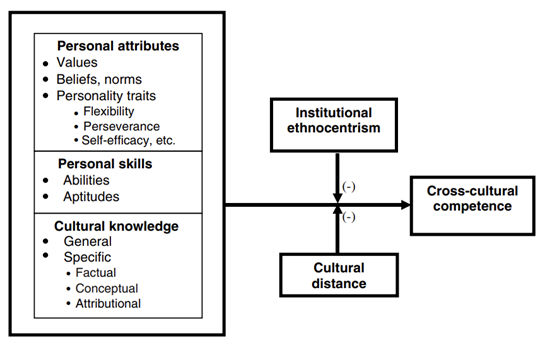
Another important aspect is the concept of monochronic and polychronic perceptions of time. Monochronic cultures view time linearly, value punctuality, consistency, and focus on a single task. Polychronic cultures perceive time as cyclical, allow for the concurrent resolution of multiple issues, and are more flexible regarding deadlines and schedules. The clash of these approaches during contract and project negotiation is a frequent cause of conflict.
Communication Risk Areas and the Practice of Developing Universal Protocols
In international B2B sales, several areas of increased cross-cultural risk can be identified. These include the contact-building and relationship-building phase, the negotiation and decision-making process, and the post-deal interaction and contract management phase. At any stage, misinterpreting silence, the form of refusal, the degree of formality, or the manner of expressing disagreement can lead to a deal being disrupted.
The practice of developing universal communication protocols aims to minimize these risks by creating corporate-wide standards that set boundaries but allow for adaptation. Such a protocol typically includes several mandatory elements.
The first element is a standard format for preparing a profile of a potential partner, which, in addition to financial and performance indicators, includes a mandatory cultural analysis: accepted decision-making models, time management, preferred communication styles, national business traditions, and taboos.
The second element is a standardized but adaptable script for initial contacts, which regulates the level of formality of correspondence, the order of introductions, acceptable topics for small talk, and the procedure for exchanging business cards, taking into account local norms.
The third element concerns the conduct of negotiations. The protocol may stipulate the mandatory use of professional interpreters for complex technical discussions even with a good knowledge of English, rules for taking meeting minutes and recording agreements, as well as recommended presentation structures—from deductive for low-context cultures to inductive for high-context ones. A well-defined understanding check algorithm is essential, which does not involve asking “Did you understand?” but rather asking the participant to rephrase or summarize the agreed-upon points in their own words.
Case Studies and Empirical Data on Standardization
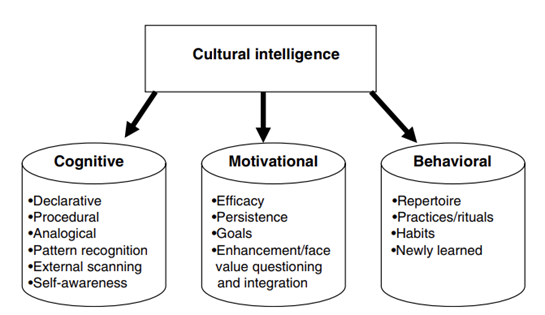
Empirical research and the practices of international corporations confirm the effectiveness of a systems approach to cross-cultural communication. IBM, a multinational corporation with extensive experience in markets with diverse cultural characteristics, has implemented a global “Cross-Cultural Competence” program. The program includes mandatory training for sales and customer support employees on the fundamentals of the Hofstede and Hall models as applied to specific regions. Communication checklists have been developed for each cultural cluster, covering all stages of the transaction—from the initial email to contract signing and service support. According to the company’s internal assessments, this has reduced the number of deal breakdowns during final negotiations due to misunderstandings and increased customer satisfaction.
Another example is the practice of the German industrial group Siemens in working with partners in Southeast Asia. Facing difficulties in understanding the straightforward German communication style in high-context cultures, the company developed a special protocol for complex project discussions. This protocol calls for allocating additional time for informal meetings before and after technical sessions, avoiding public criticism of the partner’s ideas, and always framing rejections or problems in the context of a collaborative search for a solution, rather than as an ultimatum. This has led to an improved negotiating climate and a reduction in contractual disputes during the project implementation phase [4].
A study published in the Journal of International Business Studies indicates that companies with formalized cross-cultural training programs for their sales teams demonstrate a 30-40% higher success rate in entering new international markets compared to companies relying on spontaneous employee adaptation [2].
The study confirms that the effectiveness of international B2B sales depends significantly on a company’s ability to systematically manage cross-cultural communications. Universal protocols and ethical standards do not act as rigid instructions, but as flexible frameworks that ensure predictability and consistency of communication while respecting the partner’s cultural context.
The key conclusion of the study is the need for a combined approach that combines structural process standardization at the corporate level with deep cultural awareness at the performer level. The developed framework model offers a practical path for such integration, beginning with diagnostics and ending with continuous assessment and adjustment.
Practical recommendations for companies include investing in the ongoing development of intercultural competence within sales teams, developing protocols that are not abstract but tied to specific sales stages, and creating an open environment for discussing cultural complexities. The application of these principles is particularly relevant for companies expanding their sales geography beyond culturally similar regions or operating in industries where transactions require deep integration of value chains and long-term, close collaboration. Further research could focus on quantifying the impact of implementing such protocols on the financial performance of international operations and exploring the role of digital communication platforms in overcoming or, conversely, deepening cross-cultural barriers.
References
- Hofstede G., Hofstede G. J., Minkov M. Cultures and Organizations: Software of the Mind / G. Hofstede, G. J. Hofstede, M. Minkov. – 3rd ed. – New York : McGraw-Hill, 2010. – 561 p.
- Johnson J. P., Lenartowicz T., Apud S. Cross-cultural competence in international business: Toward a definition and a model / J. P. Johnson, T. Lenartowicz, S. Apud // Journal of International Business Studies. – 2006. – Vol. 37, № 4. – P. 525–543.
- Hall E. T. Beyond Culture / E. T. Hall. – New York : Anchor Books, 1976. – 298 p.
- Trompenaars F., Hampden-Turner C. Riding the Waves of Culture: Understanding Diversity in Global Business / F. Trompenaars, C. Hampden-Turner. – 3rd ed. – London : Nicholas Brealey Publishing, 2012. – 389 p.
- Gesteland R. R. Cross-Cultural Business Behavior: A Guide for Global Management / R. R. Gesteland. – 5th ed. – Copenhagen : Copenhagen Business School Press, 2012. – 353 p.
- Thomas D. C., Peterson M. F. Cross-Cultural Management: Essential Concepts / D. C. Thomas, M. F. Peterson. – 4th ed. – Los Angeles : SAGE Publications, 2017. – 344 p.
Find a Home-Based Business to Start-Up >>> Hundreds of Business Listings.