











































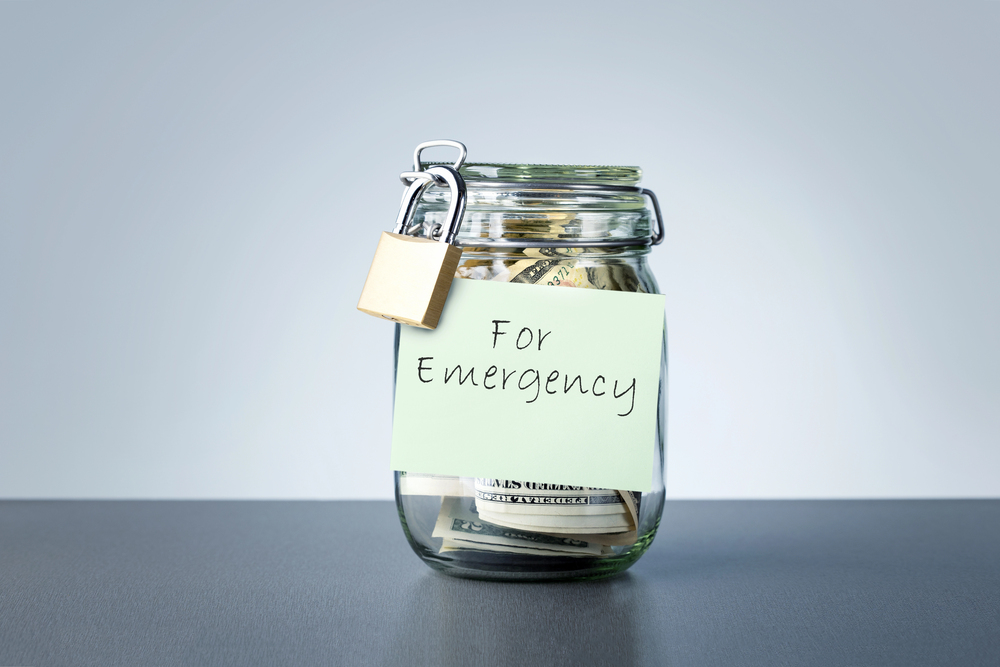
Imagine you’ve been making steady progress on your debt repayment payoff plan for months when your car breaks down, requiring a $1,200 repair. Without emergency reserve savings, you face a devastating choice—put the expense on a credit card and slow your repayment payoff plan or risk losing your job without reliable transportation.
If you’re managing debt, building an emergency fund might seem counterproductive or financially impossible. However, emergency reserve savings are precisely what you need to prevent unexpected expenses from derailing your debt elimination payoff strategy and pushing you deeper into financial distress.
Why Do I Need an Emergency Fund If I Have Debt?
Most Americans are unprepared for financial emergencies, making this challenge even more critical when you’re already carrying debt. According to Bankrate’s 2024 Emergency Savings Survey, 56% of Americans can’t cover a $1,000 emergency expense without resorting to using credit cards or loans.
When you’re already in debt, unexpected financial emergencies can create a dangerous cycle. Without emergency reserve savings, you’re forced to borrow additional money, which increases your debt burden and reduces your ability to handle future emergencies. The Federal Reserve’s 2022 Economic Well-Being report found that 37% of Americans couldn’t cover a $400 emergency expense using cash or equivalent savings.
Building emergency reserve savings while managing debt isn’t about choosing between goals—it’s about creating financial stability that protects your debt repayment payoff progress. Even a modest emergency fund of $500-$1,000 can prevent minor setbacks from becoming major financial disasters.
How Much Should I Save for Emergencies While Paying Off Debt?
Setting realistic emergency fund goals is crucial for maintaining motivation while making progress on debt elimination payoff. The key is establishing targets that feel achievable and doable without overwhelming your debt repayment capacity.
Financial experts recommend starting with a starter emergency fund of $1,000 when you have consumer debt. This amount covers most moderate financial emergencies while remaining achievable and doable within 6-12 months for most households. Your timeline depends on your savings capacity—if you can contribute and save $100 monthly, you’ll reach $1,000 in 10 months. Even saving $50 monthly achieves this goal in 20 months.
Start with $500 to cover minor financial emergencies like small car repairs or medical copays. Once you reach this milestone, work toward $1,000 for moderate emergencies. After eliminating paying off high-interest debt, build toward the traditional 3-6 months of expenses for comprehensive financial security.
What’s the Best Strategy to Balance Debt Payments and Emergency Savings?
Balancing emergency fund contributions and debt repayment payments requires a strategic allocation approach that addresses both financial priorities simultaneously. This balanced strategy prevents the common mistake of focusing exclusively on one goal while neglecting the other.
Try this practical allocation split method for your available income after essential expenses:
- 25% toward emergency fund contributions deposits
- 60% toward debt payments (minimum payments plus extra for the highest-interest debt)
- 15% as a financial buffer for monthly variation surprises
This approach ensures steady progress on both emergency savings and debt elimination payoff. For example, if you have $1,600 available after covering essential expenses, you’d allocate $400 to emergency savings, $960 to debt repayment and keep $240 for unexpected monthly expenses. Consistency in maintaining this balance creates momentum toward both financial goals.
How Do I Automate My Emergency Fund Contributions?
Automation eliminates the willpower and decision fatigue associated with manual savings transfers. Most financial institutions offer automatic transfer services that move predetermined amounts from checking to savings accounts on scheduled dates.
Schedule your automatic transfers for the day immediately following your payday when your account balance is highest. This timing ensures sufficient funds are available while making the contribution transfer feel automatic rather than discretionary or optional. Treat your emergency fund contribution transfer as a non-negotiable required monthly expense, similar to your rent or utility payments.
Research shows that individuals typically adjust their spending patterns to accommodate automatic savings within 60-90 days of implementation. This behavioral adaptation change makes emergency fund building feel natural rather than restrictive to limiting your lifestyle.
Where Should I Keep My Emergency Fund?
Your emergency savings require a secure, accessible account that balances growth potential with liquidity needs. The ideal emergency fund account offers competitive interest rates while ensuring your money remains readily available for genuine financial emergencies.
High-yield savings accounts typically offer the best combination of features:
- Interest rates of 4.0% APY or higher (current market rates)
- No monthly maintenance fees that erode your savings
- FDIC insurance protection up to $250,000
- Online access without debit card temptation
Money market accounts represent another viable option, often providing slightly higher interest rates in exchange for higher minimum balance requirements, typically $2,500-5,000. These accounts usually limit monthly transactions, which actually helps preserve funds for genuine emergencies rather than discretionary optional spending.
Avoid keeping savings in checking accounts due to minimal interest earnings and excessive accessibility. Similarly, avoid investment accounts where market volatility swings could reduce your funds when you need them most and certificates of deposit that impose early withdrawal penalties.
Should I Consider Debt Consolidation to Free Up Money for Savings?
Debt consolidation can potentially create additional monthly cash flow for emergency fund contributions and deposits by reducing your overall debt service obligations and payments. However, this strategy requires careful analysis to ensure it genuinely improves your financial position rather than extending your debt repayment payoff timeline.
Consolidation makes financial sense when you’re managing multiple high-interest debts. For instance, if you’re making $300, $250 and $200 monthly payments on three credit cards with interest rates between 18-25%, consolidating into a single personal loan at 12% interest might reduce your total payment to $600, freeing up $150 monthly for emergency savings.
Research consolidation options from at least three reputable lenders, ensuring the new interest rate significantly undercuts your current weighted average rate. Avoid extending the repayment payoff period unnecessarily, as this increases total interest costs despite reducing monthly payments. Carefully review all fees, including origination charges that might offset or cancel out initial savings.
How Can I Accelerate My Emergency Fund Building?
Maximizing emergency fund contributions often requires creative approaches beyond regular monthly allocation contributions. Windfalls and expense optimization cuts provide excellent opportunities to accelerate your progress toward financial security.
Strategic windfall allocation approach: Try this windfall split:
- 50% toward emergency savings
- 30% toward the highest-interest debt elimination payoff
- 20% for modest rewards to maintain motivation
This balanced approach works effectively for tax refunds, work bonuses, freelance income or gifts. Additionally, every dollar you eliminate through expense reduction—canceled subscriptions, negotiated bills, reduced dining costs—can be redirected toward your financial goals.
Consider developing supplemental income streams through flexible side work. Modern gig economy opportunities like food delivery, online tutoring or freelance services can generate $200-500 monthly in additional income dedicated entirely to emergency fund building.
What Expenses Actually Qualify as Financial Emergencies?
Establishing clear criteria for emergency fund usage prevents gradual erosion of your savings through non-essential expenses. Understanding the distinction between genuine financial emergencies and lifestyle inconveniences helps preserve your safety net for critical situations.
Legitimate Financial Emergencies Include:
- Job loss or significant income reduction
- Major medical expenses exceeding insurance coverage
- Essential home repairs affecting safety or habitability affect your ability to live there
- Critical vehicle repairs are necessary for employment
- Family emergency travel requirements
Non-Emergency Expenses That Feel Urgent:
- Holiday gifts or seasonal celebrations
- Sale opportunities or discount shopping
- Routine maintenance and predictable expenses
- Non-urgent home improvements or upgrades
When evaluating potential emergency fund usage, ask whether immediate payment is necessary to protect your health, safety, housing or employment. If the expense can be planned for or delayed, it likely doesn’t qualify as a genuine financial emergency.
How Do I Maintain Long-Term Financial Security?
Building your initial emergency fund represents the foundation of comprehensive financial security. Once you’ve established this safety net, regular maintenance and strategic growth ensure continued protection against future uncertainties and surprises.
Conduct quarterly financial reviews to assess whether your emergency savings remain appropriate for your current situation. As your income increases or expenses change, your emergency fund target should adjust accordingly. Celebrate progress milestones to maintain motivation while gradually increasing your savings goals.
After paying off high-interest debt, redirect those payment amounts toward building comprehensive emergency savings covering 3-6 months of essential expenses. According to financial experts at CNBC, households with $3,000 in monthly expenses should ultimately maintain $9,000-18,000 in emergency savings for optimal financial security.
Can I Successfully Build Emergency Reserves Savings While Managing Debt?
Building emergency savings while managing debt requires patience, consistency and strategic planning but it’s absolutely doable with the right approach. The key is starting with manageable contributions deposits that fit your current financial capacity, rather than waiting for perfect conditions.
Remember that financial progress isn’t always linear. Some months will allow larger contributions, while others may require using your emergency savings for their intended purpose. The important thing is maintaining the savings habit and rebuilding your fund after any necessary withdrawals.
Focus on gradual progress rather than perfection. Starting with even $25-50 monthly creates positive momentum and establishes the financial discipline that will serve you throughout your journey toward debt freedom and long-term financial security. Your future financial stability depends on the foundation you build today, one contribution deposit at a time.
Ready to start? Set up your first automatic transfer today—even $25 makes a difference.
Find a Home-Based Business to Start-Up >>> Hundreds of Business Listings.


