












































Forex trading looks enticing: 24-hour action, screenshots of quick wins, endless hype. Yet 72 percent of new retail traders lose money each year ESMA disclosure because they dive in without a proven plan. According to a 2026 PipTrend report, more than 70 percent of daily volume is now driven by AI systems, so yesterday’s “quick tips” often fall flat.
This guide highlights four beginner-friendly strategies that still win in 2026. Each one is road-tested, easy to follow, and paired with risk rules that protect every dollar. Pick the style that fits your schedule, practise on a demo account first, and trade with purpose—not hope.
Why Strategy Matters and How to Choose Yours
Most beginners lose because they treat trading like a casino spin. They hop from YouTube tips to Reddit rumors, place random orders, and hope for luck. The result is the well-known 90-90-90 pattern — 90 percent of newcomers lose 90 percent of their capital within 90 days, according to multiple broker risk disclosures from 2025.
A strategy changes everything. It spells out when to enter, where to exit, and how much to risk. With rules on paper, you stop guessing, gather data, and build skill instead of stress.
Choosing the right forex trading strategy is personal. Keep three questions in mind as you read the four strategies ahead:
- Learning curve. Do you prefer a plug-and-play approach, or do you enjoy chart work?
- Time on screen. Can you watch markets during news events, or only after work?
- Risk comfort. Are fast swings acceptable, or do you sleep better with slower trends?
Write down your answers. They will steer you toward the style that matches your life, not someone else’s highlight reel.
1. Copy Trading and Mentorship: Learn by Riding Shotgun
Why This Strategy Leads in 2026
Copy trading shortens the learning curve. Instead of months of self-study, you mirror the moves of a seasoned pro in real time. The model gained speed during the 2020–2022 retail boom, and millions now link their accounts to leaders on platforms such as eToro or ZuluTrade.
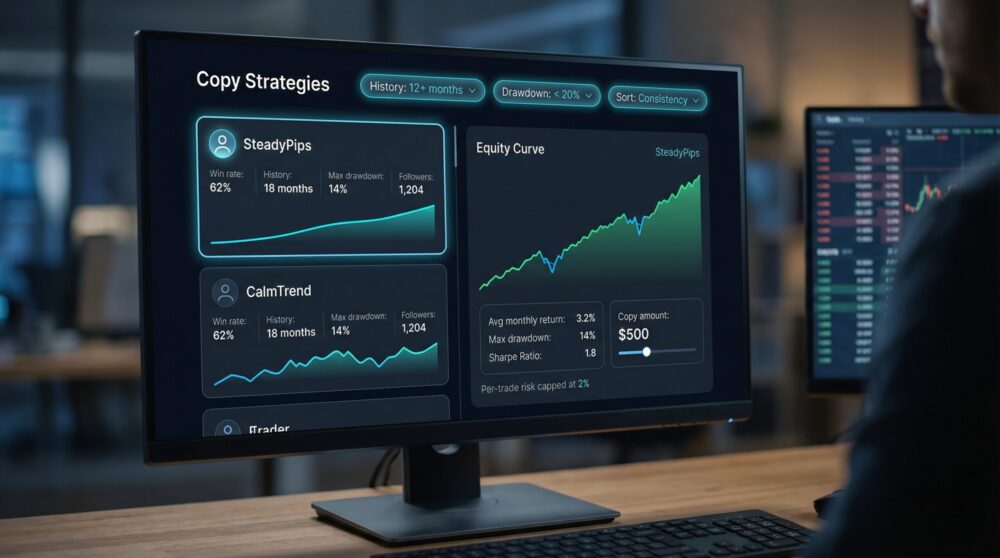
What lifts it further in 2026 is smarter filtering. AI screens performance data, highlights steady winners, and lets you follow them with one click. Some mentors add live lessons to every alert. The leader N P Financials reports an 87 percent win rate on its signal stream while explaining each entry step by step. You earn and learn at once.
For time-pressed entrepreneurs, that mix saves hours. You gain market exposure, absorb proven tactics, and keep risk small before placing a single solo trade.
How to Start Copy Trading Safely
First, choose a regulated platform that shows transparent, real-time stats. Favour traders with at least twelve months of history, smooth equity growth, and drawdowns under 20 percent. Avoid anyone promising guaranteed monthly returns; trust comes from numbers, not slogans.
Next, open a small test account. Use funds you can afford to lose and cap each copied position at a fraction of your balance. This prevents a hot streak from inflating risk or a cold streak from wiping you out. Think of the first month as tuition: micro-dollar lessons in pro decision-making.
Finally, observe and take notes. Each copied trade is a case study. Ask why the mentor entered, where they placed stops, and how they scaled out. After thirty days you will see patterns in their rules. That insight is the real payoff; profit is a bonus.
2. Trend-Following Strategy: Ride the Market Flow
Picture a river. Swim with it and you glide forward; swim against it and you tire fast. Trend-following applies the same idea to currencies. We spot a pair making higher highs or lower lows, join the move, and let momentum do the work.
The edge is persistence. Economic forces such as rate gaps, capital flows, and policy surprises can push a currency one way for weeks. TradingView daily charts show USD/JPY gained about 1,800 pips during 2025 without a major reversal. A trader who joined early and managed risk captured a move most scalpers never see.
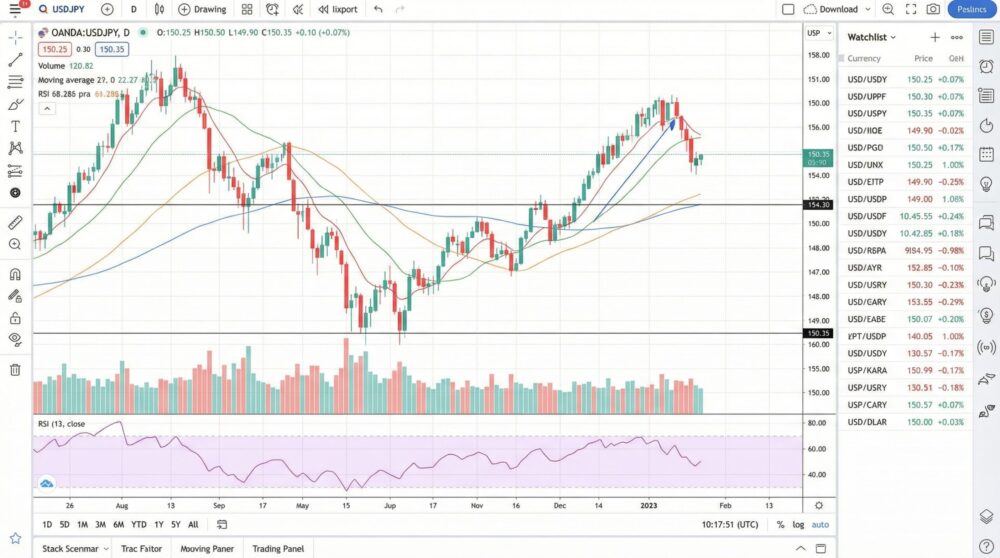
For beginners the appeal is clarity. No need to guess turning points or chase every wiggle. We wait for proof of a trend, trade in the same direction, and let gains build while we sleep.
How to Trade a Trend Step by Step
- Start with the daily chart. It filters noise and shows the true push behind a pair. Look for a series of higher swing highs and higher swing lows if you plan to buy, the opposite if you plan to sell.
- Add two moving averages. Use a 50-day line for medium-term flow and a 200-day line for the long term. When the 50 is above the 200 and price stays above both, the river is clearly moving one way.
- Wait for a pullback. Trends pause and invite late passengers. When price touches the 50-day line or a prior support level, plan your entry. Place a stop just beyond the last swing low so one mistake costs no more than two percent of your account.
- Let the trade breathe. Trail your stop behind each new higher low. This locks profit while giving the trend space. Resist the urge to grab quick wins; the larger payoff comes from holding through the grind.
3. Breakout Trading Strategy: Catch the Big Surprises
Markets can drift sideways for days, then move in seconds. Breakout trading waits for that jump. We watch a tight price box, wait for the lid to pop, and ride the surge before the crowd reacts.
Why is this forex trading strategy approach lucrative in 2026? Volatility sits on a hair-trigger. Diverging rate paths, surprise inflation data, and algorithmic news scanners can turn a routine release into a 150-pip sprint. On 3 April 2025, EUR/USD cleared 1.1000 after a strong report and reached 1.1150 within ninety minutes, according to a Reuters market wrap. Momentum traders earned more in an hour than range players made all week.
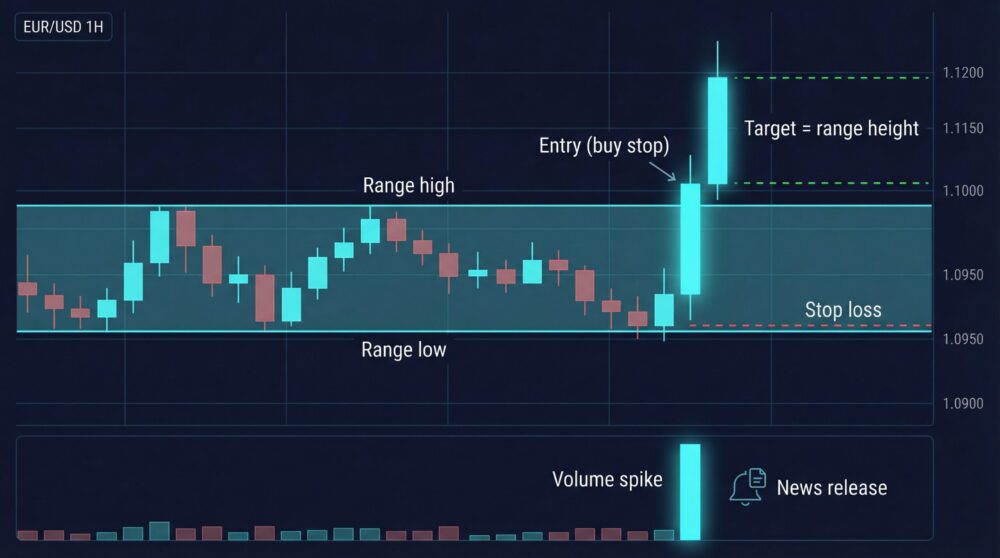
For self-starters who like clear signals, breakouts deliver. You know your entry price in advance, just beyond the range edge. You know your exit if wrong, back inside that range. Simple rules, quick feedback, and the rush of riding a move that hits headlines later.
How to Spot and Trade a Breakout
Box the range first. Draw two horizontal lines around recent highs and lows on a one-hour or four-hour chart. The tighter and longer price has respected those walls, the more fuel builds behind them.
Set price alerts at both edges and keep an economic calendar open. Breakouts sparked by fresh news usually travel farther than random jolts. When the alarm fires, check volume; a spike confirms real interest, not a lazy stop hunt.
Place a stop order just beyond the boundary in the direction of the move. If price pushes through 1.1000, for instance, a buy stop at 1.1003 gets you in while the wave is still forming. Anchor your stop loss back inside the box, typically a quarter of the range height, so a fake-out costs little.
Let momentum work. Aim for a profit equal to the height of the old range or trail a stop once price covers half that distance. Two or three well-managed breakouts a month can beat dozens of scalp attempts with far less screen stress.
4. Range Trading Strategy: Profit From the Ping-Pong
Not every market sprints. Most of the time prices drift between two familiar levels like a tennis ball crossing a net. Range trading turns that calm into steady income. We buy near support, sell near resistance, and collect small, repeatable gains while trend chasers wait for a breakout that may never come.
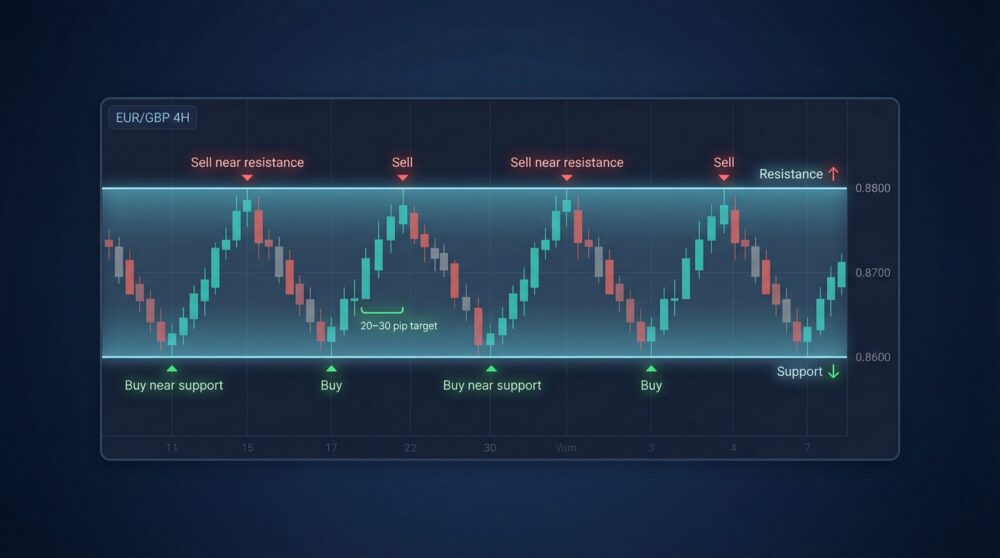
The appeal is predictability. You know the entry zone, target zone, and risk boundary before you click the button. From May to July 2025, EUR/GBP moved between 0.8350 and 0.8750 for eight weeks, letting disciplined traders capture 20- to 30-pip swings again and again, based on GO Markets historical data.
This forex trading strategy approach suits detail-oriented traders. Spend a few minutes marking levels, set phone alerts, then act only when price knocks on the door. The process feels more like running a reliable vending machine: steady, familiar, profitable.
Risk Management and Psychology: The Glue That Makes Every Strategy Work
A solid forex trading strategy fails if every trade risks ruin. Professionals treat risk like oxygen: guard it, measure it, and never waste it.
Set a hard ceiling before you press buy or sell. The two-percent rule is popular. Risk no more than two percent of your account on any idea. That single habit keeps a losing streak from turning a bad week into a blown account.
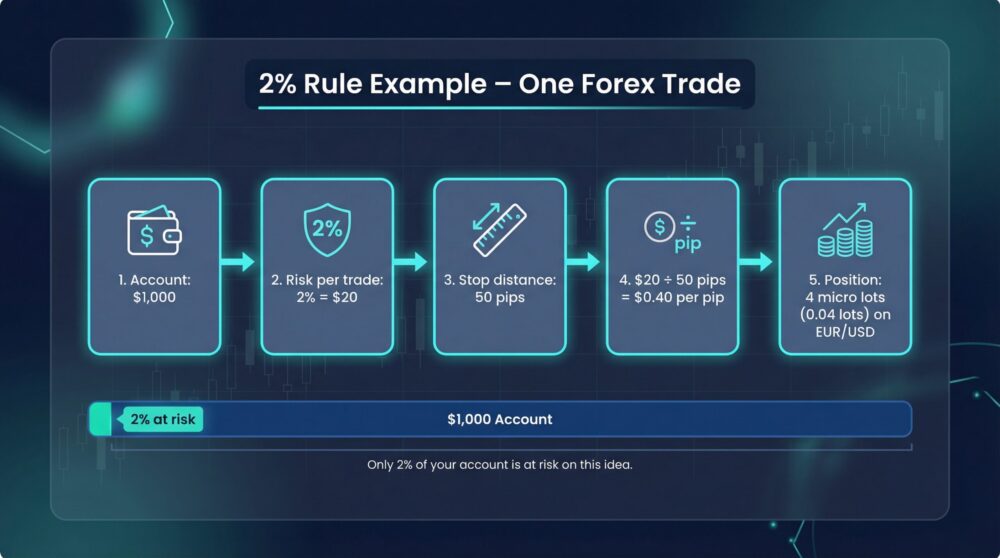
Position sizing turns theory into math. Suppose your account is $1 000 and the stop sits 50 pips away. Two percent equals $20, which divides into $0.40 per pip. On EUR/USD a micro lot equals $0.10 per pip, so you would trade four micro lots. Do the math once, place the order, and relax knowing the worst-case hit is defined.
Money rules are only half the battle. Mindset decides whether you follow them. Fear tempts you to exit winners early; greed whispers that one more trade fixes everything. Fight both with a written plan and a trading journal. Log each entry, exit, and emotion. Patterns surface and reveal where discipline leaks.
Protect capital first, confidence second, profits third. In that order, any of the four strategies can carry you through the wildest market year.
Strategy Comparison at a Glance
Before you choose a favorite forex trading strategy, compare how our four approaches stack up. The numbers below come from broker disclosures and public track records; they are guidelines, not guarantees. They highlight trade-offs such as speed versus steadiness and screen time versus set-and-forget.
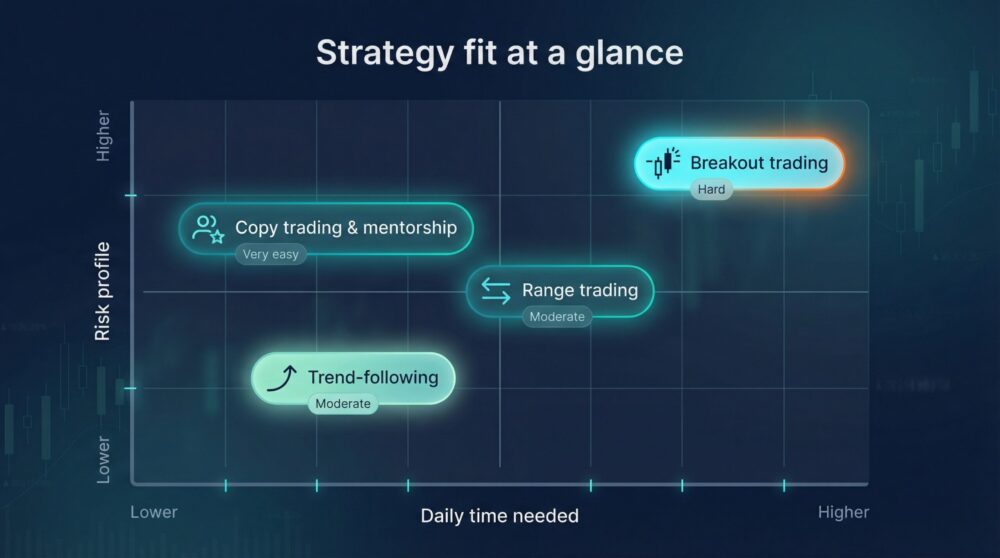
| Strategy | Ease of learning | Daily time needed | Risk profile* | Typical win rate | Return potential | Best fit |
| Copy trading & mentorship | Very easy, follow a vetted pro | 5–10 min to review stats | Medium (varies by provider) | 55–70 % (mirrors provider) | 5–15 % per year | Busy beginners who like guidance |
| Trend-following | Moderate, basic chart work | 15–30 min to scan charts | Low–medium | 40–50 % with 2–3× reward | 10–20 % in trending years | Patient planners who dislike noise |
| Breakout trading | Hard, fast decisions | Active during key news hours | High | 30–45 % with large winners | 15–30 % in volatile months | Action-oriented traders seeking momentum |
| Range trading | Moderate, mark support/resistance | Check alerts a few times per day | Medium (spike risk) | 60–70 % small gains | 5–15 % in quiet markets | Detail lovers who enjoy steady repetition |
*Risk assumes you follow the two-percent rule described earlier.
Use the grid like a mirror. If you only have evenings free, breakout trading may not fit. If wild swings keep you up at night, copy trading or trend-following will feel calmer. Match the method to your lifestyle first; profits follow that alignment.
Conclusion
Forex offers abundant opportunity, but only to traders who bring structure to the screen. Choose a forex trading strategy that suits your schedule and temperament, apply strict risk limits, and track every decision. With discipline and the right plan, 2026 can be the year you shift from hopeful bets to intentional, sustainable gains.
Find a Home-Based Business to Start-Up >>> Hundreds of Business Listings.


