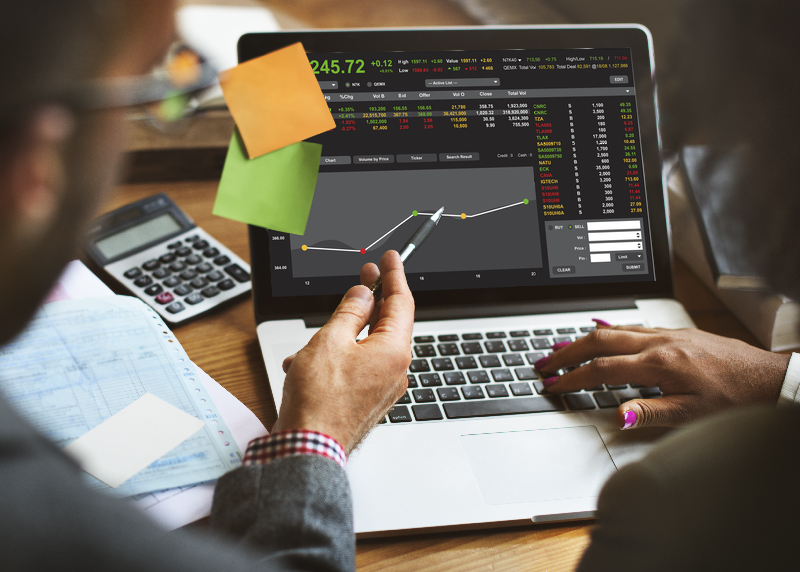







































Over the last decade or so, technological advances have changed the world we live in. More and more people are now relying on the Internet to create online businesses and work from home — and Forex trading is no exception. Of course, this doesn’t come without challenges. However, if you are prepared and have the necessary knowledge and temperament, it’s entirely possible for you to succeed as a home-based Forex trader.
So, let’s discuss some of the steps you need to follow to achieve this.
1) Take time to learn what Forex trading is
First, you have to learn what Forex is, why prices move up or down, and how you can take advantage of currency pair fluctuations. Also, learn about different strategies of trading as indices trading and others. The best way to learn Forex trading is to 1) determine your level of knowledge so you can pinpoint where it’s lacking, and 2) fill in your knowledge gaps, whether that be with books, blog posts or trading courses. The most important thing is to be sure you know what you’re doing before you get into FX trading, so then you don’t take unnecessary risks.
2) Work on your trading plan
Now that you know how Forex trading works, you need to determine how you will analyze the Forex market and what kind of trading signals you will rely on to make your trading decisions. You can’t become a successful trader without building and following a reliable and winning trading plan — one tailor made to fit your personality, risk tolerance and overall objectives. A trading plan is like a roadmap, describing the trading routine and signals you need to follow to open/close your position. You should always follow your trading plan to a T, so then you can determine whether it works or not and make adjustments from there.
3) Test your strategy on a demo account
Before using your money to trade in the Forex market, you should test your trading plan and strategy on a trading demo account. This type of account will provide you with virtual funds, so then you can trade without risk and make adjustments to your strategy if needed. Another great advantage to this type of trading account is that you can try out the services of a broker and use its trading platform to be sure it suits your trading style.
Also, you can test out the services offered by your broker to ensure the platform fits your personal style and preferences, as well as take advantage of free trading tools including free Forex signal copier and other tools for analytics for example that allow you to develop optimal strategies. All of this makes it significantly easier for traders to make smarter decisions, ultimately providing a greater return on investments.
4) Keep a trading journal
The last step to becoming a serious home-based FX trader is to keep a trading journal. This will allow you to objectively analyze your trading activity, help you spot and work on counter-productive behavior, and improve your performance. It is also a great way to measure your progress over time, both in results and in how you manage your behavior.
Final word
Trading from home isn’t easy—there are constant distractions, intense competition, and a high level of technical knowledge required to stay in the game. However, by following these four essential steps and applying disciplined forex day trading strategies, you can significantly improve your focus, manage risk more effectively, and move closer to becoming a successful home-based trader.
FAQs
1. How much time daily do I realistically need to succeed as a home-based forex trader?
Minimum 2-4 hours daily for serious trading, structured as:
-
Morning (1 hour): Pre-market analysis, review overnight moves, plan day
-
Trading session (1-2 hours): Active trading during London/NY overlap (8 AM-12 PM EST)
-
Evening (30 mins): Review trades, update journal, prepare for next day
-
Weekends (2-4 hours): Market analysis, strategy refinement, education
Full-time commitment: Treat it as a business—40+ hours weekly initially. Part-time traders need more discipline with limited hours. Quality time beats quantity—focused 2 hours beats distracted 8 hours.
2. What’s the minimum realistic income I can expect in the first year?
First year goal: Don’t lose money. Realistic expectations:
-
Months 1-6: Focus on breaking even (considered success)
-
Months 7-12: Aim for 2-5% monthly returns on risk capital
-
Year 1 income: If starting with $5,000 and achieving 3% monthly = $150/month or $1,800/year
Important: Most beginners lose money initially. Sustainable income begins in year 2-3. Never quit your job expecting immediate forex income—build gradually while employed.
3. How do I create a professional trading environment at home?
Essential setup for success:
-
Dedicated space: Separate room/office (not bedroom or kitchen)
-
Technology: 2 monitors minimum, reliable internet + backup, UPS
-
Ergonomics: Proper chair, desk at correct height, good lighting
-
Distraction-free: Noise-cancelling headphones, set “do not disturb” hours
-
Organization: Filing system for records, whiteboard for daily goals
Psychological separation: Start/end rituals (coffee routine, closing software) to separate trading from home life. This professionalizes your approach.
4. What specific skills separate successful home traders from failures?
Top 5 differentiating skills:
-
Discipline: Following trading plan 100% without deviation
-
Emotional regulation: Managing fear/greed without external supervision
-
Self-accountability: No boss to report to—must track own performance
-
Continuous learning: Daily market study without formal requirements
-
Time management: Avoiding procrastination and distraction
Home traders fail because they treat trading as a hobby, not a business. Successful traders implement business structures: set hours, performance metrics, regular reviews.
5. How do I handle taxes and legal requirements as a home-based trader?
Essential steps:
-
Business structure: Consider forming LLC for liability protection
-
Record keeping: Track all trades with timestamps (required for tax purposes)
-
Tax treatment: Understand trader vs. investor status (affects deductions)
-
Deductions: Home office percentage, equipment, education, software fees
-
Professional help: Hire accountant familiar with trading taxes
Country-specific: US (Form 8949, Schedule D), UK (self-assessment), EU (varies by country). Never commingle personal and trading funds—separate business bank account.
Find a Home-Based Business to Start-Up >>> Hundreds of Business Listings.