









































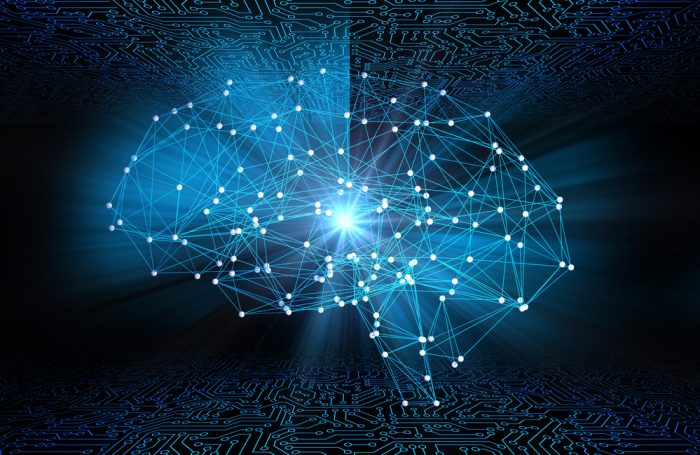
Artificial neural networks, also known as neural networks, are a part of machine learning essential to applying deep learning algorithms. Neural networks imitate the human brain’s behavioral patterns. This empowers computer programs and systems to identify patterns in data and solve common problems in artificial intelligence, deep learning, and machine learning. Essentially, neural networks can extract information from complex or imprecise data to recognize patterns and discover trends that are too perplexing for the human brain or other computer techniques to understand.
Accordingly, if you want to learn about a particular type of neural network called Long Short-Term Memory (LSTM), some data science platforms can provide an LSTM Pytorch tutorial and help you enhance your data science development. By imitating the function of interconnected brain cells, neural networks-enabled machines, such as smartphones and computers, can now learn independently, see patterns, make predictions, and solve common challenges people from different sectors face today.
With that in mind, read the industries mentioned below to learn how they may benefit from neural networks.
Why Artificial Neural Networks Are Becoming Essential Across Industries
Artificial neural networks are no longer limited to research labs or experimental projects. As data volumes grow and decision-making becomes more complex, traditional rule-based systems struggle to keep up. Neural networks fill this gap by learning directly from data and improving over time.
What makes them especially valuable today is their ability to handle unstructured information such as images, text, audio, and real-time signals. This flexibility allows businesses to solve problems that were previously too complex, time-consuming, or expensive to address using conventional software.
1. E-commerce
As data professionals continue developing artificial neural networks, the e-commerce industry can benefit from neural networks. Notably, although an increasing number of people prefer to shop online, there are still a few limitations to their buying experience. For instance, when searching for their ideal products, there is not a salesperson who can assist them and recommend the products they need. But fortunately, with neural networks-empowered technology, businesses in the e-commerce sector have the potential to deliver a more personalized customer experience. This reflects the way a salesperson or customer service representative would do to help the shoppers.
Besides the personalization of the shopping experience, neural networks can also boost e-commerce companies through advanced sales forecasting and prediction, better search results, and customer feedback analysis. In essence, business people in the e-commerce sector can gain a sustainable competitive advantage with the help of neural networks-enabled technology in their processes.
2. Finance
The finance sector is another industry that can benefit from artificial neural networks. It’s a modern tool that helps financial services to improve profitability and increase business value.
Since artificial neural networks reflect the human brain’s neural networks, neural networks in the financial sector contain multiple interconnected processors considered to be neurons. It includes an input layer, an output layer, and several hidden layers. These combined layers enable the finance sector to perform various essential financial functions, such as search, evaluation, and forecasting. Hence, finance professionals can use neural network-enabled technology to conduct financial forecasting to predict future events effectively based on historical data.
Apart from financial forecasting, financial services can also use neural networks to evaluate loan applications accurately, make better-informed decisions, and search for ideal customers.
3. Healthcare
As artificial neural networks become increasingly embraced in various industries, the healthcare sector is no exception to this artificial intelligence adoption. Neural networks can help medical providers interpret electrocardiograms, pathologies, and endoscopy scans. These neural network-enabled computer programs can also help diagnose specific types of fractures, cancers, skin lesions, hemorrhages, and cancer.
Besides positively impacting the medical diagnostic systems, neural networks may also contribute to biochemical analysis. Notably, neural networks can help track glucose levels in patients with diabetes, analyze urine and blood samples, and determine ion levels in fluids. In essence, neural networks may improve the performance of ophthalmologists, cardiologists, dermatologists, and psychotherapists.
4. Cybersecurity
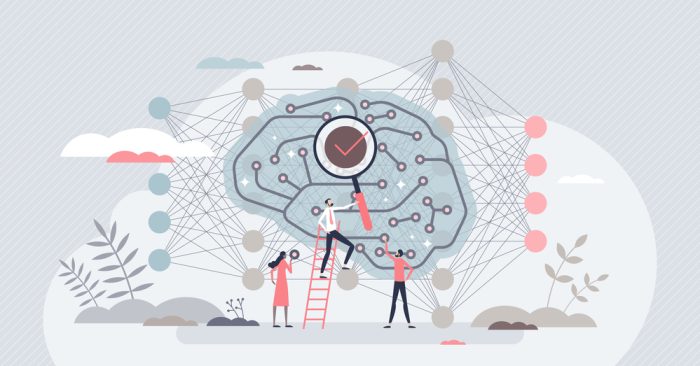
While a wide range of industries uses artificial neural networks, the cybersecurity industry is one of the primary sectors that widely utilizes these artificial brains or neural network-empowered computer programs. Notably, the intrusion detection system (IDS), intrusion prevention system (IPS), and advanced firewalls increasingly adopted deep learning and artificial neural networks to help detect anomalies and reduce false positives. Besides applications for intrusion detection and prevention systems, the cybersecurity industry can incorporate neural networks with user and entity behavior analytics to monitor user accounts and other network infrastructures like routers, servers, and endpoints.
In addition to detecting security breaches and other anonymous behavior, neural networks can learn independently based on past experiences like malware infection. That means it can conjecture how unknown malware may behave. This is something that traditional antimalware software can’t perform.
5. Logistics
The logistics industry can also use artificial neural networks to increase efficiency, avoid human error, and predict future challenges and opportunities. In particular, when it comes to warehouse management, businesspeople can integrate neural networks into their operations to analyze big data faster and solve warehouse management challenges caused usually by human error.
Besides solving inventory management issues, the logistics sector can also benefit from neural networks by improving demand forecasting or predicting future demand. By analyzing historical data or past experiences, artificial neural networks can provide a comprehensive analysis of all the factors that may have an impact on the demand. In that manner, integrating neural networks into logistics processes can help companies make better-informed business decisions.
Limitations and Challenges of Neural Networks
Despite their advantages, artificial neural networks are not without limitations. One of the main challenges is the need for large amounts of high-quality data. Poor or biased data can lead to inaccurate predictions and unreliable outcomes.
Neural networks also require significant computing resources and expertise to design, train, and maintain. In some cases, their decision-making process can lack transparency, making it difficult to explain how certain conclusions are reached.
Understanding these challenges helps organizations apply neural networks responsibly and realistically.
The Future of Neural Networks Across Industries
As computing power increases and algorithms continue to evolve, neural networks are expected to become even more efficient and accessible. More industries are likely to adopt hybrid systems that combine neural networks with traditional models for better accuracy and interpretability.
Advancements in explainable AI, automation tools, and low-code platforms may also reduce the technical barrier to entry. This will allow smaller businesses and non-technical teams to benefit from neural network-powered solutions.
The future points toward wider adoption, smarter systems, and deeper integration into everyday business operations.
Conclusion
All in all, artificial neural networks are a part of machine learning that works similarly to the human brain’s neural networks. However, with artificial neural networks, companies from various industries can use neural network-enabled technologies to make accurate predictions, automate processes, secure network infrastructure better, and perform other vital tasks. With the latest advances, researchers and data scientists expect the industrial applications of neural networks to expand in the future.
FAQs
1. What is an artificial neural network in simple terms?
An artificial neural network is a computer system designed to work like the human brain. It learns from data by recognizing patterns and uses those patterns to make predictions, decisions, or classifications without being explicitly programmed for every task.
2. How are neural networks different from traditional algorithms?
Traditional algorithms follow fixed rules written by developers, while neural networks learn from data and improve over time. Neural networks are better at handling complex, unstructured data such as images, speech, and large datasets where rule-based systems fall short.
3. Which industries benefit the most from neural networks?
Industries such as healthcare, finance, e-commerce, cybersecurity, and logistics benefit the most. Neural networks help these sectors automate tasks, improve accuracy, predict outcomes, and make data-driven decisions more efficiently.
4. Are artificial neural networks a type of artificial intelligence?
Yes. Artificial neural networks are a core part of artificial intelligence and machine learning. They enable machines to learn, recognize patterns, and make decisions, forming the foundation of many AI-powered applications used today.
5. What are the main limitations of neural networks?
Neural networks require large amounts of quality data, significant computing power, and technical expertise. They can also be difficult to interpret, and poor data quality or bias can lead to inaccurate or unfair results.
Find a Home-Based Business to Start-Up >>> Hundreds of Business Listings.