





































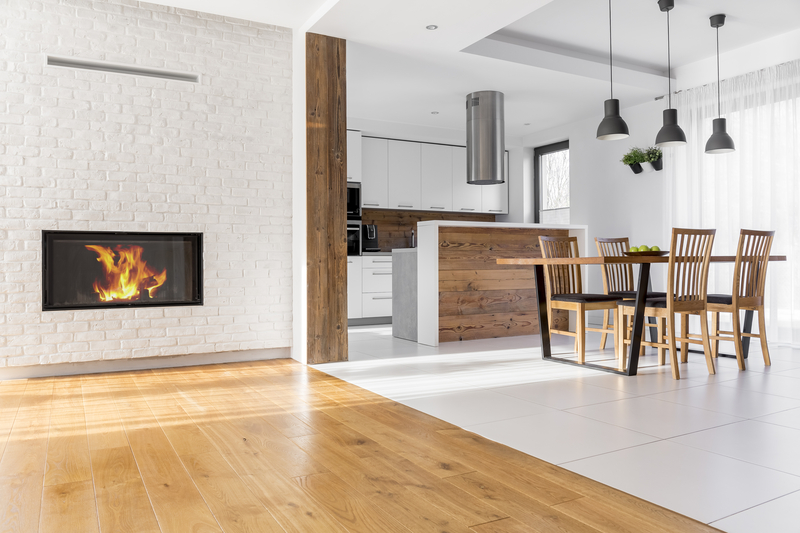
Open-plan living has become a defining feature of modern Australian homes. By blending kitchen, dining and living zones into one cohesive space, homeowners gain a sense of openness, natural light and effortless flow. Yet with that openness comes a common challenge: how do you clearly define the dining area without building walls?
The answer lies in thoughtful design. Through furniture placement, lighting, texture and subtle architectural cues, you can shape a dining zone that feels purposeful and inviting. Smart choices (like incorporating versatile stackable dining chairs that can be easily stored or rearranged for entertaining) also allow your open-plan space to remain flexible without sacrificing style.
Here are some practical and aesthetically refined ways to define your open-plan dining room beautifully.
Start with a Clear Focal Point
Every well-designed dining space begins with a focal point. In an open-plan layout, this is typically the dining table itself. Choose a table that suits the scale of the room — neither too small (which can look lost) nor oversized (which can overwhelm surrounding areas).
To anchor the table:
- Select a statement light fitting directly above it.
- Centre the table within its zone.
- Allow adequate circulation space around all sides.
A bold pendant light or sculptural chandelier immediately signals, “This is the dining area,” even within a larger shared room.
Use Lighting to Create Boundaries
Lighting is one of the most powerful tools in open-plan design. Rather than relying solely on ceiling downlights, layer your lighting to visually separate zones. For the dining area:
- Install pendant lights or a linear suspension directly above the table.
- Use a dimmer to shift from bright everyday lighting to softer evening ambience.
- Consider wall sconces or a floor lamp nearby to add warmth.
When each zone has its own lighting identity, the space feels intentional rather than undefined.
Define the Space with a Rug
A rug instantly creates a visual “room within a room.” In open-plan homes — particularly those with timber or polished concrete flooring — a rug adds both warmth and clear boundaries. When choosing a rug for your dining area:
- Ensure it is large enough so chairs remain on the rug even when pulled out.
- Opt for durable, easy-clean materials.
- Consider subtle patterning to disguise wear.
The rug acts like a frame beneath your dining setting, grounding it within the broader space.
Create Subtle Architectural Separation
You don’t need full walls to define a zone. Small architectural elements can provide just enough separation while preserving openness. Consider:
- A bulkhead ceiling detail above the dining area.
- A change in flooring material between zones.
- A half-height divider or open shelving unit.
- Strategic placement of joinery or cabinetry.
These elements gently guide the eye and create spatial clarity without closing off the room.
Use Furniture Placement Strategically
In open-plan layouts, furniture becomes your boundary line. Position the dining table in alignment with a kitchen island, a window or sliding door, or maybe a feature wall. Keep at least 900mm of clearance around the table for comfortable movement. If your layout doubles as an entertaining hub, versatile seating solutions allow you to adapt the space when guests arrive.
This is where flexibility becomes invaluable. Seating that can be stacked or moved away ensures the dining zone can expand or contract as needed — ideal for Australian homes that frequently host family gatherings and summer barbecues.
Introduce Texture and Contrast
While open-plan living embraces cohesion, each zone should still have its own personality. You can achieve this by:
- Selecting a different material palette for the dining setting (e.g., timber table against upholstered living furniture).
- Incorporating artwork specific to the dining zone.
- Using contrasting tones in chairs or table bases.
For example, if your living room features soft neutrals, a dining area with darker timber or black accents can subtly differentiate the two spaces.
Consider Sightlines and Flow
Open-plan design is as much about movement as aesthetics. Stand at your kitchen bench or entry point and observe what you see first. Does the dining area feel intentional, or does it blur into the background? To improve sightlines:
- Align furniture symmetrically where possible.
- Keep pathways unobstructed.
- Avoid overcrowding with excess décor.
An uncluttered layout ensures the dining space feels calm and refined.
Balance Practicality with Style
Open-plan homes are designed for real life. Dining areas often serve multiple purposes — homework zone, remote workspace, entertaining hub. To maintain both beauty and practicality choose durable finishes, opt for easy-clean surfaces, select adaptable seating solutions, and maintain storage nearby for placemats, tableware and entertaining essentials. The most successful open-plan dining rooms are those that look elegant yet function seamlessly.
Defining an open-plan dining room beautifully is about subtle intention rather than rigid separation
Through considered lighting, strategic furniture placement, texture, and adaptable seating, you can create a dining zone that feels both integrated and distinct. When done well, your dining space becomes more than just a table in a shared room — it becomes a destination. A place where family gathers, friends linger, and everyday meals feel just a little more special.
Open-plan living is here to stay in Australian design. With the right approach, your dining area can stand confidently within it — defined, stylish and perfectly suited to the way you live.
Find a Home-Based Business to Start-Up >>> Hundreds of Business Listings.