









































Key Takeaways
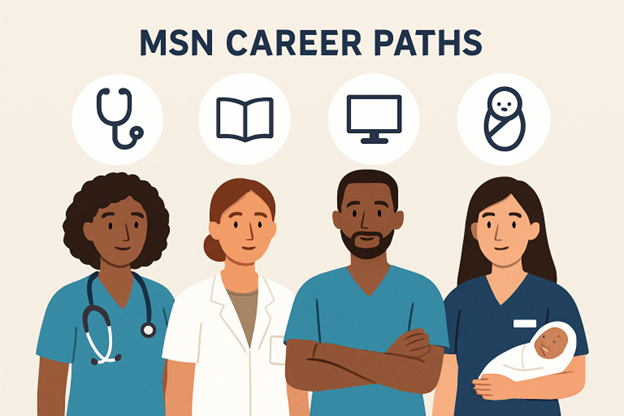
- An MSN degree prepares individuals for advanced practice roles, specialized clinical fields, and leadership positions in the healthcare field.
- Career choices include Nurse Practitioner, Nurse Educator, Nurse Administrator, Clinical Nurse Specialist, and more.
- MSN graduates often enjoy greater job security, elevated earnings, and the satisfaction of shaping healthcare outcomes.
Table of Contents
- Nurse Practitioner
- Nurse Educator
- Nurse Administrator
- Clinical Nurse Specialist
- Nurse Informaticist
- Nurse Midwife
- Public Health Nurse
- Conclusion
Pursuing a Master of Science in Nursing (MSN) can be a transformative step for registered nurses seeking to advance in the field of healthcare. With the rigorous education and specialized knowledge gained from online MSN programs, nurses open doors to a diverse range of leadership, clinical, and educational roles that go beyond bedside care.
An MSN not only elevates professional opportunities but also enhances the ability to influence patient outcomes, healthcare innovation, and organizational effectiveness. Nurses with this advanced degree are in high demand, capable of stepping into pivotal positions that shape the practice and policy of healthcare.
Whether your interest lies in direct clinical care, education, administration, or the rapidly evolving field of healthcare informatics, the career possibilities are both varied and rewarding. The expertise developed through obtaining an MSN brings nurses with an MSN degree increased autonomy, an expanded scope of practice, and opportunities for higher compensation compared to roles held by individuals with only a bachelor’s degree. According to the American Nurses Association, advanced education plays a crucial role in meeting the growing and complex needs of today’s patient populations.
Across the country, healthcare organizations are seeking MSN-prepared nurses for their expertise, clinical acumen, and leadership potential. By investing in your education, you are also investing in your future and your potential to impact the lives of countless patients and communities for years to come.
Nurse Practitioner
Nurse Practitioners (NPs) are highly trained clinicians who assess, diagnose, and treat patients independently or in collaboration with physicians. Their scope often includes primary and specialized care in settings such as family practice, pediatrics, and psychiatric mental health. Specializations, such as Family Nurse Practitioner (FNP), Pediatric Nurse Practitioner, and Adult-Gerontology NP, allow nurses to tailor their careers to their passions and community needs. According to the U.S. Bureau of Labor Statistics (BLS), the median salary for NPs reached $129,210 in 2025, with the field projected to grow much faster than average in the coming years.
Nurse Educator
Nurse Educators are responsible for teaching future generations of nurses in academic or clinical environments. They design curriculum, lecture on up-to-date clinical trends, mentor students, and supervise hands-on clinical practice. With the current nursing faculty shortage, nurses with an MSN degree are needed more than ever to ensure a robust pipeline of qualified nurses. On average, Nurse Educators earn around $77,000 per year, though salaries can vary based on academic setting and geographic region. Additionally, job growth for this path is expected to climb steadily as nursing schools ramp up to address workforce shortages.
Nurse Administrator
Nurse Administrators oversee hospital units, entire departments, or even multiple healthcare facilities. Their work focuses on enhancing patient care delivery by promoting team collaboration, ensuring compliance, managing budgets, and developing or refining healthcare policies and procedures. These professionals play a crucial role in ensuring the effective operation and maintaining high-quality standards in hospitals and clinics. The median salary for medical and health services managers, a group that includes Nurse Administrators, was $117,960 in 2025, as detailed by the Bureau of Labor Statistics. For nurses with strong leadership and organizational skills, this role combines business acumen with nursing expertise, providing a unique opportunity for growth and advancement.
Clinical Nurse Specialist
Clinical Nurse Specialists (CNSs) provide advanced clinical expertise in specialized areas of healthcare, such as oncology, cardiology, or psychiatric care. They support direct patient treatment, consult with other healthcare team members, and lead the design and implementation of evidence-based care protocols. CNSs are particularly valued for their role in driving quality improvement initiatives and guiding complex patient care decisions. According to the National Association of Clinical Nurse Specialists, both master’s and doctoral degrees are suitable for entering this vital role within the healthcare system.
Nurse Informaticist
Nurse Informaticists bridge the gap between patient care and technology, utilizing data and informatics to enhance outcomes and optimize healthcare systems. Their responsibilities include implementing and managing electronic health records, assessing software needs, analyzing clinical data, and training staff on new tools and technologies. This position is ideal for nurses who are intrigued by the intersection of clinical care and digital innovation and are driven to utilize technology for improved patient and operational outcomes. As more healthcare organizations invest in digital transformation, demand for this expertise continues to grow.
Nurse Midwife
Certified Nurse-Midwives (CNMs) provide comprehensive care to women throughout their lifespan, with a strong emphasis on pregnancy, childbirth, postpartum support, and gynecological health. They perform routine exams, counsel on birth options, assist in deliveries, and promote holistic, patient-centered care. CNMs play a crucial role in supporting maternal and child health, particularly in underserved regions and in birth centers that prioritize natural childbirth experiences. The rewards for nurse midwives are significant—not just in terms of salary, but in the profound impact on family health and wellness.
Public Health Nurse
Public Health Nurses operate on a broader scale, focusing on the health of communities rather than individuals. They develop and implement community-wide health campaigns, conduct outreach in vulnerable populations, work on disease prevention, and advocate for health policy improvements. This career path enables MSN-prepared nurses to address public health challenges, such as epidemics, immunization outreach, and health education programs, which can transform lives on a population level.
Conclusion
A Master of Science in Nursing extends far beyond the basics of clinical practice, offering diverse avenues for leadership, clinical expertise, policy advocacy, education, and technological innovation. As the demand for qualified, forward-thinking nurses grows, those nurses with an MSN degree will continue to drive progress and ensure the delivery of exceptional care at every level of the healthcare system.
Find a Home-Based Business to Start-Up >>> Hundreds of Business Listings.