








































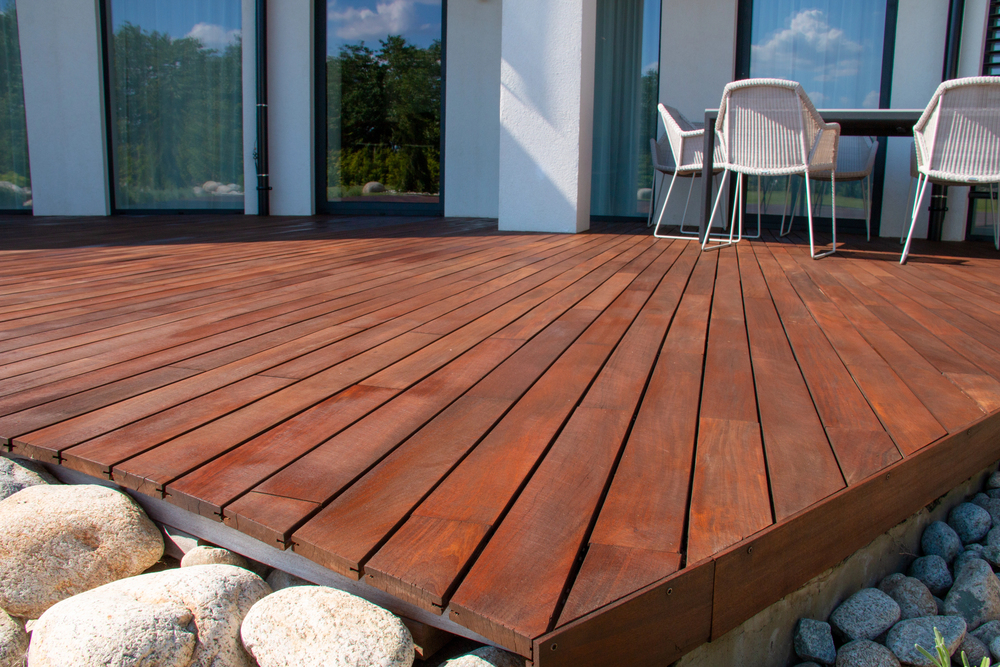
A well-built deck brings warmth and value to a property. Many homeowners spend generously on premium timber, yet small errors during construction or maintenance can lead to expensive repairs. Proper care safeguards both appearance and structure. Homeowners should arrange regular professional checks to prevent hidden faults and keep their decking strong throughout every season to avoid hardwood decking mistakes.
1. Excess Oil on Surfaces
Hardwood decking loses strength when excess oil remains after treatment. Heavy coatings prevent natural evaporation and hold moisture inside the timber. That trapped dampness breeds mould, discolouration, and sticky patches that attract dirt.
A light, even coat on a dry surface provides the right balance. Surplus oil must be wiped off to ensure an even cure. The result is a smooth, dry finish that endures both rain and sunlight. Consistent maintenance after each oiling keeps the timber surface balanced and prevents early wear.
2. Finishes in Poor Weather
Work done during damp or humid weather leads to failure. Moist air stops stains and oils from bonding with the grain. Even if the surface looks dry, trapped moisture beneath is one of the most common hardwood decking mistakes, weakening adhesion and causing uneven peeling within months. Steady, mild conditions allow the finish to harden properly. The deck gains lasting colour and strength. Patience during application ensures a flawless coat that stands the test of time. Applying finishes in ideal weather ensures better durability and reduces the need for frequent touch-ups.
3. Dust Left After Sanding
Dust from sanding settles into small gaps between boards. If left behind, it blocks oils and sealers from reaching the wood. Cleaning every plank after sanding ensures a firm bond and a smooth look.
Each surface should be brushed or vacuumed until no fine powder remains. That brief effort preserves tone, prevents flaking, and keeps the texture consistent. Proper cleaning before sealing maintains the integrity of each board and extends its lifespan. Failure to clean properly can lead to uneven finishes, which result in a patchy and unattractive appearance.
4. Incorrect Sealers Applied
Using the wrong sealers shortens a deck’s lifespan. Some products form thick films that suffocate the timber. Air and moisture become trapped beneath, producing bubbles and dull marks. Quality hardwood sealers penetrate deeply but do not completely seal the pores.
That allows air to move while still resisting rain. Testing a small patch before complete application avoids costly surprises. Choosing the right formula gives long-term protection while preserving natural colour and texture. Properly applied sealers maintain both the look and functionality of the deck for years.
5. Boards Installed Upside Down
Each decking board has a top and bottom face designed for drainage and airflow. When fixed upside down, water collects beneath, and decay begins. Correct placement lets air move freely under the boards. This prevents swelling, twisting, and early rot.
Careful installation supports the structure’s strength and keeps the surface stable for years. Following proper techniques and tips during construction ensures correct alignment, balanced load, and full airflow beneath every board. Attention during fitting ensures a strong foundation that resists damage through every season.
6. Not Cleaning Debris Regularly
Debris like leaves and dirt can trap moisture on the deck. Moisture buildup leads to mould and mildew. It also blocks proper drainage and causes water pooling. Over time, trapped water can cause rot and decay.
Regular cleaning prevents this and maintains the deck’s appearance. Sweep or blow off debris to avoid long-term damage. Cleaning regularly also helps maintain the deck’s texture and colour. It ensures the deck stays safe and usable for years. Regular cleaning also reduces the need for costly repairs and refinishing.
7. Use of Harsh Cleaners
Harsh chemicals can damage the surface of your hardwood deck. These cleaners strip away the protective oils in the wood, one of the most common hardwood decking mistakes, leading over time to fading, cracking, and weakened wood fibres. Using abrasive brushes or power washers can also cause scratches.
Opt for gentle, wood-safe cleaners to preserve the deck’s finish. Regular maintenance with the right products ensures long-lasting beauty and strength. Harsh cleaners can also affect the wood’s natural colour and texture. Choosing the right cleaning method maintains both the appearance and structural integrity of the deck.
Simple habits prevent expensive repairs and keep every deck looking elegant. Routine inspection, timely cleaning, and professional advice protect the surface beauty and strength of hardwood decking. Choosing the right supplier ensures access to durable materials, correct guidance, and reliable aftercare. Reputable builders and timber specialists provide tested products that maintain colour, stability, and structural balance through all seasons. Homeowners should source decking and cladding from trusted suppliers who value precision and proven quality. Expertly selected materials protect each home for decades with comfort and confidence.
Find a Home-Based Business to Start-Up >>> Hundreds of Business Listings.