











































Word Search: The Complete Guide to One of the World's Most Popular Puzzles
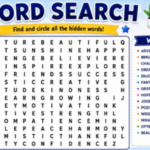
Word search puzzles have been entertaining minds for decades. From classroom worksheets to newspaper pages, from printed puzzle books to interactive digital platforms, the word search remains one of the most universally loved brain games in the world. Whether you are a student, a teacher, a casual gamer, or someone looking to sharpen your mental focus, word search puzzles offer something valuable for everyone. In this guide, we explore everything you need to know about word searches, including their history, benefits, types, and how platforms like itwordsearches.com are bringing this classic puzzle into the digital age.
What Is a Word Search?
A word search, also known as a word find or word seek puzzle, is a grid of letters arranged in rows and columns. Hidden within this grid are specific words that the solver must locate. These words can be placed in any direction, including horizontally, vertically, diagonally, and sometimes even backwards. A list of target words is usually provided alongside the grid, and the challenge is to find and circle or highlight each one.
The simplicity of the concept is what makes word searches so appealing. There are no complicated rules to learn. You look at the grid, you scan for the words, and you find them. Yet despite this straightforwardness, word searches can range from beginner-level puzzles with large grids and simple vocabulary to expert-level challenges with tiny letters, overlapping words, and hundreds of hidden terms.
A Brief History of Word Search Puzzles
The word search puzzle was invented in 1968 by Norman E. Gibat, who published it in the Selenby Digest, a small puzzle publication based in Norman, Oklahoma. Gibat created the puzzle as a fun educational tool, and it quickly gained popularity in schools and homes across the United States. By the 1970s and 1980s, word search books were being printed in the millions, and the puzzle had spread to newspapers, magazines, and puzzle collections worldwide.
Today, word searches exist in virtually every language and cover every imaginable topic. The digital revolution has further expanded their reach, with countless websites, apps, and online tools allowing users to play, create, and share word search puzzles instantly. Niche platforms focused entirely on specific themes, such as IT and technology word searches, have emerged to serve more targeted audiences.
Types of Word Search Puzzles
Not all word searches are the same. Over the years, different formats and variations have developed to keep the puzzle fresh and engaging. Understanding the main types helps you choose the right puzzle for your skill level and purpose.
Standard Word Search: The classic format where a list of words is hidden inside a rectangular or square grid. Words may go in any of eight directions. This is the most common type found in books, newspapers, and educational materials.
Themed Word Search: These puzzles are built around a specific subject, such as animals, sports, holidays, professions, or technology. A themed word search is not only a brain exercise but also a learning experience, as players absorb vocabulary related to the topic.
Diagonal-Only or Reverse Word Search: A more difficult variation where words are placed only in diagonal or backward directions, requiring higher concentration.
Hidden Message Word Search: After all the words are found and crossed out, the remaining unused letters spell out a secret message. This adds an extra layer of challenge and reward to the puzzle experience.
Cognitive and Educational Benefits of Word Searches
Word search puzzles are far more than just a pastime. Research and educational practice consistently show that these puzzles provide real cognitive and academic benefits when used regularly.
Vocabulary Building: Themed word searches introduce learners to new words in context. When students repeatedly encounter and search for terms related to a subject, those words are more likely to stick in long-term memory.
Improved Focus and Attention: Scanning a grid for specific patterns trains the brain to maintain sustained attention. This skill translates into improved concentration in everyday tasks, especially for children and older adults.
Spelling Reinforcement: Seeing words correctly spelled within a grid reinforces correct spelling patterns. This makes word searches a powerful supplementary tool for language learners and students working on literacy.
Stress Relief: The repetitive, goal-oriented nature of word searches has a calming effect on the mind. Many people use word puzzles as a low-pressure way to relax and decompress at the end of a long day.
Word Search in the Digital Age
The transition from paper to screen has transformed how people enjoy word searches. Online word search platforms allow users to access puzzles instantly without printing anything. Interactive grids let players click or tap to highlight words, and automatic checking removes any ambiguity about whether a word has been found correctly. Many platforms also track completion times, enabling friendly competition with friends or anonymous players around the world.
One growing trend in the online word search world is niche specialization. Rather than offering generic puzzles, some platforms focus entirely on a specific industry or knowledge area. For example, itwordsearches.com caters specifically to the IT and technology community, offering word search puzzles built around programming languages, cybersecurity, networking, cloud computing, and other tech-related topics. This kind of specialization makes word searches a valuable revision and memorization tool for IT professionals, students, and enthusiasts who want to reinforce their technical vocabulary while having fun.
How to Solve a Word Search More Efficiently
While word searches are not strictly competitive in the traditional sense, most players want to improve their speed and accuracy over time. Here are some proven strategies that experienced solvers use.
Scan for Unique First Letters: Start by looking for the first letter of each target word. Uncommon letters like Q, Z, X, or J are easier to spot in a crowded grid.
Work Through One Word at a Time: Instead of scanning for all words simultaneously, focus on finding one word completely before moving to the next. This prevents confusion and wasted effort.
Use the Process of Elimination: As you find and mark off words, the remaining letters in the grid narrow down, making it progressively easier to locate the final few words.
Look for Unusual Letter Combinations: Pairs like TH, QU, PH, or CH are distinctive and can help you quickly identify the start or middle of a target word.
Word Search as a Teaching and Training Tool
Educators and trainers across industries have recognized the value of word searches as instructional aids. In schools, teachers use themed puzzles to introduce new units, review concepts before exams, or provide enrichment activities for advanced students. In corporate settings, HR teams and trainers use custom word searches to onboard new employees, introduce company terminology, or make compliance training more engaging.
The IT sector is a particularly strong use case. With so many technical acronyms, programming terms, and evolving concepts to learn, word searches offer a low-pressure way to reinforce knowledge. A cybersecurity professional reviewing terms like encryption, firewall, malware, and authentication through a puzzle is engaging in active recall, a cognitive process that strengthens memory far more effectively than passive reading.
Conclusion
It Wordsearch puzzles have stood the test of time for good reason. They are accessible to all ages, adaptable to any subject, and genuinely enjoyable. From their humble beginnings in a small Oklahoma publication to their modern presence on thousands of digital platforms, word searches continue to entertain and educate millions of people around the world.
Whether you are a casual player looking for a five-minute brain break, a student trying to learn technical vocabulary, or an IT professional wanting to review your knowledge in a fun and interactive way, word search puzzles deliver real value. Specialized platforms like itwordsearches.com are pushing this classic format further by combining the timeless appeal of the word search with focused, industry-specific content. If you have never tried an IT-themed word search before, it is well worth exploring what these puzzles can do for your learning and your love of language.
No posts to display
Home Business EXPO

HomeBusinessExpo.com
Find a Business to Start
Hundreds to Choose From
Get Started Today!
HOME BUSINESS MAGAZINE

SPONSOR:
