








































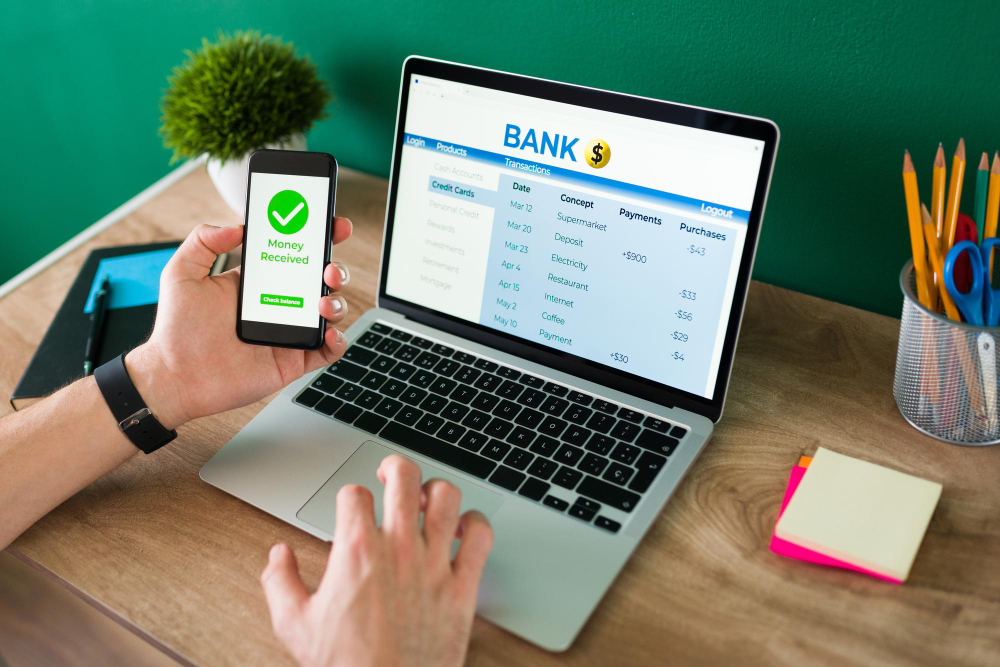
For most of banking’s history, your financial data belonged to your bank — not to you. You could see it on a statement, but sharing it securely with another service meant handing over your username and password. Open banking is changing that relationship fundamentally.
Open banking news in 2026 covers rapid global expansion, regulatory rollouts in North America, and a new generation of fintech products built on open banking rails. From real-time payment apps to AI-powered budgeting tools, open banking is reshaping the relationship between consumers, businesses, and financial institutions.
Quick Answer
Open banking is a system that gives consumers and businesses the right to securely share their
financial data with third-party apps and services via regulated APIs. In 2026, open banking is
expanding globally — including new launches in Canada and the US — enabling smarter financial
products, real-time payments, and greater consumer financial control.
Key Takeaways
- Open banking gives consumers and businesses control over their financial data
- Canada launched its regulated open banking framework in 2026, joining the UK, EU, and Australia
- US open banking rights are now backed by CFPB regulation
- Small business owners benefit from faster lending, real-time cash flow, and payment automation
• Open banking APIs are more secure than password-sharing approaches that preceded them
What Is Open Banking?
The practical result: consumers and small business owners can connect their bank accounts to budgeting apps, accounting software, lending platforms, and payment services without sharing passwords. The data flows securely and with granular permission controls.
Key Global Developments
Canada’s Open Banking Launch
Canada has moved from planning to implementation in 2026, with a regulated open banking framework launching for major financial institutions. Canadian consumers can now authorize their banks to share transaction data with accredited third-party services, mirroring what the UK and Australia have already implemented.
For Canadian small business owners, this creates immediate access to better accounting integrations, faster loan underwriting based on live cash flow data, and real-time payment options outside traditional card networks.
United States: Open Banking Gains Regulatory Clarity
UK and EU: Maturing Ecosystems
The UK’s open banking ecosystem — the world’s most mature — now serves millions of users through hundreds of accredited providers. The EU’s PSD2 framework continues evolving toward PSD3, expanding open banking to new asset classes and payment use cases.
How Open Banking Benefits Small Business Owners
- Faster, cheaper payment processing through direct bank-to-bank transfers
- Real-time cash flow visibility across all accounts in a single dashboard
- Faster loan and credit approvals based on live financial data
- Automated reconciliation between bank accounts and accounting software
- Personalized financial products tailored to your actual business patterns
Open Banking vs. Traditional Banking
| Feature | Traditional Banking | Open Banking |
| Data ownership | Held by the bank | Controlled by the customer |
| Third-party access | Screen scraping (insecure) | Regulated API (secure) |
| Payment options | Card networks, ACH | Direct bank-to-bank transfer |
| Loan underwriting | Historical statements | Real-time live data |
| Product personalization | Generic offers | Data-driven, relevant offers |
Common Open Banking Misconceptions
‘Open banking means my data is public’
This is false. Open banking data is only shared with providers you explicitly authorize. You control which apps access which data, and you can revoke access at any time.
‘Open banking is only relevant to big businesses’
Small businesses and freelancers benefit enormously — particularly through faster loan approvals, real-time cash flow visibility, and accounting automation.
‘It’s not secure’
Open banking uses the same OAuth security standards that protect Google and Apple login authentication — far more secure than the password-sharing that predated it.
Expert Tips for Using Open Banking
- Review the permissions each app requests — only grant the access level the app actually needs
- Use open banking-enabled accounting tools like QuickBooks, Xero, or Wave for automatic reconciliation
- Explore embedded lending offers — open banking often unlocks pre-approved credit based on real cash flow
- Monitor which apps have access to your data and audit permissions quarterly
- Verify that any fintech app you connect is properly accredited in your jurisdiction
FAQ: Open Banking
What is open banking in simple terms?
Open banking lets you securely share your bank account data with apps and services you choose, without giving them your password. Think connecting your bank account to your accounting software in one click.
Is open banking safe?
Yes. Open banking uses regulated APIs with strong encryption and OAuth authentication. It is significantly more secure than the password-sharing practices it replaced.
Which countries have open banking?
The UK, EU (PSD2), Australia (Consumer Data Right), Canada (2026 launch), and the US (CFPB rules) all have open banking frameworks at various stages of maturity.
How does open banking benefit small businesses?
Small businesses gain real-time cash flow visibility, faster loan underwriting, automated accounting reconciliation, and access to cheaper direct bank payment options.
What apps use open banking?
Popular apps using open banking include Mint, YNAB, QuickBooks, Xero, Plaid-connected services, and various lending platforms that use live bank data for credit decisions.
Find a Home-Based Business to Start-Up >>> Hundreds of Business Listings.