








































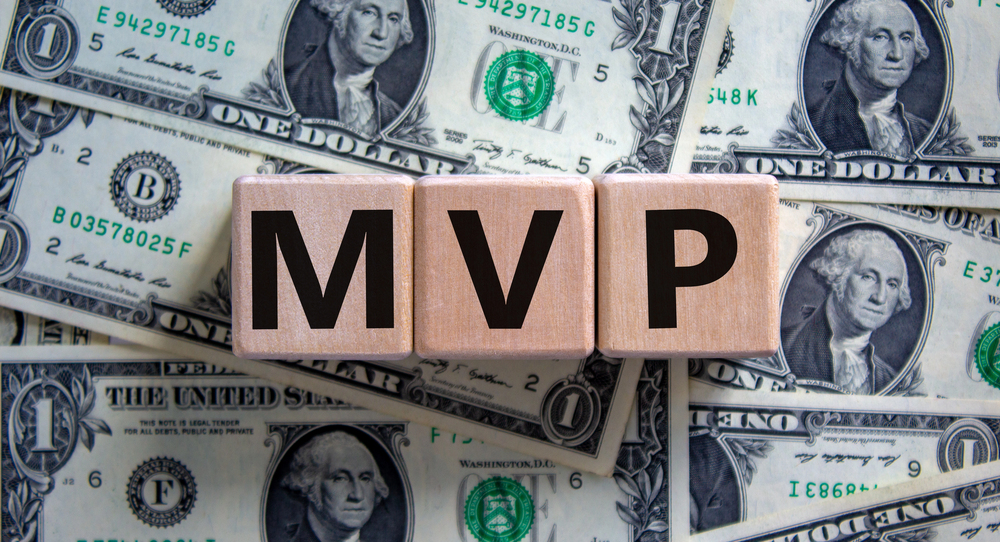
Every founder dreams of the perfect launch when a product is polished to perfection, ready to wow investors and customers. But in reality, this obsession with “ready” kills more startups than it helps. The truth is, you don’t need months of coding to bring your idea to life. What you need is proof that your product can solve a real problem. This is why you need to build an MVP.
Think about the companies that reshaped the market, starting small. Airbnb began with photos of an apartment posted on a simple website. Dropbox launched with a short demo video explaining the concept, not a bells-and-whistles product. Their founders didn’t spend hundreds of thousands of dollars building complex systems; they spent their time testing whether anyone cared about their solution.
That’s the mindset today’s entrepreneurs need — especially those building from home, juggling other work, or bootstrapping their way through early stages.
Why MVP Thinking Saves Time and Money
Focusing on creating a small, testable version of your idea—an MVP, or Minimum Viable Product—lets you quickly test the core value you want to deliver to your customers. Instead of spending months and tens of thousands of dollars on every feature when you build an MVP, you create only what’s needed to confirm whether your concept works in the real world.
This approach matters because most startups don’t fail from poor execution but from building something nobody needs. Starting small is a winning strategy for entrepreneurs as it keeps costs low and allows them to test the market fast. You collect early feedback, adjust, and improve without wasting time or budget. In a market where attention spans are short and competition is fierce, MVP thinking is survival.
How to Build an MVP that’s Budget-Friendly
To build an MVP doesn’t require a Silicon Valley budget if you start with clarity, focus on the right objectives, and choose the right tools. Follow these five practical steps to turn an idea into a working product without overspending.
1. Define the single problem your product solves
Every successful MVP begins with one clear pain point. Avoid trying to please everyone. Choose one problem that matters deeply to your target audience.
2. Validate before you code
Use quick, low-cost methods such as landing pages, mockups, or online surveys to gauge whether people are willing to pay for your solution.
3. Create a simple prototype
You can use no-code builders or AI-assisted design tools to create early mockups that demonstrate the idea’s value.
4. Test and refine fast
Collect feedback from real users and refine the product before investing more.
5. Scale with professionals once it works
When your early validation proves demand, move toward a scalable, production-ready version. For many startups, partnering with experts who offer fast MVP development services can deliver a full-fledged prototype, which is stable, secure, and ready to pitch to investors. Fast in the context of MVP development means days, not months.
Why does speed matter? Because the quicker you can get your product in front of investors, the sooner you can secure funding rounds before your competitors do. A traditional MVP development might take 3–6 months. Still, so-called rapid MVP development services compress that timeline to under 30 days, allowing you to validate startup ideas quickly, control costs when self-funded, and stay ahead of competitors chasing the same market.
How AI Cuts Costs and Speeds Up MVP Development
How to build an MVP fast without hiring dozens of developers? The answer is AI-assisted software engineering. For entrepreneurs, this means access to capabilities once available only to large, well-funded startups. AI can now analyze requirements, generate clean code, assist with testing, and even suggest performance improvements.
Can you code your MVP with AI, without the help of an MVP development company? Yes, you can, and it’s called vibe coding. But if you aim for a stable, secure, and scalable product, AI coding performs best when guided by experienced developers.
This “human plus AI” approach delivers results faster with predictable timelines and transparent progress, turning limited budgets into a competitive edge for small startups and entrepreneurs.
Where AI Helps the Most
AI accelerates repetitive, time-consuming tasks that often slow down MVP development. AI coding tools can automatically generate functional modules like authentication, dashboards, and reporting systems. Automated testing frameworks detect bugs early, reducing the need for manual debugging. Large language models (LLMs) can also produce documentation, summarize errors, and create user stories, making collaboration between founders and engineers smoother.
Where Human Expertise Still Matters
While AI handles repetition and structure, humans still handle judgment. Senior engineers decide how systems scale, manage data privacy, and ensure long-term stability. They know how to interpret the model’s suggestions, improving them rather than accepting them as is. The balance between automation and human oversight keeps quality high and prevents the “fast but fragile” outcomes.
Real-World Timelines and Cost Benchmarks
Traditional MVP development cycles can stretch three to six months and cost anywhere from $40K to $80K, depending on complexity. With AI-assisted workflows, the same result can be achieved within three to four weeks. The typical range for a complete, production-ready prototype is $15K–$25K, including design, architecture, and deployment. This compression of time and cost comes not from shortcuts but from eliminating redundancy: fewer hand-offs, fewer idle hours, and faster iterations.
The speed and precision of this approach allow founders to test market fit, attract investors, and iterate confidently while larger competitors are still in planning mode.
It’s Time to Start off
For entrepreneurs, the path from idea to income is no longer defined by company size or available resources, but by speed, focus, and clarity. When you build an MVP with the right balance of AI efficiency and human expertise, founders test quickly, spend wisely, and compete effectively. Instead of waiting for the perfect state of their product, they build a version that tests a hypothesis on the real market. Every iteration brings valuable insights and stronger validation (or not) of the whole idea.
In business, perfection can wait — but opportunity cannot. The faster you try, the quicker you grow.
Find a Home-Based Business to Start-Up >>> Hundreds of Business Listings.