









































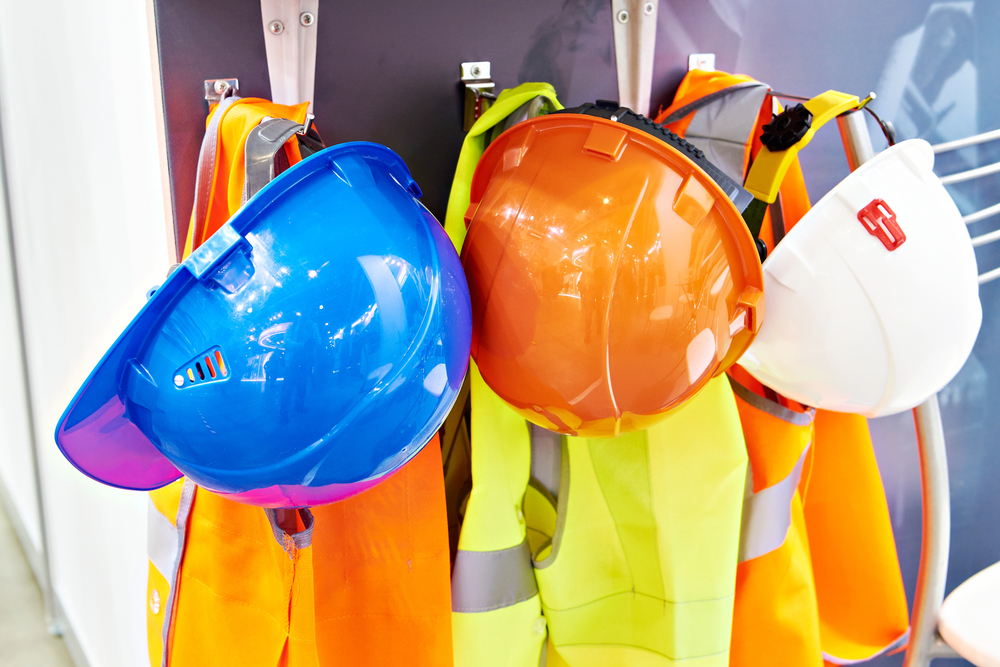
Managing health and safety, even just within one facility, requires a lot of knowledge and discipline. Even when you’re on top of the protocols, there can be changes in legislation that you must be up to date with. When extending this to multiple sites, the complexity spirals and inconsistencies can arise.
It can cause inefficiencies and legal vulnerabilities, but most important are the increased risk of injuries. For organisations looking to overhaul their entire health and safety strategy, go to the website to see how Seton has been supporting UK businesses for decades.
Achieving uniformity across sites is going to be the goal – but how you get there is a matter of following a strict template.
The Elusiveness of Consistency
A big threat to getting uniformity is the natural development of localized cultures. Without a strong central voice, individual site managers may interpret regulations differently. Prioritisation is inevitable, but leaving this to individual managers can lead to different views on what is a priority.
This creates a postcode lottery when it comes to employee protection, with some sites having more up-to-date PPE than others, or perhaps even differing attitudes to enforcing them.
In the UK, the Health and Safety Executive (HSE) asks organisations to show management systems that apply equally to all employees across all sites. Achieving industrial health and standardised safety compliance therefore means a centralized approach is needed. Policies must be laid out at the top level, to which it trickles down with precision.
Supply Chain Efficiency
Going beyond the legal and cultural implications, the financial argument for standardisation is clearly convincing. For a start, when each and every site purchases its own safety gear from different local vendors, the organisation loses its bulk purchasing power. Ad-hoc purchasing also leads to varying consistency in the product quality, and then training may need to be localised to cater to the different gear. When there’s an internal transfer, new training is needed.
By centralizing procurement, a company can partner with established workplace safety equipment suppliers UK-wide. This standardizes the same high-quality equipment across sites, be it high-visibility clothing or respiratory protection. It then simplifies inventory management and that the exact item is available to every employee performing that task, regardless location. This standardised safety compliance also means that, in a pinch, one location could borrow from another if there were supply chain issues.
Viscom Is Everything
Visual communication is the silent supervisor of workplace safety. It’s the signage that provides immediate instruction and warning, and it does so passively in high-pressure or hazardous situations. In a multi-site operation, it’s very common for staff to transfer between sites, so consistency within the colours and design of safety signs, and where they’re placed, is what will reduce hesitation and delays. Even if the site is a different layout, following the same placement strategy can be transferable.
It doesn’t matter if it’s a fire exit sign or a mandatory PPE notice, they should look identical whether the employee is in a depot in Leeds or a factory in Slough. The best approach combines standard ISO 7010 compliant symbols with custom safety signage solutions – it’s not about forcing the identical solution onto all sites, but following the same patterns and rules.
A Culture of Safety
Standardization also has a big impact on company culture. Safety culture is all about having a shared set of values – it’s how people behave when no one is watching. If safety procedures are wildly different between the sites, it sends a message that safety is a matter of preference or interpretation rather than a core value.
A standardised approach makes equity easier to achieve, but it’s also felt. It shows that the organization really does value the safety of a remote lone worker just as much as it values those in head office. A cohesive identity is formed and it makes onboarding much easier for internal hires and transfers.
Data Dictating Decisions
Standardisation is also crucial in the world of industry 4.0 and business intelligence. If Site A records near misses on a spreadsheet, Site B uses a paper logbook, and Site C uses an app, the data is not compatible – insights cannot be shared and compared. It limits the trends that can be spotted or finding out the systemic risks.
The same goes for standardised safety compliance. A safety director can look at accident statistics across 50 sites and instantly see that a specific type of machinery is causing a disproportionate number of minor injuries across the network. Perhaps nobody even spots this but a machine learning algorithm does.
So while the logistics of aligning multiple sites can certainly seem daunting, the return on investment is clear for all to see. It can reduce legal risks and procurement costs, but also increase the efficiency of internal transfers and the sharing of insights. Having a strong top-down culture of safety means that all employees feel equally valued and that safety is not up for interpretation.
Find a Home-Based Business to Start-Up >>> Hundreds of Business Listings.