







































Many conversations about roof hatch material stop at aluminum vs. steel and fail to explore why that’s only the tip of the iceberg of what matters when these products will sit atop a roof for 20 or 30 years. Material selection is far more extensive than the choice between two metals, and far more selections during manufacture dictate if a hatch will fit, seal appropriately, be energy efficient, or need replacing long before the roof does.
What Compromises a Roof Hatch
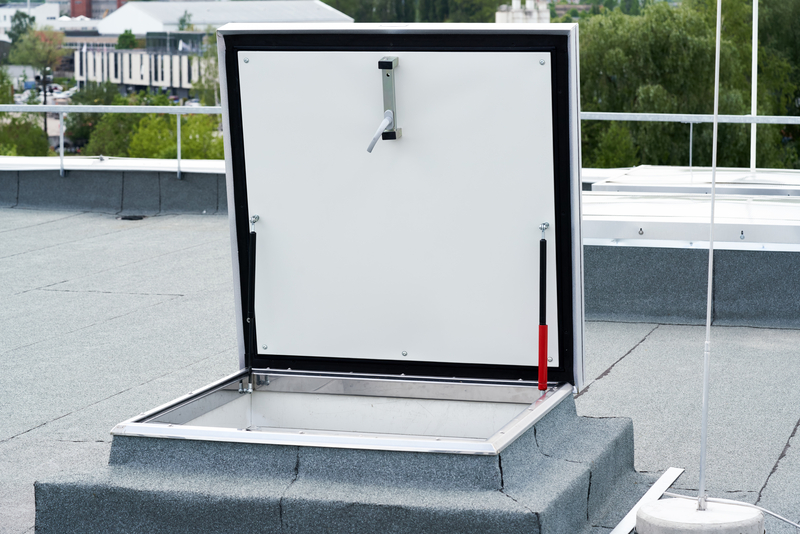
A roof hatch isn’t just a metal door with a curb. There’s a frame, a lid, an insulated core, weather seals, and hardware (plus a ladder system). The materials across the components can change and mean levels of performance that comprise a performance profile. Two manufacturers can say they build aluminum roof hatches, but one uses aluminum extruded frame with foam insulation and EPDM gaskets, while the other uses aluminum sheet metal with fiberglass insulation and silicone seals. They’re not going to perform the same.
In fact, the most important component is the frame. The frame does all the structural support work as well as the thermal bridging. Steel frames are stronger per pound so they can span larger openings without added reinforcement. Aluminum frames are lighter and non-rusting, but they need to have added thickness to have the same support as steel. That means the hatch sits differently on the curb and the curb-to-hatch assembly is then different because of frame thickness.
Corrosion: The Assumed Advantage of Aluminum & The Downside of Steel
People think aluminum does not corrode and steel does. Wrong. The reality is far more complicated. Aluminum does corrode; it just does so via anodization and oxide layers, which inherently protect the metal from further corrosion. However, in coastal areas and areas where salt exists, the anodized layer fails. Pitting corrosion occurs in proximity to ocean air at lightning speed; aluminum isn’t as impervious as people think.
Steel may corrode in a less desirable visible manner; however, this is good because it can be seen before problems arise. Galvanized steel or steel with powder coat finishes perform well in most climates. Unfortunately, at fasteners and at points where coating gets scratched during install or service, steel rusts. When moisture meets bare steel, it rusts internally.
Enter stainless steel. Stainless is impervious to corrosion; stainless also runs a bit hot with thermal conductance and costs more. Therefore, stainless is great for places which need to worry about contamination, or extremity exposure, chemical plants, wastewater treatment plants, buildings right on the water, but for the average commercial roof it may be overkill.
Insulation Core Materials Change Everything
The material sandwiched between the two panel interiors (and exteriors) accounts for more thermal performance than either metal. Polyisocyanurate foam insulation has the greatest R-value per inch – which is important when depth is an issue in design and implementation – while expanded polystyrene offers a lower cost option but needs additional thickness to match up.
Fiberglass insulation is used by some manufacturers because it can handle moisture better than foam but lacks thermal resistance. This is where surespancovers.us/roof-hatches/ and similar suppliers differ with multiple offerings; frame materials are one thing, but insulation options should differentiate based on climate use and building purpose – not just one solution across all situations.
The type of insulation makes a difference for more than energy savings, foam cores break down via moisture intrusion inside the panel over time through freeze-thaw cycles; fiberglass won’t break down via moisture but compresses over time if the panel flexes too much when subjected to movement (i.e., rooftops used for heavy foot traffic tend to require insulation that won’t lose integrity due to stress).
Hardware and Seals Are Important Components
The components that create hinges, latches, compression hardware and lifting mechanisms mean what’s going to keep this hatch functional intended per its lifecycle. Zinc plated steel rusts faster than stainless but is significantly cheaper; stainless steel is worth it for a hatch that’s going to be accessed monthly for HVAC maintenance; stainless isn’t worth it for an egress hatch that’s going to sit for years without use.
Sealing means more than one thinks, EPDM rubber gaskets hold longer than neoprene but are more expensive; silicone holds extreme temperature tolerances better than either rubber option but can’t be easily serviced if damaged; compression seals are different than bulb seals which are dependent upon frame types.
Gas springs use steel cylinders that contain different fluids/seals; cheaper springs lose pressure after two years making the hatch heavy and dangerous to use; better gas springs maintain pressure for decades but one has no idea looking at them what kind they are.
Thermal Performance Beyond R-Values
The material of the frame provides thermal bridging which negates insulating effectiveness. An aluminum frame conducts heat four times better than steel. While that doesn’t seem significant, it creates condensation and ice that forms on hatches faster with aluminum than steel. Thermal breaks in a plastic or foam design that creates a cut-in halting the metaling transfer eliminate some of this effort (but with an added cost) which can help.
Winter condensation that’s formed within the hatch assembly creates water damage downstream, mold growth and insulation degradation within roofs in cold climates; even if aluminum or steel are decent options, when it comes to framing, it’s imperative to ensure a thermal break when applicable; exterior and interior air temperatures trump insulation core thickness more than people realize.
Colors/Coatings That Last
Powder coating provides better efficacy than liquid paint across steel and aluminum, and through powder coating it’s all about the transfer thickness and curing process – not so much about color pigment. However, cheap powder coating chips and fades within five years; quality powder coating lasts 15-20 years with UV exposure and weather cycling.
Anodized aluminum finishes last longer than powder coating but limit color choice and add expense; this is useful for aesthetic locations (schools/hospitals/civic buildings) where replacing faded units becomes an obvious maintenance issue.
Bare galvanized steel is aesthetically industrial; if looks aren’t an issue then it performs well. Zinc coating on steel does well as long as it doesn’t get scratched during installation, as long as it holds durability there’s minimal corrosion relative to coated joints of intersection especially on roofs where maintenance is limited.
Cost vs Performance Over Time
Material selections factor into upfront cost, but they factor into lifecycle expense even more. Where an aluminum roof hatch with quality sealant and proper hinges may cost 30% more than a basic steel hatch, it may outperform reliable by 25 years while the other performs for 12 and needs replacing immediately after.
Maintenance issues vary by material combination; steel hatches with powder coating need periodic checks for coating issues/rust infiltration; non-polyurethane aluminum hatches with EPDM seals need replacements every decade on their gaskets; stainless hardware generally needs no attention; zinc plated might fail after the hatch needs replacement.
More than specification suggests climates determine overall effectiveness; where one design option works seamlessly in AZ, it fails five years into use in ME or less-than-desired environments (coastal inclusive). Buildings with certain exposure to temperatures/tunnels/vents/piping need safe connections that prevent extremes causing failure.
Making The Decision on Material Selection
The best course material makes sense based on actual location conditions, climate-first exposure (how often will someone access it), how often access is needed (daily better than every now and again) and budget concerns for an upfront solution vs lifecycle goal.
Also determines whether material selection made sense are those realities after a decade or so, did the integrity hold up? Did everything work? Did materials complement each other? The frame supports the lid, insulation matters for condensation risk, sealing prevents water intrusion, and hinges determine whether anyone can operate correctly 10 years later. All roof hatch materials need to be cohesive, and that’s where aluminum vs steel misses the mark entirely.
Find a Home-Based Business to Start-Up >>> Hundreds of Business Listings.